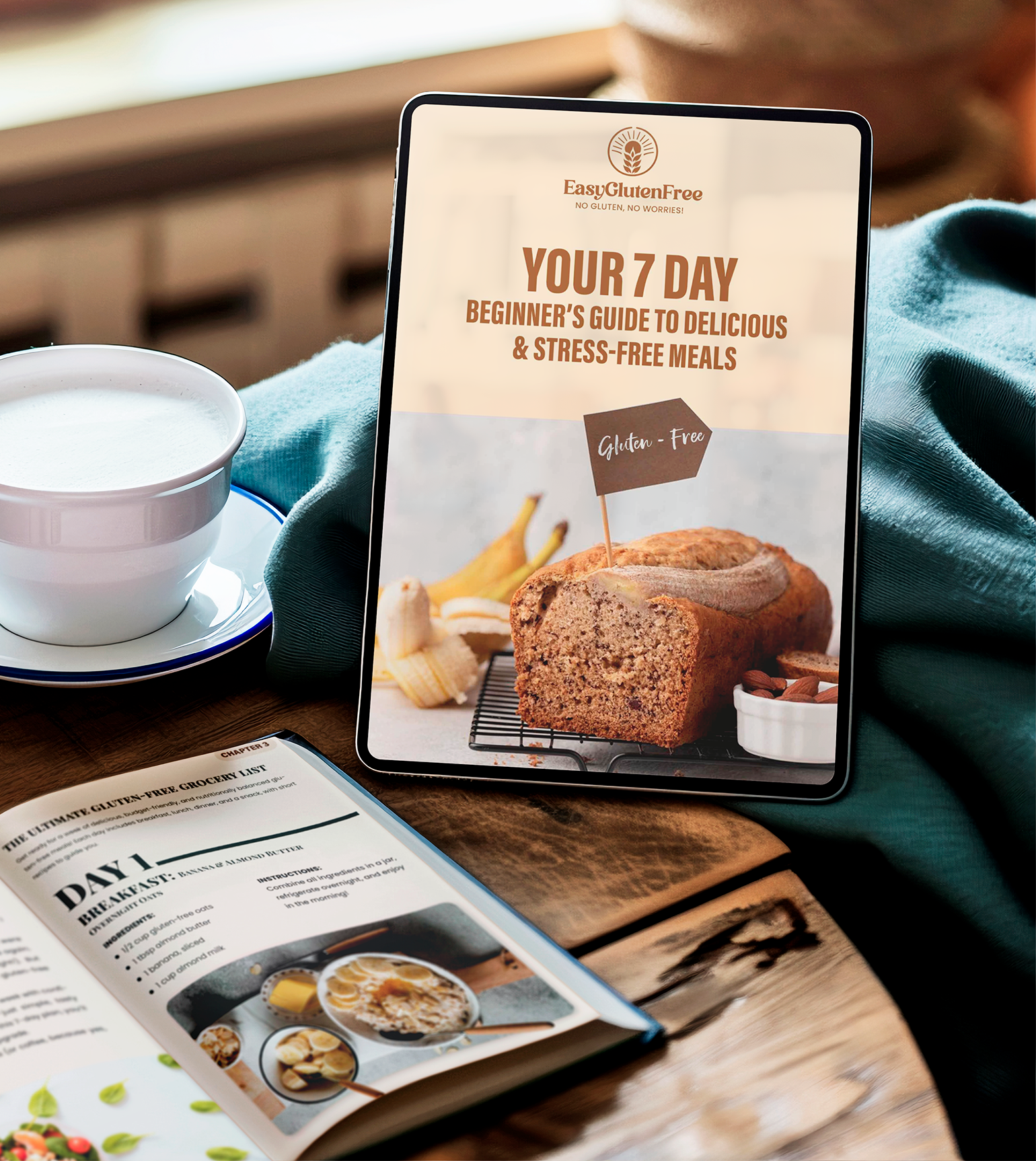
Download the Free Guide to Safe Gluten-Free Eating Out

Gluten-Free Dining Out: How to Eat at Restaurants Without Panic
Eating out while gluten-free can feel like a mix of detective work and blind trust. This guide walks you through how to choose safer restaurants, what to ask, and how to enjoy a meal out without spending the whole evening worrying about “what if.”
Download Our Free Gluten-Free Starter Guide
- 7-day meal plan
- shopping list
- Tips & 3 beginner-friendly recipes
Introduction
Going gluten-free at home is one thing: you control the ingredients, the cookware, and the crumbs. Eating out? That’s where most people start to feel nervous. Menus aren’t always clear, staff training varies wildly, and “gluten-friendly” can mean anything from carefully prepared to “we removed the croutons.”
Still, restaurant meals are part of real life—birthdays, work lunches, date nights, or just the “I’m not cooking tonight” moments. The goal isn’t to avoid restaurants forever, but to learn how to navigate them with confidence, realistic expectations, and a solid game plan.
In this guide, we’ll walk through how to choose better options, the questions that actually matter, how to lower your risk of cross-contact, and what to do if you’re still feeling unsure. This is not about perfection; it’s about stacking the odds in your favor so you can enjoy your food and your company.
1. Choosing Safer Gluten-Free Restaurants
Not all restaurants are created equal when you’re gluten-free. Some kitchens are set up to minimize cross-contact and take special diets seriously; others are chaotic, rushed, and covered in flour dust by 9 a.m. The trick is learning to spot the difference before you sit down and commit.
Start your search online (before you get hangry)
A little pre-planning saves a lot of stress. Before you go out, look up a few options and evaluate them with a gluten-free lens:
- Check the menu online. Look for a clearly marked gluten-free menu or symbols. Even better if they explain what those symbols mean and whether they address cross-contact.
- Scan for naturally gluten-free–leaning cuisines. Places that focus on grilled meats, rice, vegetables, salads, and simple preparations are usually easier to navigate than, say, bakeries or pizza spots that are covered in wheat flour.
- Read recent reviews. Search within reviews for “gluten free,” “celiac,” or “allergy” to see what other gluten-free diners experienced in the last few months.
- Check the restaurant’s own language. Phrases like “we take food allergies seriously” are more reassuring than “gluten friendly” with no explanation.
Rating your options: low-, medium-, and higher-risk spots
Think of restaurants in loose “risk tiers.” This isn’t about fear—it’s about knowing where to be extra cautious.
Lower-risk styles of restaurants often include:
- Dedicated gluten-free restaurants or bakeries. These are rare but wonderful when you find them.
- Places that use naturally gluten-free bases. For example, bowls built on rice, salads with simple proteins, or grilled meats with veggies.
- Restaurants with clear allergen training. If they talk openly about procedures for handling allergies, that’s a good sign.
Medium-risk spots that can still work with care:
- Regular restaurants with a gluten-free menu. A dedicated “GF” section is helpful, but you’ll still need to ask how things are prepared.
- Fast-casual chains with build-your-own bowls or salads. These can be okay if staff change gloves, use clean utensils, and avoid shared toppings that are contaminated.
Higher-risk environments to approach carefully:
- Shared bakeries and pizza places. Airborne flour and heavily shared surfaces can make these tough to navigate.
- Buffets. Utensils wander, crumbs fall, and labels can be vague.
- Very busy bars or late-night spots. Noise and rush can make clear communication about gluten-free needs more difficult.
Red flags to watch for early
If you see several of these at once, it may be worth choosing a different spot:
- The staff look confused when you mention gluten-free, or say “we don’t really do that.”
- The menu says “we cannot accommodate allergies.”
- Everything breaded, fried, or pasta-based is marked “gluten-free” without any clarification.
- They brush off your questions with “you’ll be fine” instead of explaining how they handle your request.
Once you’ve narrowed down some better options, the next step is learning how to talk to the restaurant so they understand what you actually need.
2. Smart Questions to Ask Before You Order
Once you sit down (or pull up the ordering app), your words matter. You don’t need to give your full health history, but you do want to be clear, calm, and specific so the kitchen understands that gluten isn’t just a “preference.”
How to introduce your gluten-free needs
When your server arrives, a simple script helps set the tone:
“Hi, I have to eat gluten-free and need to avoid wheat, barley, and rye. Can you help me choose something that can be prepared safely?”
This does a few things at once:
- Signals this is important, not a casual choice.
- Names the grains so they’re less likely to think it’s just about bread.
- Invites them to work with you, not against you.
Key questions that actually help
Instead of asking, “Is this gluten-free?” (which can get you a quick but incomplete “yes”), try more detailed questions like:
- “Do you have a dedicated gluten-free menu or allergen guide?”
- “Are any of your fries or fried foods cooked in a shared fryer with breaded items?”
- “Is there flour used in the kitchen, like for breading or dusting?”
- “Can the kitchen cook my food in a clean pan with clean utensils, away from bread or pasta?”
- “Do any sauces or marinades contain wheat, soy sauce, or malt vinegar?”
These questions give you real information instead of just a yes/no answer and help reveal how much the staff understands about gluten.
Choosing safer dishes from the menu
Use the menu to your advantage by building meals around simpler, less-processed items. In many restaurants, you can assemble a reliably gluten-free meal from:
- Grilled or baked proteins like chicken, steak, fish, or tofu—without breading.
- Rice or potatoes (confirm no seasoning mixes, coatings, or shared fryers).
- Steamed or sautéed vegetables prepared in a clean pan.
- Salads without croutons, with dressing checked for gluten-containing ingredients.
Sometimes, the safest choice is asking the kitchen to keep it simple—even if the “special” menu items look more exciting.
How to politely say no to risky add-ons
You’re allowed to be picky here. Feel free to say:
- “No croutons on the salad, please, and can you make sure they’re not just picked off?”
- “No bread on the plate at all, even on the side.”
- “Could the burger be served without the bun on a clean plate?”
Specific requests reduce the chance that something gluten-y sneaks onto your plate “by habit.”
Nima gluten sensor test
These single-use capsules pair with the Nima Sensor to help users test foods for gluten on the spot. Perfect for travelers, researchers of their own digestive reactions, or anyone who just doesn’t trust that café’s “gluten-free… we think?” answer. A reliable, quick-gluten-detection option that empowers people who want data—not guesswork.
3. Managing Cross-Contact in Real Restaurant Kitchens
At home, you can swap cutting boards and buy new toasters. In restaurants, you’re working with whatever systems they already have. That’s where understanding cross-contact—and what’s realistic to ask—becomes key.
What cross-contact looks like in restaurants
Cross-contact happens when gluten-containing foods touch gluten-free foods, surfaces, or tools. In a restaurant, that can look like:
- A gluten-free burger cooked on the same flat-top as regular buns without cleaning.
- Fries cooked in a fryer that’s also used for breaded chicken or onion rings.
- Gluten-free pasta boiled in the same water as regular pasta.
- Tongs or spatulas used for regular bread, then for your “gluten-free” option.
- Crumbs on cutting boards or shared prep areas.
You don’t have to inspect the kitchen, but you can ask targeted questions that help you judge the level of risk.
Reasonable cross-contact questions to ask
Depending on the style of restaurant, you might ask:
- “Are your fries cooked in a dedicated fryer that’s only used for fries?”
- “Can my food be cooked in a clean pan, not directly on the grill?”
- “Do you have separate utensils for preparing gluten-free orders?”
- “Is your gluten-free pasta boiled in fresh water in a clean pot?”
Their responses can tell you a lot about how carefully they’ll handle your meal.
When to adjust your order—or walk away
Sometimes, despite everyone’s best intentions, the setup just isn’t ideal. It’s okay to pivot. You might:
- Choose a different dish that doesn’t go near high-risk equipment (like fryers or flour-heavy prep stations).
- Ask if they can modify a dish—grilled protein plus veggies and rice is often easier to keep separate.
- Decide to just order a safe drink and snack and eat more fully at home later.
- Thank them for their honesty and choose another restaurant if it feels too risky for your comfort level.
Listening to your gut—both literally and figuratively—is part of building a sustainable, low-stress gluten-free lifestyle.
Recipe Inspiration
Try these gluten-free staples loved by thousands:



4. Building a Go-To List of Gluten-Free-Friendly Spots
One of the best ways to make gluten-free dining less stressful is to create your own “tried-and-true” list of places that work for you. Instead of starting from scratch every time someone suggests going out, you’ll already have options in mind.
Start with one or two test meals
Pick a restaurant that seems promising, and treat your first visit like a gentle test run. Pay attention to:
- How the staff respond when you mention gluten-free needs.
- Whether they offer to ask the kitchen or bring a manager over.
- How confident and informed the answers feel.
- Whether the final plate matches what you asked for (no surprise croutons, no bread on the side).
If it goes well, make a note—and consider ordering something similar next time so you’re building on what you know works.
Keep simple notes after you eat
You don’t need a spreadsheet (unless you want one), but a quick note on your phone can be powerful. Include:
- The restaurant name and location.
- What you ordered and how you modified it.
- Who seemed most helpful (server, manager, etc.).
- Anything you’d do differently next time.
Over time, this becomes your personal gluten-free dining guide—something you can rely on when you’re tired, traveling, or out with a group.
Sharing and learning from the gluten-free community
Other gluten-free diners can be a useful resource, especially for spotting patterns—restaurants that consistently do well or places where multiple people report issues. Look for:
- Local gluten-free or allergy-friendly social media groups.
- Reviews written specifically by gluten-free or celiac diners.
- Word-of-mouth recommendations from friends or family who eat gluten-free.
Remember that everyone’s sensitivity level and comfort zone is different, so use these as data points, not absolute guarantees.
5. How to Stay Confident, Prepared, and Low-Stress
Gluten-free dining out isn’t about never taking a risk—it’s about taking informed ones that feel right for you. Confidence grows with practice, and a few simple habits can make the whole experience feel more manageable.
Have a backup plan (and snacks)
Sometimes the menu has changed, the kitchen is short-staffed, or you just don’t feel great about the answers you’re getting. Having a backup plan keeps frustration low:
- Keep a small gluten-free snack in your bag or car to tide you over.
- Know one or two alternate spots nearby in case you need to pivot.
- At social events, consider eating a small, safe meal beforehand so you’re not relying on the restaurant entirely.
Practice your “gluten-free script” until it feels natural
The first few times you explain your needs, it might feel awkward. That’s normal. Repeating a simple script helps:
- “I need my meal to be gluten-free and prepared to avoid cross-contact with wheat, barley, and rye.”
- “Can you please let the kitchen know this is for someone who must avoid gluten?”
Over time, you’ll adapt these phrases to sound like you—but the more you practice, the easier it becomes to speak up without apologizing or minimizing your needs.
Give yourself permission to be “that person”
It’s okay to ask follow-up questions. It’s okay to send something back if it arrives with croutons, pasta, or obvious gluten on the plate. Advocating for yourself doesn’t make you difficult; it makes you responsible for your own health and comfort.
If you’re with friends, you can set expectations ahead of time: let them know you might need a moment to talk to the server or that you may choose a simpler restaurant than they’re used to. Most people are more understanding once they know what’s at stake for you.
Focus on what you’re gaining, not just what you’re avoiding
Yes, gluten-free dining means extra steps, questions, and sometimes compromise. But it also means:
- Finding restaurants that truly care about their guests’ needs.
- Discovering new dishes you might never have tried otherwise.
- Enjoying meals out without the same level of fear or guesswork.
- Being able to say “yes” to more social invitations with a plan in place.
With time, you’ll develop instincts about which places feel safe, which dishes tend to work for you, and how to ask for what you need without feeling like you’re asking for the moon.
Your gluten-free life does not have to stay inside your kitchen. With the right tools, language, and mindset, you can navigate restaurants with far more ease—and still enjoy the best part: good food with good people.
Key Takeaways
- Research restaurants ahead of time by checking menus, reviews, and how clearly they describe their gluten-free options.
- Use clear, specific language with servers and ask targeted questions about ingredients, preparation, and cross-contact.
- Favor simpler meals built around grilled proteins, rice, potatoes, and vegetables, and be cautious with fryers, sauces, and breads.
- Build a personal list of trusted restaurants and go-to orders so each new outing doesn’t start from zero.
- Stay prepared with backup plans, practice your gluten-free “script,” and give yourself permission to advocate for your needs.
Take the Next Step in Your Gluten-Free Journey
- Download the Free EGF Starter Guide
- Try our Gluten-Free Planner to simplify your week
- Explore our growing recipe library
You don’t have to navigate the gluten-free lifestyle alone, we are here to make it easier every day.
Category: Dining Out Gluten-Free