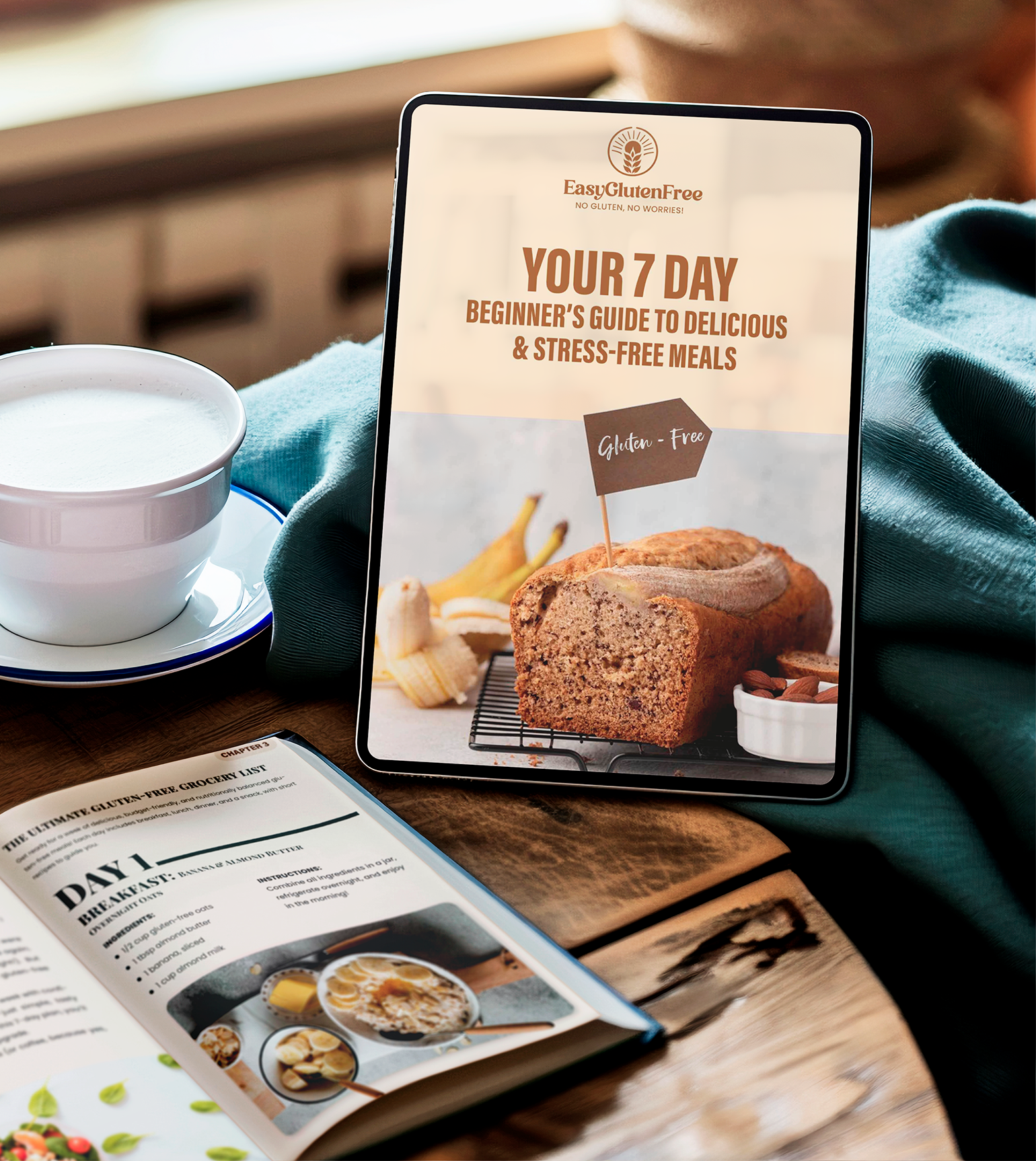
Download Your No-Stress Gluten-Free Dining Out Playbook

How to Confidently Test for Gluten When Eating Out (Without Killing the Vibe)
Eating out gluten-free can feel like a trust fall with a restaurant menu. You ask questions, scan for red flags, and still wonder, “Is this actually safe for me?” In this guide, we’ll walk through practical, real-life ways to test for gluten when you’re away from your own kitchen—using smart questions, simple habits, and tools like portable gluten-testing devices so you can enjoy the meal and the company, not just stress over the bread basket.
Download Our Free Gluten-Free Starter Guide
- 7-day meal plan
- shopping list
- Tips & 3 beginner-friendly recipes
Introduction
When you’re gluten-free, eating out is never as simple as “let’s just grab something.” There’s always that background calculation: how much do I trust this restaurant, this server, this kitchen? And if you’ve ever been “glutened” after doing everything right, you know how discouraging that can feel.
The good news: while you can’t control everything, you can dramatically lower your risk by combining smart communication, a few repeatable routines, and—if it fits your style—portable gluten-testing tools. None of this has to turn dinner into a science experiment. It’s about building a system that becomes second nature.
In this article, we’ll walk through how to test for gluten when eating out in a realistic, sustainable way. You’ll learn how to choose safer restaurants, what to ask (and how to ask it), how to use gluten-testing devices strategically, and how to build your own personal “gluten-safety toolkit” so you can say yes to more invites without sacrificing your well-being.
Table of Contents
▾
1. Understanding Your Personal Gluten Risk When Eating Out
Before you decide how to test for gluten at restaurants, it helps to understand what you’re actually trying to manage: your personal level of risk and your own body’s responses. Two people can both be gluten-free and make very different choices—and both can be valid.
Know your “why” for avoiding gluten
Your reason for avoiding gluten shapes how strict you’ll want to be when eating out:
- Diagnosed celiac disease – Even small amounts of gluten can be a problem, including cross-contact in shared fryers, cutting boards, or toasters.
- Non-celiac gluten sensitivity or intolerance – You may react to gluten, but your threshold and symptoms might differ from someone with celiac.
- Wheat allergy – You may be focused more on avoiding wheat specifically and preventing allergic reactions.
- Personal preference or experimenting – You may be more flexible but still want to avoid obvious sources.
Where you fall on this spectrum influences whether you simply read menus carefully, ask a few questions, or decide to add gluten-testing tools into the mix.
What testing tools can (and cannot) do
Portable gluten-testing tools can help you gather more information, but they’re not a magic shield. They may test for gluten only in the portion you sample and may not cover every ingredient on the plate. They can, however, give you another layer of data so you’re not relying on “I think it’s gluten-free” as your only safety net.
Think of your overall approach as a three-part system:
- Smart restaurant choices – Before you even sit down.
- Clear communication – Once you’re ordering.
- Optional testing tools – As a final personal check when you want extra reassurance.
When these pieces work together, you’re not just hoping a meal is safe—you’re actively stacking the odds in your favor.
2. Using Portable Gluten Testing Tools at Restaurants
For some gluten-free diners, especially those who travel often or eat in new places regularly, portable gluten-testing tools offer extra peace of mind. They’re not required for a safe gluten-free lifestyle, but if you’re someone who likes data, they can be a helpful addition to your toolkit.
When a testing tool might be helpful
You might consider using a portable gluten-testing device when:
- You’re trying a restaurant for the first time and aren’t yet confident in their gluten-free processes.
- You’re traveling and language or cultural differences make communication tricky.
- You’re eating a dish that feels “borderline” (for example, sauces, marinades, or foods that are often thickened or breaded).
- You’ve had mixed experiences at a place and want to double-check before fully diving into your meal.
How to use testing in a realistic way
Using a gluten-testing device doesn’t mean you have to test every bite of food. Many people use them for “spot checks,” especially on higher-risk components like:
- Gravies, sauces, and dressings
- Anything fried (even if labeled gluten-free)
- Marinated meats or veggie burgers
- Foods that were modified from the regular menu (like “no bun” burgers or “gluten-free pasta” swaps)
It’s also completely fine to only use a device occasionally—such as when you’re building trust with a restaurant. Over time, as you find safer spots and patterns, you may feel less need to test every time.
Balancing testing with social comfort
One concern many people have is, “Will using a device at the table make things awkward?” You’re not alone if you’ve wondered that. A few tips that can help:
- Practice at home first so you’re quick and confident when you test in public.
- Explain briefly if needed: “I have to avoid gluten for health reasons, this just helps me double-check my food.” Most people will simply nod and move on.
- Test a small sample at the edge of the plate to keep things low-key.
- Decide your plan ahead of time—what you’ll do if a test suggests gluten is present—so you’re not stuck problem-solving in the moment.
Ultimately, your health is more important than a few curious looks. You’re allowed to do what you need to feel safe and comfortable at the table.
Nima gluten sensor test
These single-use capsules pair with the Nima Sensor to help users test foods for gluten on the spot. Perfect for travelers, researchers of their own digestive reactions, or anyone who just doesn’t trust that café’s “gluten-free… we think?” answer. A reliable, quick-gluten-detection option that empowers people who want data—not guesswork.

3. Smart Restaurant & Menu Strategies to Avoid Gluten Exposure
Even if you use testing tools occasionally, your first line of defense is always going to be how you choose restaurants and what you order. A few habits here can drastically reduce the number of “uh-oh” moments later.
Choose restaurants with gluten-free awareness
Not all restaurants are equally prepared for gluten-free guests. When possible, favor places that:
- Have a separate gluten-free menu or clearly marked GF options.
- Mention cross-contact, separate fryers, or dedicated prep areas on their website or menu.
- Have staff who can easily answer questions without guesswork.
Before you go, take a minute to:
- Check the menu online for naturally gluten-free-friendly cuisines (like certain Mexican, Thai, or farm-to-table spots).
- Read a couple of recent reviews from other gluten-free diners, if available.
- Call ahead during off-peak hours to ask how they handle gluten-free orders.
Safer menu patterns to look for
In most restaurants, some types of dishes are simply easier to make gluten-free safely than others. Examples:
- Grilled proteins with plain seasoning and a simple side (rice, potatoes, veggies).
- Salads without croutons, with a simple oil-and-vinegar or clearly labeled gluten-free dressing.
- Bowls built from whole ingredients—protein, veggies, rice, beans.
- Simple tacos or lettuce wraps, when made with corn tortillas that aren’t warmed in a shared, flour-dusted area.
On the other hand, consider extra caution around:
- Shared fryers (fries, wings, tempura, etc.).
- Anything breaded, “crispy,” or “crunchy” unless clearly gluten-free.
- Soups and sauces that may be thickened with flour.
- Veggie burgers or meat substitutes that may contain wheat.
Create your own “go-to order” list
To reduce decision fatigue, many gluten-free diners keep a little mental (or written) list of “safe-ish” go-to orders at different cuisines. For example:
- Mexican: grilled chicken or carne asada plate with rice, beans, and corn tortillas, no mystery sauces.
- American grill: bunless burger or steak with baked potato and steamed vegetables, no fried sides.
- Breakfast spots: omelet with cheese and veggies, no toast, verify potatoes are not cooked in a shared fryer.
Over time, this list becomes your shortcut: less stress, fewer surprises, and a much lower need to “wing it.”
Recipe Inspiration
Try these gluten-free staples loved by thousands:



4. How to Talk to Staff Without Feeling Awkward
Testing for gluten when eating out isn’t just about devices or reading labels—it’s also about honest, calm conversations with the people preparing your food. You don’t need to give your full medical history, but a few clear sentences can go a long way.
How to introduce your needs simply
Here’s a short script you can adapt to your own words:
“I need to avoid gluten for health reasons. Could you help me choose something that can be prepared safely, with no bread, flour, or cross-contact from things like fryers or cutting boards?”
Key details to mention:
- You’re avoiding gluten (not just bread).
- You need help avoiding cross-contact, not only obvious ingredients.
- Your request is for health reasons, which signals that this is not just a preference.
Questions that actually reveal how safe a place is
Instead of asking, “Is this gluten-free?” try questions that invite more detailed answers, such as:
- “Do you have a dedicated fryer for gluten-free foods?”
- “How is this sauce or gravy thickened?”
- “Is the gluten-free pasta cooked in a separate pot with clean water?”
- “Are your corn tortillas warmed on a shared surface with flour tortillas?”
- “Can the kitchen prepare this on a clean pan or foil to avoid cross-contact?”
Notice how these questions gently test whether the staff understands what gluten-free means beyond just “no bread.”
Reading the room: when to stay and when to leave
Your comfort level matters. It’s completely valid to decide a place doesn’t feel safe enough for you today. Red flags can include:
- Staff saying “I think so” or “It should be fine” without checking.
- Confusion between “gluten-free” and “low-carb” or “no bread on it.”
- No willingness to check with the kitchen or adjust a dish.
On the other hand, good signs include servers who:
- Immediately mention cross-contact and how they handle it.
- Are happy to ask the chef and return with clear answers.
- Offer to customize a dish to keep it gluten-free.
If you ever feel uncomfortable, you’re allowed to change your mind, order something very simple, or even decide this isn’t the right restaurant for you. Your body, your rules.
5. Building Your Own Gluten Safety Routine for Dining Out
To make testing for gluten when eating out feel manageable (and not like a part-time job), it helps to create your own repeatable routine. Once you’ve tested it a few times—no pun intended—it becomes almost automatic.
Step-by-step dining-out routine
- Before you go
- Check the menu online and look for naturally safer options.
- Call ahead if needed to ask about gluten-free procedures or dedicated fryers.
- Pack any tools you rely on: testing device, capsules, enzyme supplements if you use them, and a small snack just in case.
- When you arrive
- Let your server know right away that you need to avoid gluten for health reasons.
- Ask 1–3 targeted questions based on what you’re thinking of ordering.
- Choose the dish that feels safest, not just the most exciting.
- When the food comes
- Double-check visually for obvious gluten (croutons, bread, fried garnishes).
- If you’re using a testing device, sample the highest-risk part of the dish first.
- Decide what you’ll do if something seems off—ask for a remake, request a simpler alternative, or rely on your emergency snack.
- After the meal
- Notice how you feel over the next day or so and make a mental note.
- Keep a simple log of restaurants and dishes that worked well for you.
- Over time, build a “safe spots” list in your phone for easy reference.
Give yourself permission to adjust over time
Your needs might change, and your comfort level with tools and restaurants might evolve. Some seasons of life you may feel stricter and test more; other times, you might lean more on trusted restaurants and simple orders.
The goal isn’t perfection. The goal is a realistic, sustainable gluten-free lifestyle where eating out feels possible, enjoyable, and aligned with how your body feels best.
Bringing it all together
When you combine:
- Thoughtful restaurant choices,
- Clear communication with staff,
- Smarter menu decisions, and
- Optional gluten-testing tools when you want more data,
you create a dining-out routine that doesn’t rely on luck. You’re allowed to ask questions, to test your food, and to walk away if something doesn’t feel right. That’s not being “difficult”—that’s honoring your health.
Key Takeaways
- Eating out gluten-free is safer and less stressful when you combine smart restaurant choices, clear communication, and simple routines.
- Portable gluten-testing tools can provide extra information on specific foods, but they work best as one part of a broader safety strategy.
- Asking targeted questions about fryers, sauces, and preparation methods reveals far more than just asking if something is “gluten-free.”
- Building a personal list of trusted restaurants and go-to menu options reduces decision fatigue and accidental gluten exposure.
- Your comfort and health come first—it’s okay to test food, send a dish back, or choose a different restaurant if things don’t feel right.
Take the Next Step in Your Gluten-Free Journey
- Download the Free EGF Starter Guide
- Try our Gluten-Free Planner to simplify your week
- Explore our growing recipe library
You don’t have to navigate the gluten-free lifestyle alone, we are here to make it easier every day.
Category: Dining Out Gluten-Free