Download the Free Guide to Confident Gluten-Free Restaurant Dining

Gluten-Free Restaurant Survival Guide: How to Dine Out Without the Stress
Eating out gluten free can feel like playing menu roulette—one wrong question, one mystery sauce, and your night is ruined. This guide walks you through how to order safely, communicate clearly, and enjoy restaurant meals again without feeling like the “difficult” customer at the table.
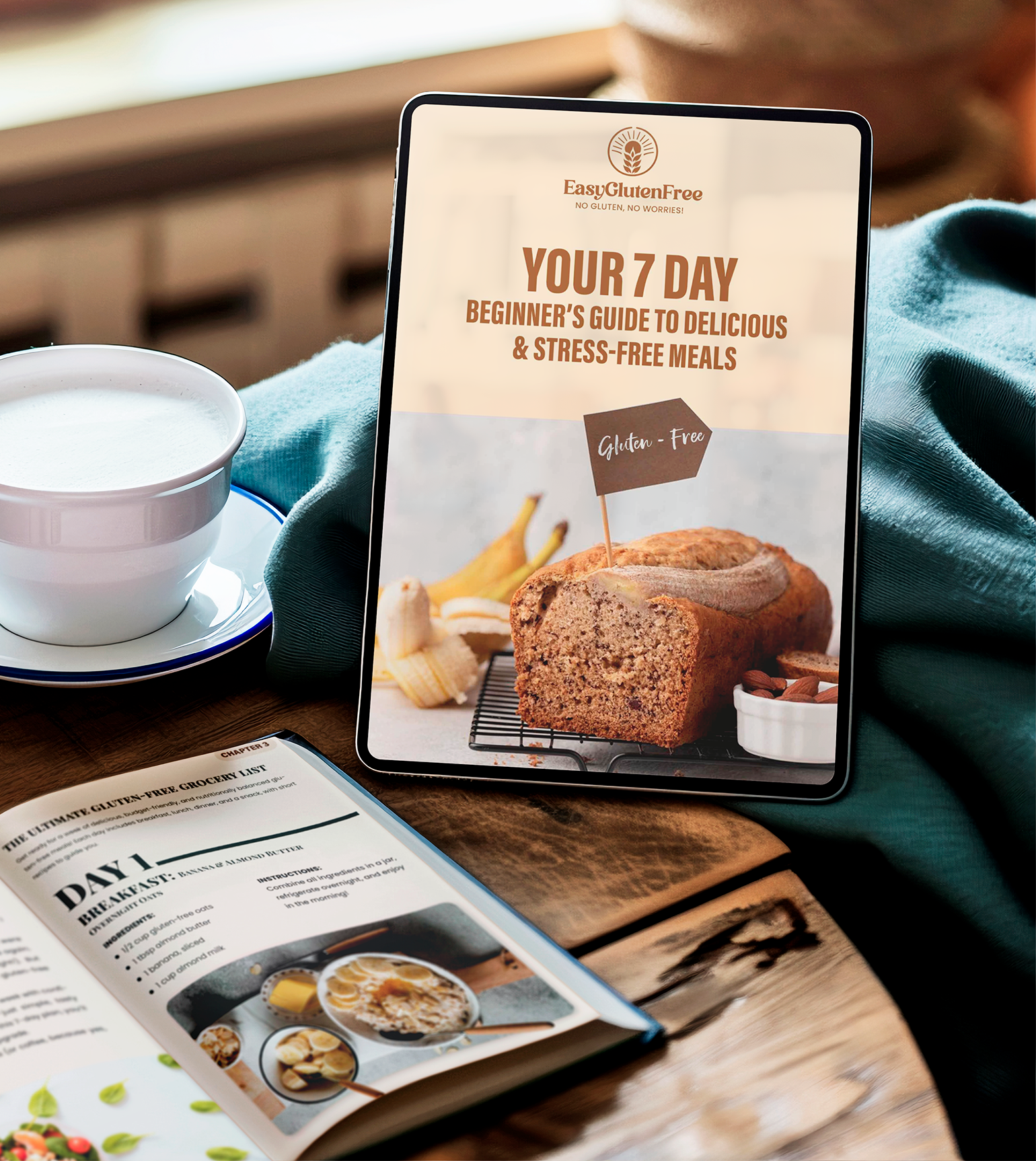
Download Our Free Gluten-Free Starter Guide
- 7-day meal plan
- shopping list
- Tips & 3 beginner-friendly recipes
Introduction
Dining out gluten free can be a mix of freedom and fear. Freedom because you don’t have to cook or clean, fear because one careless crouton or shared fryer can turn a fun night into days of recovery. If you’ve ever stared at a menu wondering, “Is any of this actually safe for me?”—you’re in the right place.
Whether you live with celiac disease, non-celiac gluten sensitivity, or you simply feel better avoiding gluten, restaurant meals require a bit of strategy. The good news: once you learn what to ask, what to watch for, and how to advocate for yourself without apologizing, eating out becomes far less stressful and a lot more enjoyable.
This gluten-free restaurant survival guide pulls together practical tools: what to do before you go, how to talk to staff, which red flags to treat seriously, and how to handle social situations without feeling like you’re “making a fuss.” Think of it as your calm, prepared friend who’s been through it—and wants to help you skip the hard lessons.
1. Planning Ahead Before You Dine Out Gluten Free
Safe gluten-free dining starts long before you sit down at the table. A little planning dramatically lowers your risk of being “glutened” and makes the whole experience less stressful for you and everyone you’re with.
Research the restaurant before you go
Instead of walking into the closest place and hoping for the best, give yourself options:
- Check the menu online: Look for a dedicated gluten-free menu or clearly marked gluten-free items. Bonus points if they mention cross-contact procedures.
- Look for key phrases: “Gluten-free kitchen protocols,” “dedicated fryer,” “celiac-friendly,” or an allergen guide are all promising signs.
- Read recent reviews: Search within reviews for “gluten free,” “celiac,” or “allergy.” You’re looking for comments like “staff understood cross contamination” rather than just “had gluten-free buns.”
Call ahead and ask targeted questions
A quick phone call can tell you more in two minutes than a website can in twenty. When you call, be kind but clear about your needs. You might say:
“Hi, I eat strictly gluten free for medical reasons. Do you have options that can be prepared safely, avoiding cross-contact with gluten?”
Then follow up with specific questions:
- “Do you have a dedicated gluten-free fryer for fries or breaded items?”
- “How do you prevent cross-contact when preparing gluten-free dishes?”
- “Is any gluten-free pasta or pizza cooked in separate water/ovens?”
- “Can the kitchen leave off croutons or flour-based coatings?”
Listen not just for the answers, but for the confidence level. If they sound unsure, rushed, or confused, that’s useful data. You’re allowed to decide, “Thank you so much, I think I’ll try another spot.”
Have a short list of “go-to” safe choices
It helps to have a few “template meals” in mind you can almost always modify safely, such as:
- Grilled meat or fish with plain vegetables and a baked potato (no seasoning blends unless confirmed gluten free).
- Salads with no croutons, no fried toppings, and a simple oil-and-vinegar dressing from the bottle.
- Rice-based bowls with clearly identified sauces served on the side.
When you know you can fall back on a simple but safe meal, the pressure around the menu instantly drops.
Time your visit strategically
If you can, avoid the absolute busiest times (like Friday night at 7 p.m.). When the kitchen is slammed, there’s more room for error. Early lunches, weeknights, or slightly off-peak times often mean staff can listen, ask questions, and take more care with your food.
Pack a small “just in case” kit
Your bag is not being dramatic; it’s being prepared. Many gluten-free diners like to carry:
- Simple snacks (like nuts or a gluten-free bar) in case options are limited.
- A list on your phone of “safe order phrases” you can quickly reference.
- Any personal comfort items you use if you do get exposed (always following advice from your own healthcare provider).
The goal is not to live in fear, but to walk into any restaurant with a plan, not panic.
2. How to Order Safely: Questions, Scripts & Cross-Contact Traps
Once you’re seated, the most powerful tools you have are your words. How you communicate your needs can set the tone for your entire meal. You don’t need to apologize, over-explain your health, or be confrontational—but you do need to be clear, consistent, and calm.
How to talk to your server (without feeling awkward)
Let your server know about your gluten-free needs before you order, ideally as soon as they introduce themselves. A simple script you can adapt:
“I need to eat strictly gluten free for medical reasons. Could you please let the kitchen know? I also need to avoid cross-contact with gluten, like shared fryers or cutting boards.”
This quickly signals that:
- You’re not ordering gluten free as a casual preference.
- Cross-contact matters, not just visible gluten.
- You appreciate help, but you also know what you’re talking about.
Key questions to ask before you commit to a dish
Instead of asking, “Is this gluten free?” (which often gets a vague yes/no), ask how it’s prepared. For example:
- “What is this grilled chicken marinated in? Are there any soy sauce, malt vinegar, or flour-based ingredients?”
- “Are your fries cooked in a dedicated gluten-free fryer, or shared with breaded items?”
- “Is the gluten-free pasta boiled in separate water and handled with clean utensils?”
- “Can you check whether the seasoning blends or sauces contain wheat or barley?”
Questions like these help staff think through the process and avoid unintentional mistakes.
Common cross-contact traps to watch out for
Even if your main dish sounds naturally gluten free, there are a few “sneaky” sources of gluten that frequently catch people out:
- Shared fryers: Fries, tortilla chips, and wings are often cooked in the same oil as breaded items.
- Grill surfaces: Burgers or steaks grilled on the same surface as flour-dusted buns or pancakes can pick up gluten.
- Toasters and panini presses: Even gluten-free bread can become unsafe if heated where regular bread is toasted.
- Salad toppings: Croutons, crispy onions, or breaded proteins tossed in the same bowl.
- Sauces and soups: Roux (flour + fat), soy sauce, malt vinegar, and barley-based flavorings can all hide gluten.
Whenever in doubt, you can say:
“This looks great. Before I order, can you please confirm that it won’t come into contact with gluten in the fryer, on the grill, or during prep?”
How to make modifications without guilt
Asking for changes can feel awkward at first, but restaurants deal with requests all day long. You might say:
- “Could I please have this taco bowl with no flour tortillas and no fried toppings?”
- “Can the kitchen cook this in a clean pan instead of on the shared grill?”
- “I’ll skip the sauce and use oil and vinegar instead, just to be safe.”
Pairing your requests with a “thank you for helping with this” goes a long way; you can be firm about your needs and kind at the same time.
Why tools and testing can add extra peace of mind
Some gluten-free diners like to pair strong communication with tools that help them feel more in control of what’s on their plate. Portable testing solutions, for example, can provide extra data when you’re trying a new restaurant, traveling, or navigating meals where you’re just not fully confident in the answers you’re getting.
They don’t replace clear communication with staff or common-sense precautions, but they can be a helpful “backup layer” for people who want additional reassurance in high-risk or unfamiliar situations.
Nima gluten sensor test
These single-use capsules pair with the Nima Sensor to help users test foods for gluten on the spot. Perfect for travelers, researchers of their own digestive reactions, or anyone who just doesn’t trust that café’s “gluten-free… we think?” answer. A reliable, quick-gluten-detection option that empowers people who want data—not guesswork.

3. Choosing Safer Cuisines and Restaurant Types
Not all cuisines are created equal when it comes to gluten. Some rely heavily on wheat-based breads, pastas, or batters, while others naturally lean on rice, corn, potatoes, or whole foods. Knowing the general “risk profile” of different restaurant styles helps you choose spots where you’re more likely to eat well and stay safe.
Cuisines that tend to be easier for gluten-free dining
Every restaurant is different, but many gluten-free diners find success with these types of cuisines (still always asking detailed questions, of course):
- Mexican and Latin American: Corn tortillas, rice, beans, grilled meats, salsas, and guacamole can form naturally gluten-free meals. Confirm that tortillas are 100% corn, avoid shared fryers for chips, and check seasonings and sauces.
- Thai and Vietnamese: Rice noodles, rice-based dishes, and fresh herbs make these a good starting point. Check for soy sauce, hoisin, and marinades containing wheat; ask whether they can use gluten-free tamari instead.
- Mediterranean: Grilled meats, salads, rice dishes, and vegetable sides are often easy to modify. Watch out for breaded items, bulgur wheat, and sauces thickened with flour.
- Farm-to-table / whole food–focused restaurants: Places that cook from scratch and highlight simple ingredients are often more willing (and able) to adapt dishes safely.
Higher-risk restaurant styles (and how to navigate them)
These cuisines aren’t off-limits, but they do usually require extra care:
- Italian: Gluten-free pasta and pizza are increasingly common, but cross-contact is the big issue. Ask about separate water for pasta, clean strainers, and whether gluten-free pizzas are baked on dedicated trays or in shared ovens.
- Chinese-American takeout: Many sauces contain wheat-based soy sauce, and most fried items are battered. Ask specifically about gluten-free sauces, separate woks, and steamed dishes.
- Burger and sandwich shops: Gluten-free buns can be toasted in contaminated equipment, and shared fryers are extremely common. Consider bunless burgers wrapped in lettuce, grilled on clean pans, with safe sides.
- Buffets: Utensil swapping, crumb contamination, and unclear ingredients make buffets tricky. If you must eat at one, focus on fresh-carved meats, plain salads, and items the staff can bring directly from the kitchen.
Questions to ask based on restaurant type
Tailor your questions to the style of restaurant you’re in. Examples:
- Pizza place: “Is your gluten-free pizza prepared on a clean surface with separate tools, and baked so it doesn’t touch regular dough?”
- Steakhouse: “Are any of your steaks dusted with flour, and do you use a shared grill with bread or pancakes?”
- Casual chain restaurant: “Do you have an allergen menu, and can you mark my order as an allergy in your system so the kitchen takes extra care?”
Signs a restaurant takes gluten-free seriously
Beyond menus and buzzwords, look for:
- Staff who can clearly explain their process without hesitation.
- Note fields on the ticket or ordering tablet for allergies or gluten-free needs.
- Voluntary suggestions from staff like, “We’ll cook that in a clean pan for you,” or “Let me double-check with the chef.”
- Willingness to say, “We can’t do that safely”—which is actually a very good sign of honesty and awareness.
The more often you choose places that consistently demonstrate this kind of care, the easier gluten-free dining becomes over time.
Recipe Inspiration
Try these gluten-free staples loved by thousands:



4. Navigating Social Pressure, Dates, and Group Meals
Let’s be honest: the food is only half the challenge. The other half is navigating friends, family, coworkers, and dates who may not fully understand why gluten has to be a non-negotiable for you.
How to handle “Where should we go?” gracefully
When someone asks where you’d like to eat, that’s your chance to guide the plan instead of apologizing for your needs. You might respond:
- “Thanks for asking! I eat strictly gluten free, so some spots work better for me than others. How about [Option A] or [Option B]? They’ve been great about gluten-free meals.”
- “I can’t do every restaurant safely, but if you’re open, I can share a couple places I know handle gluten free well.”
Having 2–3 go-to restaurants ready to suggest makes this much easier.
Dealing with pushback or jokes
Most people aren’t trying to be hurtful; they just don’t understand. You can keep your response short and calm:
- “I wish it were a preference! My body just doesn’t tolerate gluten, so I have to be careful.”
- “I know it sounds intense, but cross-contact really can make me sick, so I’ve learned to ask a lot of questions.”
You don’t owe anyone your full medical history, and you’re allowed to hold your boundary even if others don’t fully “get it.”
Gluten-free dating without losing the romance
Dating while gluten free can feel vulnerable at first. If you’re meeting someone new, you might:
- Offer to choose the restaurant and explain briefly, “I have to eat gluten free, so I know a couple places that work really well.”
- Be upfront early on: “I have to be careful with gluten, so you’ll hear me ask a few questions at restaurants—that’s just me staying healthy.”
- Suggest non-food dates for early meetups: walks, coffee (with a safe drink), museums, or activities not centered on a full meal.
The right people will respect your boundaries; sometimes your gluten-free needs simply help filter that out faster.
Navigating work events and parties
Buffet lines and catered office lunches are notoriously difficult. Strategies that can help:
- Ask the organizer in advance if they can request a clearly labeled gluten-free boxed meal prepared separately.
- Eat a safe mini-meal at home first so you’re not navigating the buffet while starving.
- Bring a small backup snack in your bag so you’re not left completely without options.
It can feel awkward the first few times you say, “I brought something I know is safe for me,” but your long-term health and energy are worth more than a few seconds of discomfort.
5. What to Do After a Reaction (and How to Learn From It)
Even with great planning and careful questions, most gluten-free diners experience accidental exposure at some point. It’s upsetting, frustrating, and exhausting—but it doesn’t mean you did anything wrong or that eating out is impossible.
First: give yourself compassion, not blame
It’s easy to spiral into “I should have known” or “I’ll never eat out again.” Instead, remind yourself:
- Restaurants are complex environments; mistakes can happen even when you do everything “right.”
- Every reaction is data you can use to refine your questions and choices next time.
- Your worth is not measured by how perfectly you avoid gluten.
Make simple notes while the details are fresh
When you feel up to it, jot down a few quick details—either in a notes app or a small paper journal:
- Where you ate and what you ordered.
- What questions you asked (or realized later you didn’t ask).
- Anything you noticed, like shared fryers, crumbs on surfaces, or confusing sauces.
Over time, these notes help you spot patterns—specific cuisines, restaurant chains, or menu items that don’t tend to work for you.
Decide whether to give feedback to the restaurant
If you believe the reaction came from cross-contact or a misunderstanding, you can choose whether to contact the restaurant later (once you’re feeling better). Feedback can help them improve for you and others in the future. When you do, keep it factual and calm:
- Share the date, time, and what you ordered.
- Explain that you eat gluten free for medical reasons, and that you became ill afterward.
- Mention any possible points of confusion (for example, staff insisting the fryer was safe when it wasn’t).
Some people prefer not to revisit the situation; that’s okay too. Do what feels right for your energy and mental health.
Adjust your approach going forward
Instead of deciding “I can’t eat out at all,” try translating the experience into one or two practical changes:
- Asking a new question you hadn’t thought to ask before.
- Avoiding a specific dish category (like fried foods) at that type of restaurant.
- Choosing to reserve certain higher-risk foods (like pizza or fried chicken) for trusted, dedicated gluten-free spots only.
Your gluten-free restaurant survival skills will keep evolving. The small adjustments you make after each experience slowly build a solid, confident system that works for you.
Remember: confidence grows with practice
The first few times you advocate for yourself at restaurants may feel uncomfortable. Over time, having a script, knowing what to ask, and recognizing red flags becomes second nature. You’ll find favorite places, build relationships with staff who get it, and realize that yes—you can have a social life and eat out while staying gluten free.
Key Takeaways
- Planning ahead—researching menus, reading reviews, and calling restaurants—dramatically improves the safety of gluten-free dining out.
- Clear, confident communication about gluten-free needs and cross-contact is essential and can be done kindly without apologizing for your health.
- Some cuisines and restaurant types are naturally easier for gluten-free diners; learning these patterns helps you choose safer options.
- Social situations, dates, and work events are easier when you have go-to restaurants, simple scripts, and a backup plan for food.
- Accidental exposure is never your fault; treat it as information, adjust your approach, and keep building a restaurant routine that truly supports you.
Take the Next Step in Your Gluten-Free Journey
- Download the Free EGF Starter Guide
- Try our Gluten-Free Planner to simplify your week
- Explore our growing recipe library
You don’t have to navigate the gluten-free lifestyle alone, we are here to make it easier every day.
Category: Eating Out Gluten Free