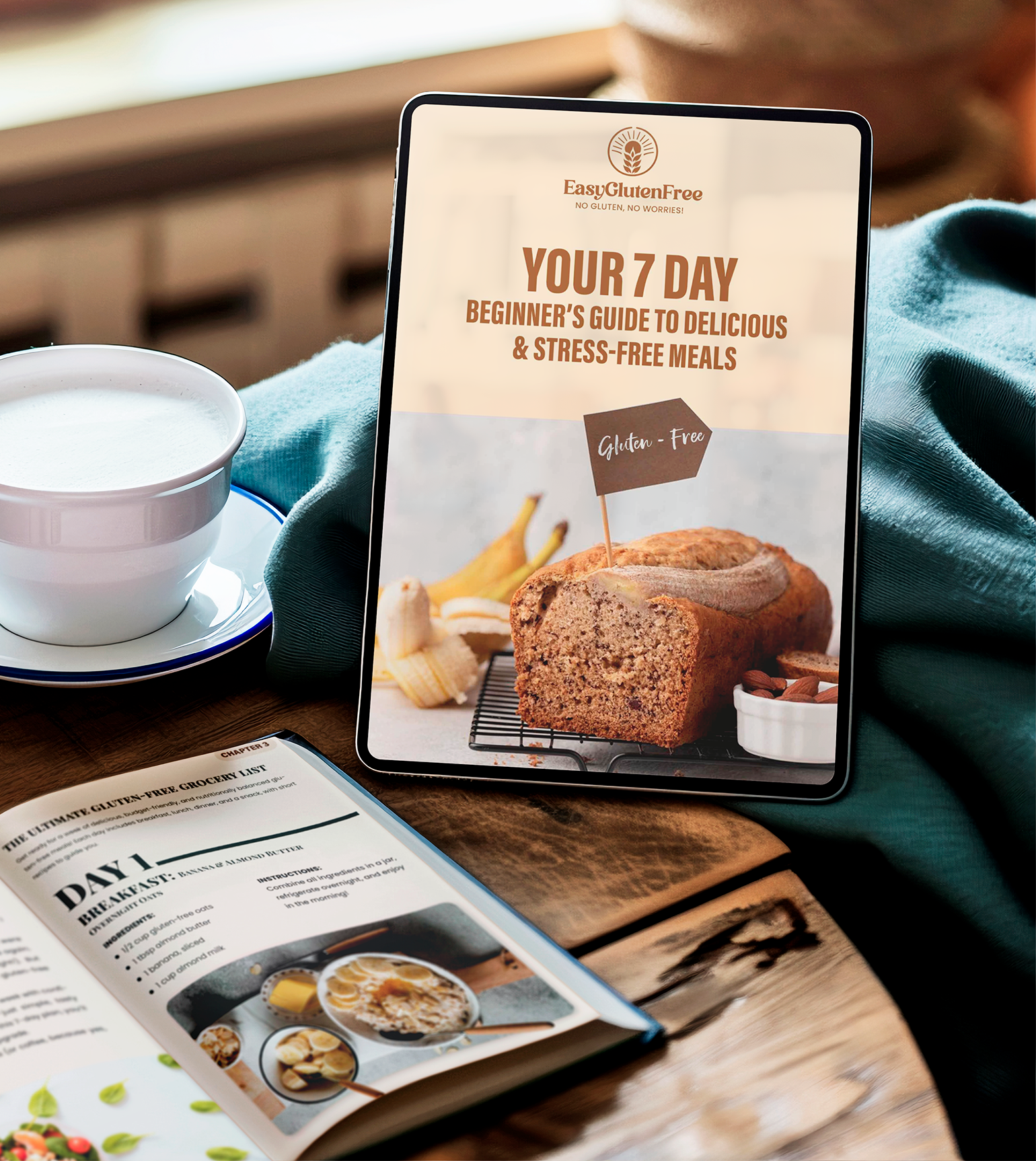
Download Your Free Guide to Confident Gluten-Free Label Reading

The Beginner’s Guide to Gluten-Free Label Reading (So You Actually Enjoy Shopping Again)
Gluten hides in the most unexpected places—soy sauce, “healthy” granola, even your favorite spice blends. Learning to read labels confidently is the difference between constant second-guessing and feeling calm, prepared, and actually excited to try new products. This guide walks you through the essentials of spotting gluten on labels, decoding sneaky ingredients, and building a shopping routine that feels simple, not stressful.
Download Our Free Gluten-Free Starter Guide
- 7-day meal plan
- shopping list
- Tips & 3 beginner-friendly recipes
Introduction
If you’ve ever stood in the grocery aisle, staring at a label and wondering, “Okay, but is this actually gluten-free?”—you’re not alone. Every ingredient list feels like a pop quiz, and the stakes are high when your health and comfort are on the line. The good news: label reading is a skill you can absolutely learn, and once you do, shopping becomes far less overwhelming.
In this guide, we’ll break down exactly how to spot gluten on food labels, what common phrases really mean, and how to handle gray areas like “may contain wheat” or “processed in a facility with…” You’ll also learn how to choose gluten-free products more confidently at home, on the road, and when you’re eating out or ordering in.
Think of this as your friendly, practical roadmap to gluten-free label reading—no fear-mongering, no jargon, just clear information and real-world tips you can start using on your next grocery trip.
Table of Contents
▾
- 1. Why Gluten-Free Label Reading Matters (And What “Gluten-Free” Legally Means)
- 2. How to Spot Gluten on Labels: Ingredients, Allergens, and Sneaky Sources
- 3. Decoding Common Certifications, Claims, and “May Contain” Statements
- 4. Smart Shopping Strategies for a Stress-Free Gluten-Free Grocery Trip
- 5. Building Long-Term Confidence with Practice, Tools, and Simple Systems
1. Why Gluten-Free Label Reading Matters (And What “Gluten-Free” Legally Means)
Before we dive into the nitty-gritty of labels, it helps to understand what “gluten-free” actually means from a regulatory standpoint—and why that matters for your daily choices.
What gluten is (in label-reading terms)
Gluten is the family of proteins found in:
- Wheat (including spelt, durum, semolina, farro, and more)
- Barley (often hiding in malt and flavorings)
- Rye
- Crossbreeds like triticale (wheat × rye)
In practice, gluten can show up directly as these grains, or indirectly through ingredients that are derived from them. That’s why label reading is more than just scanning for the word “wheat.”
What “gluten-free” means on packaged foods
In many countries, including the United States, “gluten-free” on a food label is a regulated term. Manufacturers using it must meet specific standards, typically:
- Ingredients that are naturally gluten-free, or
- Ingredients processed to remove gluten, and
- A final product tested to contain less than a specific, low amount of gluten (commonly 20 parts per million).
This doesn’t guarantee the food is suitable for every individual, but it provides an important baseline of safety and consistency. When you see a regulated “gluten-free” claim, the brand is responsible for following and documenting those standards.
Why label reading still matters—even with “gluten-free” claims
So if a product says “gluten-free,” why not just toss it into the cart and move on? Because label reading helps you:
- Catch recipe changes. Manufacturers can change ingredients at any time. Reading labels helps you notice when a trusted product adds a gluten-containing ingredient or removes a gluten-free claim.
- Spot personal triggers. Many people also avoid dairy, soy, or other ingredients. Label reading gives you the full picture so you can choose what works for your body and lifestyle.
- Be smarter in higher-risk categories. Things like sauces, soups, and processed meats are more likely to contain hidden gluten. Labels help you navigate those landmines.
The mindset shift: from “fearful detective” to “confident investigator”
At first, reading labels can feel like you’re searching for danger in every package. With practice, it becomes more like a quick checklist. The mindset shift looks like this:
- Early days: “I have no idea what any of this means. I’m going to be here forever.”
- With practice: “Glance at bolded allergens, scan ingredient list, double-check anything vague—done.”
This guide is designed to help you reach that second stage faster, so the grocery store becomes manageable again—not a maze of maybes.
2. How to Spot Gluten on Labels: Ingredients, Allergens, and Sneaky Sources
Now let’s get practical. When you pick up a package, there are three key places to look:
- The allergen statement (often in bold under the ingredient list)
- The full ingredient list itself
- Any front-of-pack claims or certifications
Step 1: Check the allergen statement for wheat
Many countries require that common allergens—including wheat—be clearly identified. You’ll usually see this in one of two formats:
- “Contains: wheat, milk, soy.”
- Or wheat highlighted in the ingredients list itself (often in bold).
If you are avoiding gluten, any product that clearly “contains wheat” is a no-go unless it is specifically labeled and certified as gluten-free due to special processing. For most beginners, it’s simpler just to avoid anything that lists wheat in the allergen line.
Step 2: Scan the ingredient list for gluten-containing grains
Next, move to the ingredient list. Here’s what you’re watching for:
- Wheat (including spelt, farro, kamut, durum, semolina, bulgur)
- Barley (often in the form of barley malt, malt extract, malt flavoring)
- Rye
- Triticale (a wheat–rye hybrid)
Some foods are obvious, like wheat flour in bread or barley in beer. Others are more subtle, like barley malt in breakfast cereals or flavorings.
Step 3: Learn the common “watch list” ingredients
There are certain ingredients that are not automatically gluten-containing, but are worth a closer look because they may be derived from gluten grains, depending on how they’re made. Examples include:
- Malt, malt extract, malt flavoring (often barley-derived)
- Modified food starch (in some regions, wheat-based starch must be labeled as wheat)
- Flavorings (especially in savory foods like soups and sauces)
- Soy sauce (traditional soy sauce typically contains wheat)
When you see these, look closely for clarifying information—sometimes labels will specify the source (e.g., “corn starch,” “rice malt”). When in doubt, choosing a clearly labeled gluten-free alternative is the easiest path.
High-risk food categories to double-check
Some types of products are more likely to contain gluten, even if they don’t look grain-based at first glance. Pay extra attention to labels on:
- Soups and broths
- Gravies and sauce mixes
- Veggie burgers and meat substitutes
- Seasoning packets and spice blends
- Granola and snack bars
- Deli meats and sausages
A little label-reading in these categories goes a long way toward avoiding accidental gluten.
When tools and testing can be helpful
For some people, especially those who travel frequently or eat out often, having an extra layer of information can feel reassuring. Portable testing tools can be used to check foods for gluten in real time. While no tool replaces label reading or direct communication with brands and restaurants, they can provide useful data points in uncertain situations.
Nima gluten sensor test
These single-use capsules pair with the Nima Sensor to help users test foods for gluten on the spot. Perfect for travelers, researchers of their own digestive reactions, or anyone who just doesn’t trust that café’s “gluten-free… we think?” answer. A reliable, quick-gluten-detection option that empowers people who want data—not guesswork.

3. Decoding Common Certifications, Claims, and “May Contain” Statements
Front-of-pack claims can be incredibly helpful—or incredibly confusing. Let’s break down the most common ones you’ll see while shopping gluten-free.
“Gluten-Free” vs “Wheat-Free” vs “Made Without Gluten”
- “Gluten-free” is typically a regulated term with specific standards, including limits on gluten content in the final food.
- “Wheat-free” means the product doesn’t contain wheat, but it may still contain other gluten-containing grains like barley or rye.
- “Made without gluten” or “no gluten ingredients” might sound reassuring, but these phrases are not always regulated in the same way. They may not guarantee the same level of oversight as an official gluten-free claim.
As a general rule, if you are strictly gluten-free, choosing products with a clear and regulated “gluten-free” claim is often the simplest and most straightforward option.
Understanding certifications and logos
Beyond simple text claims, you may also see certification symbols from third-party organizations. These programs usually involve extra testing, documentation, and audits of the manufacturer.
While each certification body has its own standards, many people appreciate the additional oversight these logos represent. They can be especially helpful when you’re tired, rushed, or shopping in a new store and want quick visual cues.
What about “may contain wheat” and “processed in a facility with…”?
Advisory statements like these are about potential cross-contact, not deliberate ingredients. Common phrases include:
- “May contain wheat”
- “Processed on shared equipment with wheat”
- “Made in a facility that also processes wheat”
How you handle these will depend on your comfort level, medical guidance, and experience. Some people choose to avoid all such products; others feel comfortable relying on products that carry a regulated gluten-free label, even if advisory statements are present.
One helpful strategy is to:
- Talk with your healthcare provider about your risk tolerance.
- Keep a simple symptom journal when trying new products, so you can notice patterns.
- Favor brands that communicate clearly about their manufacturing practices.
Recognizing marketing buzzwords that don’t equal gluten-free
Finally, a quick reality check: some words have a “healthy” halo, but tell you nothing about gluten content. These include:
- “Natural”
- “Organic”
- “Wholesome”
- “Multigrain”
- “Ancient grains” (often includes gluten grains unless specified)
These terms might describe how something was grown or made, but they do not automatically mean gluten-free. Always go back to the ingredient list and allergen statement for the real story.
Recipe Inspiration
Try these gluten-free staples loved by thousands:



4. Smart Shopping Strategies for a Stress-Free Gluten-Free Grocery Trip
Knowing how to read labels is one thing; putting it into practice on a busy Tuesday night is another. A few simple systems can transform grocery shopping from exhausting to efficient.
Create your “safe brands” list
Over time, you’ll notice brands that consistently offer clearly labeled gluten-free options. Capture them in a note on your phone or in a simple planner so you can lean on them when you’re short on time.
You might track:
- Favorite gluten-free breads and wraps
- Trusted snack brands
- Reliable sauces, broths, and condiments
- Go-to frozen meals or shortcuts for busy nights
This doesn’t mean you’ll never try anything new—it just gives you a solid “auto-pilot” list to fall back on.
Shop the naturally gluten-free basics first
Build your cart around foods that are naturally gluten-free and simple to interpret:
- Fresh fruits and vegetables
- Plain meats, poultry, fish, and eggs
- Legumes (beans, lentils, chickpeas)
- Gluten-free whole grains like rice, quinoa, and certified gluten-free oats
- Plain dairy products, if tolerated
Starting with these staples means fewer labels to decode—and more room in your budget for a few specialty products.
Use store layout to your advantage
Many stores now have:
- Dedicated gluten-free sections or endcaps
- Specialty aisles for “free-from” products
- Digital filters in their apps to show gluten-free products
Ask customer service or check the store’s website to learn where gluten-free items are grouped. The easier they are to find, the less energy you’ll spend hunting.
Plan ahead to reduce decision fatigue
Decision fatigue is real—especially when you’re learning a new way of eating. A tiny bit of planning turns label reading from a constant scramble into a manageable routine:
- Make a short weekly meal plan (even 3–4 dinners is enough).
- Build your shopping list from those meals, noting specific brands when you can.
- Batch-label-reading: research a few new products at home when you’re relaxed, not in a crowded aisle.
Once you’ve done the “heavy lift” of decoding a product and deciding it works for you, it becomes an easy repeat buy.
5. Building Long-Term Confidence with Practice, Tools, and Simple Systems
Like any new skill, gluten-free label reading gets easier the more you use it. The goal isn’t perfection—it’s progress and confidence over time.
Give yourself a learning curve (and some grace)
It’s completely normal to:
- Look up ingredients on your phone in the aisle at first
- Stick mostly to products with clear “gluten-free” labels while you build knowledge
- Re-read the same labels a few times until you remember which brands are safe
Each grocery trip, you’ll pick up a little more pattern recognition. Eventually, what once took minutes will take seconds.
Lean on simple tools and supports
A few supports can make the process smoother:
- Checklists: Keep a short “ingredients to avoid” list on your phone for quick reference.
- Favorites list: Save or photograph the labels of products that work well for you.
- Community: Online gluten-free communities can be helpful for discovering new products and hearing others’ experiences with them.
Remember that tools and technology are there to support your decisions—but they don’t replace your own growing knowledge and comfort.
Keep perspective: one label at a time
It’s easy to feel like you have to learn everything at once: every synonym for wheat, every certification, every brand. You don’t. Focus on:
- Getting comfortable with the big-picture steps: allergens, ingredient list, then claims.
- Learning the most common gluten-containing ingredients first.
- Expanding your knowledge again later if and when you’re ready.
Over time, you’ll build a pantry, a routine, and a set of habits that make eating gluten-free feel less like a project and more like second nature.
Turning label reading into food freedom
At its core, learning to read labels isn’t about restriction—it’s about information. The more clearly you understand what’s in your food, the more confident you can be in choosing what works for you, exploring new products, and enjoying meals again.
With a little structure, some practice, and tools that support your decisions, you can move from “Is this safe?” on repeat to “I’ve got this” in the grocery aisle—one label at a time.
Key Takeaways
- Gluten-free label reading is a learnable skill that starts with understanding what “gluten-free” legally means and which grains contain gluten.
- Always check the allergen statement for wheat, then scan the ingredient list for gluten-containing grains and common “watch list” ingredients like malt and soy sauce.
- Front-of-pack claims and certifications can be helpful shortcuts, but they don’t replace carefully reading the ingredients and understanding advisory statements.
- Smart shopping strategies—like keeping a safe brands list, focusing on naturally gluten-free foods, and planning simple meals—make grocery trips faster and less stressful.
- Over time, tools, practice, and simple systems turn label reading from a source of anxiety into a source of confidence and food freedom.
Take the Next Step in Your Gluten-Free Journey
- Download the Free EGF Starter Guide
- Try our Gluten-Free Planner to simplify your week
- Explore our growing recipe library
You don’t have to navigate the gluten-free lifestyle alone, we are here to make it easier every day.
Category: Gluten-Free Basics