Download Your Free Gluten-Free Eating Out Survival Guide

Gluten-Free Travel and Eating Out: How to Stay Safe Without Losing the Fun
Eating away from your own kitchen can feel like stepping into a gluten minefield—but it doesn’t have to be that way. With a bit of planning, the right tools, and a confident script for talking to staff, you can enjoy restaurants, road trips, and even street food stands while staying safely gluten-free.
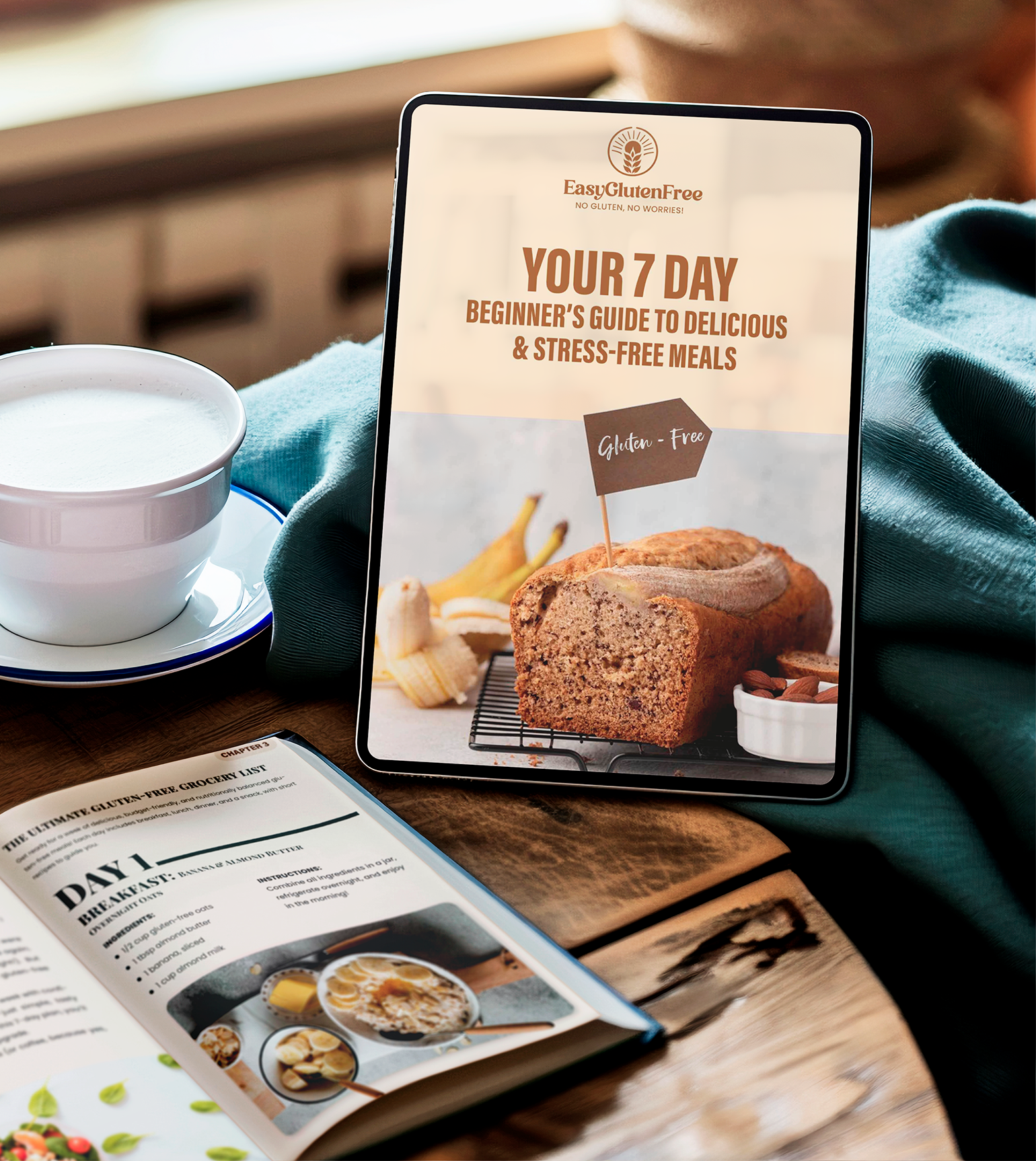
Download Our Free Gluten-Free Starter Guide
- 7-day meal plan
- shopping list
- Tips & 3 beginner-friendly recipes
Introduction
At home, you control every ingredient, pan, and cutting board. Out in the world? Not so much. Travel, work lunches, and dinners with friends can suddenly feel stressful when you’re gluten-free. Will there be anything safe to eat? Will staff understand what you mean by “gluten-free”? Will you spend the night feeling unwell because of one tiny crumb?
The good news is you don’t have to choose between staying safe and actually having a life. With a few smart strategies, you can confidently navigate airports, fast-casual spots, fine dining, and even that random café you found on a road trip. The key is knowing how to research ahead, what questions to ask, and when to lean on tools and products that give you extra peace of mind.
This guide walks you through practical, repeatable steps for gluten-free travel and eating out—so you can say yes to more invitations, more adventures, and more great meals, without constantly worrying about gluten sneaking onto your plate.
1. Planning Gluten-Free Travel Before You Leave
If you’re gluten-free, the most important part of eating out actually happens long before you sit down at a table. A little research turns an anxious trip into a relaxed, “I’ve got this” experience.
Research gluten-free options in advance
Start by looking up restaurants and grocery stores near where you’ll be staying. Focus on:
- Restaurants with dedicated gluten-free menus – These often show that the staff has at least some training and systems in place.
- Cuisines that are easier to customize – Think grilled meats, rice-based dishes, salads, and bowls over heavy bread and pasta spots.
- Chains you already trust – Familiar menus and known protocols can be very comforting when you’re tired or jet-lagged.
Bookmark your top choices in Google Maps and label them “safe-ish” or “worth calling.” This becomes your personal gluten-free map for the trip.
Call or email ahead
Menus rarely tell the whole story. Calling ahead gives you a feel for how a restaurant actually handles gluten-free requests. When you call, you might say:
“Hi, I eat strictly gluten-free and am sensitive to cross-contact. Do you have options that can be prepared safely, and how do you usually handle that in the kitchen?”
Pay attention to whether the person sounds confident and specific or vague and unsure. Clear, practical answers are a very good sign.
Choose your accommodation strategically
When possible, look for:
- Rooms with a kitchenette or at least a fridge – Being able to store safe snacks or simple meals is a game changer.
- Proximity to supermarkets – Many larger grocery stores now carry gluten-free bread, crackers, and even frozen meals.
- Breakfast that isn’t your main plan – Hotel breakfasts are often bread-heavy and high risk for cross-contact, so think of them as a bonus, not your safety net.
Pack a small gluten-free travel kit
A simple kit can save you from “there is literally nothing I can eat here” moments. Consider including:
- Portable snacks like nuts, bars labeled gluten-free, or rice cakes
- Small packets of nut butter or shelf-stable hummus
- Instant gluten-free oatmeal or soup cups (for hotel kettles or microwaves)
- Your favorite gluten-free crackers or bread, especially when traveling abroad
Think of this as your “Plan B” so you never feel forced to roll the dice on questionable food just because you’re hungry.
2. Smart Tools and Products That Make Eating Out Safer
Even with great planning, eating out always involves a little uncertainty. That’s where supportive tools and products come in—they can’t replace good communication with restaurant staff, but they can add another layer of information and confidence.
Build your personal “safety toolkit”
Consider traveling with a few items that make gluten-free life on the go easier:
- Compact gluten-free snacks for flights, long meetings, tours, or unexpected delays.
- Travel containers and cutlery so you’re not relying on shared office or hotel kitchen items.
- Translation cards if you’re visiting a country where you don’t speak the language—helpful for explaining gluten-free needs clearly.
These simple tools help you manage the situations that restaurants and cafes can’t always control.
Why on-the-spot testing appeals to many gluten-free diners
Some people like having a way to quickly check food when they’re unsure about ingredients or preparation. This can feel especially reassuring when:
- You’re traveling somewhere new and don’t know how well gluten-free is understood.
- You’re eating at social events where you didn’t control the menu.
- You’re still learning how your own body responds and want more data about what you’re eating.
Everyone’s comfort level is different, and the goal is always the same: less guesswork, more confidence.
Use tools as one layer of protection—not your only one
Even the best products are just part of a bigger safety strategy. Clear communication with staff, smart menu choices, and avoiding obvious cross-contact risks should still be your first line of defense. Think of tools as helpful assistants—not magic shields.
Nima gluten sensor test
These single-use capsules pair with the Nima Sensor to help users test foods for gluten on the spot. Perfect for travelers, researchers of their own digestive reactions, or anyone who just doesn’t trust that café’s “gluten-free… we think?” answer. A reliable, quick-gluten-detection option that empowers people who want data—not guesswork.

3. How to Talk to Restaurants About Being Gluten-Free
Learning how to clearly—but kindly—advocate for yourself is one of the most powerful gluten-free skills you can build. The more comfortable you get with the conversation, the less stressful eating out becomes.
Be clear about what you need
Instead of just saying “I’m gluten-free,” try something more specific like:
“I need to eat strictly gluten-free, including avoiding cross-contact with gluten-containing foods. Can you help me find something that can be prepared safely?”
This tells staff that it’s not a preference or a low-carb diet—it’s an important safety need.
Ask concrete, practical questions
Specific questions give you better information than general ones. For example:
- “Do you use a dedicated fryer for gluten-free items, or is it shared with breaded foods?”
- “Is there a separate area or clean pan where my meal can be prepared?”
- “Are sauces and marinades made in-house, and do any contain flour or soy sauce with wheat?”
The more practical the question, the easier it is for staff to give you a meaningful answer.
Read the room and know when to pivot
If answers feel unsure—“I think so,” “Probably,” or “We’ve never had a problem before”—take that as useful information. It might be time to choose a simpler dish (like a plain grilled protein and salad) or decide that this particular spot just isn’t the best fit for a gluten-free meal.
Simple scripts you can reuse
It can help to have a few go-to phrases ready, such as:
- “What are the safest gluten-free options on your menu that you’re most confident in?”
- “Could you please let the kitchen know this is a gluten-free order and needs to avoid cross-contact?”
- “I’m happy to keep it really simple if that makes it easier for the kitchen.”
Most staff genuinely want to help; clear, calm communication makes it easier for everyone.
Recipe Inspiration
Try these gluten-free staples loved by thousands:



4. Safer Choices at Common Restaurant Types
Some restaurant styles are easier to navigate than others. Knowing where the biggest gluten risks tend to hide can help you order with more confidence.
Italian restaurants
Italian food can be both wonderful and challenging. Many spots now offer gluten-free pasta or pizza bases, but cross-contact can be a concern.
- Ask if gluten-free pasta is cooked in clean water with clean utensils.
- Pizza is higher risk if it’s baked in the same oven and handled with the same peels as regular pizza.
- Consider simpler dishes like grilled meats, salads (without croutons), or risotto—if confirmed gluten-free.
Asian-inspired restaurants
The big watch-outs here are soy sauce, marinades, breaded items, and shared woks or fryers.
- Look for menus that specifically call out gluten-free tamari or gluten-free soy sauce.
- Ask if they can cook your dish in a clean pan or wok with plain rice.
- Skip anything tempura, breaded, or fried in a shared fryer.
Mexican and Latin restaurants
Tacos and rice bowls can be great gluten-free options, but only if the restaurant can keep gluten-containing items away.
- Confirm that corn tortillas are 100% corn and not a corn-wheat blend.
- Ask whether chips are fried in a dedicated fryer, separate from flour tortillas or breaded foods.
- Watch out for flour-based thickeners in sauces and mole.
Fast casual and build-your-own bowls
These spots can be convenient, but the open topping bars and shared utensils can mean a lot of crumbs and splashes.
- Ask staff to change gloves and use clean utensils for your order.
- When possible, request ingredients from fresh containers in the back.
- Stick to naturally gluten-free bases like rice, salad greens, or potatoes.
Bakeries and coffee shops
Even when gluten-free pastries are offered, the overall flour-in-the-air environment can be tricky.
- Pack your own baked goods if you’re especially sensitive.
- If you do order, ask if gluten-free items are wrapped or stored separately.
- For drinks, check flavored syrups and toppings for gluten-containing ingredients.
5. Travel Day Survival: Airports, Road Trips, and Hotels
Travel days are when even the best intentions can fall apart—early alarms, delays, and limited options can leave you staring at a vending machine full of wheat. A bit of preparation keeps you in the driver’s seat.
Airports and train stations
Airports vary wildly in their gluten-free friendliness, so it’s wise to assume options might be limited.
- Eat a solid, safe meal before heading out whenever you can.
- Pack more gluten-free snacks than you think you’ll need—delay-proof fuel.
- At cafes and chains, look for clearly labeled packaged items rather than build-your-own sandwiches.
If you’re flying internationally, check restrictions on what foods you can bring, but sealed, packaged snacks are usually easiest.
Road trips
Road trips actually offer a surprising amount of flexibility when you plan them well.
- Use maps to bookmark gluten-free-friendly stops along your route.
- Pack a small cooler with fresh fruit, cut veggies, cheese sticks, gluten-free wraps or sandwiches, and drinks.
- Keep a “dry pantry” bag in the car with crackers, nuts, seeds, and bars.
This way, gas stations become bonus snack stops, not your only option.
Hotels and rentals
Where you stay can make or break how easy it feels to stay gluten-free on a trip.
- In hotels: Use the mini-fridge for safe foods, and don’t rely too heavily on shared toasters or buffets.
- In rentals: If you plan to cook, you may want to bring or buy a few basics like a sponge, cutting board, and foil to create a clean surface.
- Do a quick grocery run when you arrive to stock up on gluten-free breakfast and snack options.
Give yourself permission to keep it simple
On busy travel days, it’s completely fine if your meals look more like a picnic than a three-course event. The goal is to stay nourished and comfortable first; the fancy meals can come once you’re settled and have time to choose safer spots.
Key Takeaways
- A bit of advance planning—researching restaurants, calling ahead, and packing snacks—dramatically reduces gluten-free travel stress.
- Tools and products can add an extra layer of information and confidence when eating out, especially in unfamiliar places.
- Clear, specific communication with restaurant staff is one of the most powerful ways to stay safely gluten-free.
- Understanding common risks at different types of restaurants helps you choose simpler, safer dishes when needed.
- Airports, road trips, and hotels are much easier to navigate when you bring your own gluten-free backups and keep expectations flexible.
Take the Next Step in Your Gluten-Free Journey
- Download the Free EGF Starter Guide
- Try our Gluten-Free Planner to simplify your week
- Explore our growing recipe library
You don’t have to navigate the gluten-free lifestyle alone, we are here to make it easier every day.
Category: Lifestyle