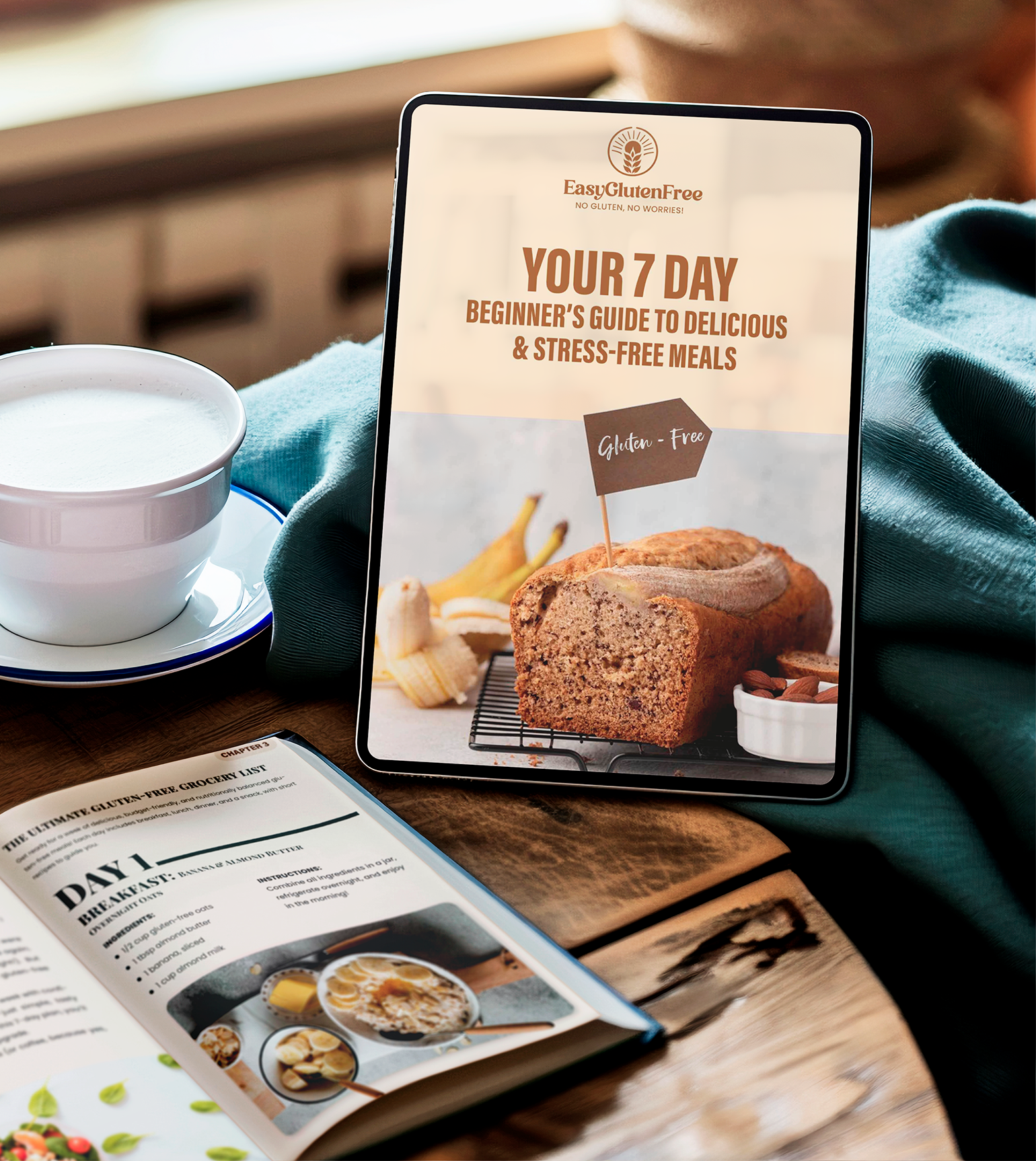
Download the Free Guide to Confident Gluten-Free Testing (at Home & On the Go)

Gluten Testing 101: How to Check Foods, Labels, and Your Own Reactions
If you’ve ever stared at a menu, a “gluten-free” label, or a mystery casserole at a family party and thought, “But… is it really safe?”, this guide is for you. We’ll walk through smart, realistic ways to test for gluten—from reading labels like a pro to using tools such as the Nima gluten sensor test—so you can eat with more confidence and less second‑guessing.
Download Our Free Gluten-Free Starter Guide
- 7-day meal plan
- shopping list
- Tips & 3 beginner-friendly recipes
Introduction
Navigating a gluten-free life today is equal parts empowering and overwhelming. On one hand, there are more gluten-free products, menus, and resources than ever before. On the other, it sometimes feels like you need a science degree, a magnifying glass, and a lie detector test just to figure out whether your next meal is truly safe.
Gluten testing doesn’t have to mean living in fear or obsessively Googling every single bite. Instead, think of it as building a practical toolbox: label-reading skills, kitchen habits that reduce cross-contact, and, if you choose, technology like the Nima gluten sensor test to give you additional data in tricky situations. Each tool plays a different role—and you get to decide which ones fit your lifestyle, budget, and comfort level.
This article will walk you through the main ways people “test” for gluten in real life: understanding labels, managing your home and restaurant meals, using portable testing devices, and tracking your own body’s reactions. You’ll come away with a calmer, more systematic approach so that instead of guessing or stressing, you’re making informed, confident choices day after day.
1. Understanding What “Gluten-Free” Really Means
Before you think about gadgets or special tests, it helps to be very clear on what “gluten-free” actually means in everyday products. Regulations vary by country, but in many places (including the U.S. and EU), “gluten-free” on a label generally means the food contains less than 20 parts per million (ppm) of gluten. This level is considered safe for most people with celiac disease and gluten sensitivity, though individual tolerances can differ.
That number—20 ppm—sounds technical, but what matters is this: a food can be legally labeled “gluten-free” and still contain tiny traces of gluten. For most people who need to avoid gluten, that’s okay. But if you’re highly sensitive or reacting even when you’re “doing everything right,” understanding this nuance can explain a lot.
Decoding Labels Like an Expert
Labels are your first line of defense. Instead of quickly scanning for the big scary word “wheat,” take a calm, step-by-step approach:
- Start with any gluten-free claim. If the package says “gluten-free,” that’s a good sign—but don’t stop there. It doesn’t tell you about manufacturing practices or potential cross-contact.
- Check the ingredient list. Look for obvious gluten sources: wheat, barley, rye, malt, brewer’s yeast, and triticale. Also be cautious with ingredients like “malt flavoring” or “malt vinegar,” which almost always come from barley.
- Look at “Contains” and “May Contain” statements. “Contains wheat” must be declared in many regions when wheat is present. “May contain wheat” or “made in a facility with wheat” are advisory statements about potential cross-contact; some sensitive people choose to avoid these, others tolerate them well.
- Learn the safe starches. Corn, rice, potatoes, quinoa, buckwheat, and oats labeled gluten-free are typically safe. When in doubt, choose products that are certified gluten-free by a trusted organization.
Cross-Contact vs. Ingredients
Two very different things can cause gluten exposure:
- Ingredients: gluten is actually part of the recipe (e.g., wheat flour, barley malt).
- Cross-contact: gluten sneaks in through shared equipment, prep surfaces, or utensils.
Why does this matter? Ingredient gluten is usually easier to spot on labels or menus. Cross-contact is invisible and often the reason someone reacts to food that “should” be safe. That’s where good kitchen habits, smart restaurant questions, and sometimes testing tools come into play.
Once you’re comfortable with the basics—what gluten is, where it usually hides, and how labels work—you’re in a much better position to decide whether extra testing options are worth adding to your personal toolkit.
2. Using Tools Like the Nima Gluten Sensor Test
For many gluten-free eaters, there comes a moment when labels and questions don’t feel like enough. Maybe you travel a lot, eat out frequently, or have had a few “but it was supposed to be gluten-free” reactions that shook your confidence. That’s where portable testing tools can feel reassuring.
Devices designed to detect gluten in food allow you to test small samples on the spot. Instead of relying only on what a server, chef, or package says, you get an extra layer of information to support your decisions. This can be especially helpful in situations like shared fryers, sauces with mysterious thickeners, or international travel where language barriers make ingredient lists harder to interpret.
It’s important to understand that any food-testing device has limits: you’re only testing the small bite you put into the capsule or sample area, not the entire meal. Results also don’t replace your own judgment about obvious risks such as shared cutting boards or flour dust in the air. Think of these tools not as a magic shield, but as one more data point alongside your label-reading skills, questions, and personal experience.
Some people use devices regularly, especially during the early years of a gluten-free diagnosis or when building trust with certain restaurants. Others reserve them for “high-risk” moments—like buffets, social gatherings, or street food—where the level of unknowns feels higher. And some never use them at all, choosing instead to rely on strict avoidance, home cooking, and careful restaurant selection. All of these approaches can be valid; it’s about what helps you feel safer and more at ease.
Nima gluten sensor test
These single-use capsules pair with the Nima Sensor to help users test foods for gluten on the spot. Perfect for travelers, researchers of their own digestive reactions, or anyone who just doesn’t trust that café’s “gluten-free… we think?” answer. A reliable, quick-gluten-detection option that empowers people who want data—not guesswork.

3. Everyday Strategies to Minimize Gluten Exposure
Whether you use a gluten-testing device or not, your daily habits are where most of your safety actually comes from. The good news: once you set up a few simple systems at home and learn how to navigate restaurants, things feel far more manageable.
Creating a Safer Gluten-Free Kitchen
If you share a kitchen with gluten-eaters, think in terms of dedicated zones and tools. Some practical, low-drama steps include:
- Separate storage: Keep your gluten-free breads, flours, and snacks on a separate shelf or bin, clearly labeled.
- Dedicated tools for high-risk items: Use your own toaster, wooden spoons, cutting boards, colanders, and spatulas. Porous or scratched items can trap gluten.
- Color coding: Assign a color (like bright blue or green) to your gluten-free utensils and containers so everyone in the household recognizes them quickly.
- Wipe-down routine: Before cooking, wipe counters and handles, and wash hands thoroughly. A 30-second wipe can prevent a 3-day flare-up.
- Family “house rules”: For example, no double-dipping knives in shared butter, mayo, or jam, and no flour dust near gluten-free cooking areas.
These steps reduce the need to second-guess every single meal at home. Over time, they become automatic, and everyone in the household understands how to support your needs.
Smarter Restaurant and Travel Choices
Eating away from home will always carry a bit more uncertainty, but a few habits can significantly lower your risk:
- Research before you go. Look up menus online, read recent gluten-free reviews, and check whether the restaurant has separate prep areas or protocols.
- Call ahead when possible. A quick conversation asking how they handle gluten-free orders can tell you a lot about their awareness and training.
- Be specific with questions. Instead of asking, “Is this gluten-free?” try, “Is this cooked in a shared fryer?” or “Is there flour used on the grill or pan?”
- Skip high-risk items. Buffets, shared fryers, and “dusting with flour” situations are classic trouble spots.
- Have a backup plan. Bring a small snack bar or nuts just in case the options aren’t safe when you arrive.
Using a tool like the Nima gluten sensor test in these situations can be an additional layer of information, but the strongest foundation is still your own knowledge, questions, and boundaries.
Recipe Inspiration
Try these gluten-free staples loved by thousands:



4. How to Listen to Your Body’s Signals
Devices, labels, and protocols are helpful, but your own body is still one of the most important “testing tools” you have. The challenge is that gluten reactions can be delayed, subtle, or easily confused with stress, hormones, or other foods. Instead of guessing, try to approach it like a gentle, ongoing experiment.
Track Patterns Without Obsessing
Consider keeping a simple symptom and food log for a few weeks. It doesn’t need to be perfect—just enough to help you connect dots:
- Write down what you ate and roughly when. Focus especially on foods eaten outside your controlled home environment.
- Note any symptoms and timing. Digestive discomfort, headaches, fatigue, skin changes, or brain fog can all be patterns worth noticing.
- Look for repeat offenders. If the same restaurant, product, or scenario pops up before symptoms more than once, it may deserve extra scrutiny.
Over time, this kind of gentle tracking can help you distinguish between “one-off fluke” and “this situation or product probably doesn’t work for me.”
Pairing Your Observations with External Data
Some people find it helpful to combine their body’s feedback with tools and tests. For example, if you often react to a certain type of meal, you might test a sample with something like the Nima gluten sensor test the next time you eat it. If results and symptoms line up, that’s useful information. If they don’t, it may nudge you to explore other possible triggers, ingredient sensitivities, or lifestyle factors.
The goal is not to live in fear of every crumb but to gradually build a picture of what genuinely works for you. When you trust your process—your habits, your questions, and your understanding of your body—each reaction feels less like a mysterious setback and more like data you can use.
5. Building a Long-Term, Low-Stress Gluten-Free Routine
Living gluten-free is a marathon, not a sprint. Your approach to “testing” for gluten will likely evolve over time. At first, you might lean heavily on detailed tracking, lots of restaurant questions, and maybe even regular use of tools like the Nima gluten sensor test. As you gain confidence—finding trusted brands, safe go-to restaurants, and reliable recipes—you may discover you don’t need to test as often.
Designing Your Personal Safety Plan
It can be helpful to define what “good enough” safety looks like for you in different situations. For example:
- At home: Dedicated tools, clear family rules about cross-contact, and a shortlist of trusted staple products.
- Restaurants you know: A usual order you feel good about, questions you always ask, and staff who understand gluten-free needs.
- New or higher-risk places: Extra questions, more cautious ordering, bringing a backup snack, and, if you choose, using a portable testing tool.
Writing this out—even briefly—can take a lot of pressure off. Instead of reacting in the moment, you’ve already decided in advance how you’ll handle different levels of risk.
Staying Flexible as Life Changes
Your needs may shift over the years. Travel, pregnancy, kids, work stress, or other health changes can affect both your sensitivity and your tolerance for risk. Give yourself permission to adjust. Maybe you rely on testing devices more during a busy travel season, then relax back to your usual habits once you’re home. Maybe you become more selective about restaurants or invest more time in batch cooking.
What matters most is that your gluten-free life feels sustainable. You deserve both safety and joy at the table. By combining knowledge, practical routines, and the right tools for your situation, you can move away from constant worry and toward a calmer, more confident way of eating—one meal at a time.
Key Takeaways
- “Gluten-free” labels typically allow up to 20 ppm of gluten, so understanding what that means and how to read ingredient lists is your first line of defense.
- Cross-contact in shared kitchens, restaurants, and factories is a major source of accidental gluten exposure, but simple systems and clear questions can greatly reduce your risk.
- Tools like the Nima gluten sensor test can provide on-the-spot information about specific food samples, acting as an optional extra layer of data alongside your existing habits.
- Tracking your own symptoms and noticing patterns helps you combine external information with your body’s feedback to make smarter, more personalized choices.
- A low-stress, long-term gluten-free routine blends knowledge, practical kitchen and restaurant strategies, and any testing tools you choose to use into a lifestyle that feels both safe and sustainable.
Take the Next Step in Your Gluten-Free Journey
- Download the Free EGF Starter Guide
- Try our Gluten-Free Planner to simplify your week
- Explore our growing recipe library
You don’t have to navigate the gluten-free lifestyle alone, we are here to make it easier every day.
Category: Gluten-Free Basics