Author name: thinkgroupemedia

Blog

“Gluten-Free Holiday Survival Guide: Navigating Festive Feasts with Ease”

Once upon a chilly winter’s day, as I found myself wandering down a market aisle teeming with gluten-loaded holiday treats, a sudden realization dawned on me. The welcoming scent of cinnamon and freshly baked goods was ever-present, but the holidays can be an especially challenging time for those of us on a gluten-free diet. Let me tell you—it’s not easy to bypass all those inviting pies and sugar cookies, especially when they’re practically synonymous with festive cheer. But who says you can’t enjoy the holidays, gluten-free style? Now, all the seasoned gluten-free warriors out there, I know you’ve got this covered. But for our gluten-free newbies, it may seem unfair that your first gluten-free holiday season comes with a buffet of adjustments. A new diet can be a tall order to handle amidst the holiday hustle and bustle, holiday meals, and festive treats—it’s like being thrown into the deep end. Always remember, though, you haven’t said goodbye to delicious holiday meals—you’ve just begun a journey to discovering new alternatives. It’s time to rewrite the rules on holiday indulgence! So, buckle up my gluten-free fellows, let’s dive into a fun, flavorful, and festive world—one where gluten has no dominion. Now, where to start? Having penned what feels like a hundred articles navigating the gluten-free lifestyle, I often find myself circling back to the basics for guidance. Here’s my golden nugget of wisdom: Always have a game plan, especially when it comes to meals. A quick flashback here (you didn’t think you’d get through this blog post without a bit of my personal anecdotes, did you?)… Shortly after I started my gluten-free journey, I attended a family holiday dinner without a game plan. Spoiler alert: It ended in a growly stomach and excessive amounts of wine (because, thankfully, that’s gluten-free). But really, hindsight is 20/20. And that brings me to the essence of today’s blog post. Let’s explore how we can approach the holiday season armed with a strategic plan, some delicious recipes, and newfound confidence that yes, you can enjoy the holidays, and no, you don’t have to compromise on taste, tradition, or the festive spirit. To start with, let’s discuss prepping for holiday meals. More often than not, holiday meals are family affairs, with dishes that have been handed down through generations—a testament to family traditions and love. However, most of these meals are not designed for a gluten-free diet. But don’t despair! One of my favorite posts, “Navigating Family Meals When You’re the Only One Gluten-Free,” provides some fantastic advice on this topic. Essentially, it’s all about communicating and educating. Cooking and baking are such integral parts of holiday festivities. If you’re attending a family function or a friends’ potluck, offer to bring a dish. Not only are you assured of having something delicious that you can eat, but you also get a chance to show off your gluten-free cooking prowess. This is where I underline (and probably should be shouting out loud) that gluten-free food does not have to be boring or bland. I’ll point you towards another of our blog posts, “Gluten-Free Cooking: Simple Swaps for Your Favorite Recipes.” Trust me, with some clever swaps and a sprinkle of creativity, you’ll have everyone lining up for seconds! Holiday baking is another delightful tradition, and it’s one you certainly don’t have to sacrifice simply because you’re going gluten-free. But it can certainly seem daunting. What do I use instead of wheat flour? Are there gluten-free alternatives that won’t compromise the taste or texture of my baked goods? Breathe out a sigh of relief, because the answer is a resounding ‘Yes’ to both! Let’s walk through a little Gluten-Free Baking 101. When it comes to gluten-free baking, the game-changer is your flour. Investing in a high-quality gluten-free all-purpose flour blend is crucial. They’ve been masterfully crafted to mimic regular flour’s properties, so your baked goods still come out delightful. Not to mention, there are various options available now: from rice flour to amaranth flour, to blends filled with buckwheat, chickpea, or even coconut! It’s a whole, exciting world waiting to be explored. Did I hear someone say cookies? Yes, let me assure you that gluten-free cookies can be just as divine as the regular kind—crispy, chewy, soft, or sandy—however you like them, we’ve got you covered. It’s all about picking the right combination of gluten-free flours and adjusting liquids and binders to get that perfect bite. Enough talk, right? Want some hands-on action? Check this out – our “Cracking the Code on Gluten-Free Baking” blog post is a gem. I often refer back to it myself for useful tips and tricks—it’s like a little gluten-free baking bible, always there to guide you towards your next baking victory. And Voila! Just like that, you have a toolbox ready at your disposal for your first (or next) gluten-free holiday season. It may seem overwhelming at first, but take it from someone who’s been there, done that—it just takes a little bit of planning, a whole lot of experimenting, and heaps of fun. Remember, it may be a gluten-free diet, but it’s certainly not a taste-free or fun-free one. Embrace it, live it, and enjoy it. The holidays are all about spreading cheer, warmth, and love. Don’t let your diet take away from that. Instead, let it become a part of the magic, the tradition, and the joy of the season! And here’s the thing: the holiday season comes and goes. But the experience, knowledge, and confidence you gain during this time will serve you for the rest of your gluten-free journey. So, put on your aprons, dust off your oven mitts, and gear up, my gluten-free fellows – the festive season awaits! Happy Holidays to all. May your meals be delicious, your cookies be gluten-free, and your spirits be high! **Category: Gluten-Free for Beginners**
Blog

Embracing the Gluten-Free Rhythm: A Beginner’s Guide

You know how there’s always that one song that can transport you back to a particular moment or feeling? For me, gluten-free living had its own soundtrack, especially in the beginning. The “song” was a combination of “am I doing this right,” “I miss my comfort foods,” and even a touch of “why can’t my life be normal?” And just like a well-loved song, the emotions tied to coming to terms with a gluten-free life can be equally overwhelming and full-fledged. But over time, I found that embracing this “gluten-free rhythm” has allowed me to lead a happier, healthier life, humming a fresh tune of vivacity. I settled into a beautiful harmony of understanding and managing my dietary needs. Now, I want to take you through this melody, step-by-step. Let’s start, where else, but at the beginning. Perhaps you’ve found that your body isn’t quite content with gluten, or maybe you’re experimenting with a gluten-free diet for other health reasons. Either way, coming to terms with this new reality is like learning an unfamiliar dance. Our minds are hardwired to resist change; we cherish the comfort of our regular routines and familiar foods. This was me when I first started. I still remember cringing at the sight of the hollow-looking gluten-free bread or cursing my fate at social gatherings where I unwillingly passed the decadent cakes and warm, buttery croissants. Fast forward to now, my dance with gluten-free living has evolved into a graceful ballet. The one thing that truly helped was understanding why my body was reacting the way it was. Knowledge, as they say, is power. Here, our previous blog post on [Understanding Gluten and How it Affects Your Body](link here) can prove to be a helpful starting point. However, change doesn’t happen overnight. It’s gradual. It’s about picking yourself up every time your steps falter, brushing off the self-doubt, and retuning yourself to the gluten-free rhythm. It’s about acknowledging that it’s okay to have off-beat days when you miss the “good old gluten days.” For such instances, I always found my peace by treating my palate to a indulgent treat without any gluten guilt. Our recipe of [Flourless Double Chocolate Brownies](link here) can be the perfect gluten-free comfort treat on a challenging day. The next part of our journey with the gluten-free rhythm is in the supermarket aisles. Reading labels is now your new hobby and gluten, your elusive enemy. You know it loves to play hide-and-seek in the most unexpected of ingredients. Well, fret not! Bust out your Sherlock Holmes hat and your magnifying glass and join us in this game. We have a comprehensive guide on [Decoding Gluten-Free Labels](link here) to help you chase gluten-free clues in the grocery store lanes. And finally, we reach the chorus of our gluten-free life tune – the Social Tango. Personally, I found this the hardest step to master in the dance. How to navigate birthday parties, work lunches, and simply eating out without compromising your health or feeling like an outsider? Here, communication is your lifeline. Let the people around you know about your dietary needs. Most restaurants are more than willing to cater to you if you give them a heads-up. If you’re going to be a guest, politely informing your host beforehand about your gluten sensitivity can avoid any awkward moments at the dinner table. While it’s true that the gluten-free rhythm may encompass a few minor hiccups and tricky footwork, remember that every dance becomes smoother with practice. I can assure you that once you have accustomed yourself to this new tune, you will not only lead a healthier and harmonious life but also open doors to a world of unique flavors and dishes you might never get to enjoy otherwise. So, keep your dancing shoes on and move with conviction to the tune of gluten-free living – a dance that is as remarkable as the dancer themselves. **Category: Gluten-Free for Beginners**
Blog

“Gluten-Free Breakfast Bliss: A Morning Guide for Beginners”

Easing into the morning as my dear friend Alice usually does — with a steaming cup of earthy black tea and a soft blanket draped over her lap — may seem like a picture-perfect snapshot of tranquility. But not too long ago, Alice found herself in quite the quandary. She noticed, with growing concern, an unpleasant reaction to her beloved morning gluten-loaded toast. Do you know who came to the rescue? Yours truly, the gluten-free guide. After all, it’s what I’m here for! To say Alice was devastated at the prospect of giving up her morning routine would be an understatement. However, armed with the right alternatives, she not only regained her inner peace but also found fulfillment in a new, healthier and gluten-free lifestyle. So today, we’re going to traverse through the exciting journey of replacing gluten-laden breakfasts with sumptuously wholesome gluten-free ones. Get your cozy pajamas and warm tea ready, because you are in for a treat! What could be better than waking up to the smell of fresh, warm pancakes? Nothing really, unless those delightful griddle cakes threaten to disrupt your digestive peace for the rest of the day. With this simple recipe for [fluffy gluten-free pancakes](blog-list-link), your breakfast routine needn’t hold any cruel surprises. The secret to their matchless fluffiness lies in gluten-free all-purpose flour and a generous dash of baking powder! Trust your gluten-free guide here, they’re just as delightfully fluffy and mouthwateringly delicious as their gluten-loaded counterparts. So why not give them a whirl? Now I know not everyone is a pancake person. So for all you lovers of crispiness, let’s move on to a family favorite – waffles. Oh, that crumpled brow! I see what you’re thinking, my friend. Waffles, they have to be full of gluten, right? Well, not any more – Enter [gloriously gluten-free waffles](blog-list-link). These breakfast darlings are simply heavenly with their crisp edges and soft, airy interiors. And believe you me; they are as gluten-free as can be! Made with gluten-free oat flour and a magical blend of baking soda and apple cider vinegar, these waffles will make your mornings feel like a cheerful celebration free from gluten worries. One question I often encounter in my gluten-free journeys is, “Claire, what about all the nutrients that I lose when going gluten-free?” And to that, let’s dive into a bowl of piping hot quinoa porridge. Gluten-free grains like quinoa are nutrient powerhouses, packing in everything from a healthy dose of protein, fiber, and essential minerals. When simmered in your choice of dairy-free milk and sweetened with a touch of honey, it makes for a warm, comforting, and, most importantly, nutrient-dense way to kick-start your day. For our egg lovers out there, fret not! Eggs are naturally gluten-free and are perfect for a breakfast boost. Imagine scrambled eggs on a slice of gluten-free toast or having it poached and ladled over a bed of sauteed spinach. Whichever way you prefer, eggs promise a filling and balanced start to your day. Don’t forget; a gluten-free lifestyle does not mean bidding farewell to your favorite morning beverages. Coffee, teas, and most fruit juices are naturally gluten-free. However, just to be on the safe side, always remember to check the labels while buying ready-made juices or tea blends. And finally, for those mornings when you are in a bit of a hurry, gluten-free cereals can be your best ally. Just pour the cereal into a bowl, top it up with your favorite dairy-free milk, add a handful of fruits or nuts if you like, and voila! You’ve got a quick, tasty, and healthy gluten-free breakfast ready in no time. Embracing a gluten-free lifestyle, especially when it comes to your cherished morning rituals, doesn’t have to feel like a sacrifice. It’s more of an exciting exploration into a world of flavors and ingredients that offer a unique harmony of taste and nutrition. And since you now have a whole spread of scrumptious gluten-free breakfast ideas to enjoy, your mornings are sure to be just as delightful – sans the gluten. Remember, embracing a gluten-free lifestyle is just as much about your wellbeing as it is about expanding your culinary horizons. And who better to guide you through this delightful journey than me – your trusted voice, Claire Bennet, leading the way through your easy gluten-free life. **Category: Gluten-Free for Beginners**
Blog

“Gluten-Free Globetrotting: Exploring World Cuisines Without Gluten”

As your personal gluten-free lifestyle guide, I’m always eager to bring you new and exciting topics. Today, we’ll be diving into the world of gluten-free global cuisines and exploring how you can enjoy a flavorful trip around the world, right from your kitchen, without worry of gluten-laden ingredients. Before we begin, I’d like to remind everyone that while gluten-free adaptations of traditional recipes are always possible, it’s crucial to always double-check labels and make sure you fully understand substitutes and gluten-free versions of common ingredients. What’s safe for the gluten-sensitive or celiac person in one part of the world might not be the safe in another because labeling standards and manufacturing processes can vary. Alright, let’s grab our culinary passports and get started. We’ll be making whistle-stops in Italy, India, and Japan – countries known for their distinct and tantalizing cuisines but also often associated with gluten-filled dishes such as pasta, roti, and soy sauce. Fear not, because we’re here to break down how you can enjoy each cuisine while maintaining your gluten-free lifestyle. First up, we have the land of pasta and pizza: Italy. Now, I know what you’re thinking. Italian food is notorious for dishes centered around wheat products. But did you know that Italy is also recognized for welcoming gluten-free bloom, popularized largely due to its increased understanding of celiac disease? The secret to enjoying gluten-free Italian food lies in selecting the right pasta substitutes and mastering how to make gluten-free pizza crust. For pasta, there are several gluten-free options available in the market today such as those made from corn, rice, or quinoa – just make sure to check the labels to ensure they are certified gluten-free. In terms of pizza, we’ve got a comprehensive guide on making a perfect gluten-free pizza crust right at home. For sauces and accompaniments, fresh vegetables, meats, and naturally gluten-free cheeses are your best friends. From Italy, let’s take a culinary flight to India. The Indian diet is predominantly gluten-free, except for a few grains like wheat, rye, and barley. Native Indian grains like millets, rice, and sorghum are naturally gluten-free and at the heart of many traditional Indian dishes. Rich in flavor and filled with spices, Indian food, if carefully chosen, can be a delight for those on a gluten-free diet. Beware of hidden gluten, especially in sauces and packaged food items. Freshly cooked meals, wherever possible, are always the safest bet. From flavorful biryanis made with aromatic long-grain rice to curries thickened using chickpea flour, Indian cuisine will leave you satisfied and brimming with delight over its diversity of flavors. Need inspiration for an Indian night? Try our hearty Gluten-Free Chana Masala. Remember to serve with plain rice or gluten-free grain of your choice to keep things gluten-free. Now, for our last stop- Japan! The land of sushi, tempura, and tasty katsu curry. One would imagine it to be a haven for gluten-free eaters, but traditional Japanese cuisine often incorporates hidden gluten sources, especially in the form of soy sauce, which is a primary seasoning agent in many Japanese dishes. Here’s the good news – there’s a gluten-free version of soy sauce known as Tamari. Much like soy sauce, it adds the right amount of umami pop but without the gluten! Use Tamari to make gluten-free sushi, stir-fries, marinades, and soups. Remember to request Tamari the next time you enjoy Japanese cuisine at a restaurant or substitute it in recipes at home. Do watch out for hidden gluten in battered and breaded items like tempura and katsu. A great gluten-free Japanese dish to try? Our simple and delicious Gluten-Free Yakitori Chicken recipe. As we’ve seen today, going gluten-free doesn’t mean you have to bid adieu to your favorite global cuisines. Through the careful selection of ingredients, mindful cooking, and the wealth of naturally gluten-free alternatives, one can savor the flavors of the world, one gluten-free bite at a time. It just takes a little creativity, a sprinkle of knowledge (like knowing to swap out soy sauce for Tamari), and a pinch of continued learning to navigate the beautiful world of global cuisines, sans gluten. Remember, it’s always best to consume fresh, unprocessed foods wherever possible, but in the event you’re buying packaged foods, remember our handy guide to understanding gluten-free labels. Keep exploring, keep learning, and remember, the gluten-free life is abundantly delicious and wonderfully diverse! **Category: Health & Wellness**

Blog

“Embracing Gluten-Free Living: Activities, Adventures, and Adapting”

If you’re keen on making gluten-free a lifestyle rather than just a dietary choice, you might have asked yourself: “What activities fit best with a gluten-free lifestyle, and how can I ensure that these pastimes cater to my dietary needs?” Luckily, living gluten-free does not mean giving up your social life or hobbies, folks! Your health condition should not change your habits, right? First, let’s get this out of the way: there are countless activities that are compatible with a gluten-free lifestyle. From hiking, cycling, yoga, painting, reading to knitting — whatever floats your boat. However, the tricky part comes when these activities involve food — particularly, when dining out or attending social functions becomes part of your routine. But don’t feel despondent just yet; there’s plenty of ways to engage in these gatherings without compromising your gluten-free lifestyle. When it comes to dining out, remember – you are your own advocate! Before you step out for a meal, do a little research. Check out restaurants that offer gluten-free options, spend time talking to your server and make your dietary needs known, and you’ll find that most places are more than accommodating! Do keep in mind though, even the best researched and assured choices can sometimes miss the mark. I remember walking into a charming Italian restaurant, confident that they would cater to me. Why? Their online menu stated they had gluten-free pasta! Yet, when I arrived and began chatting with a very sympathetic waiter, I found out they cooked the pasta in the same water as regular pasta, risking cross-contamination. Lesson learned: Always double-check, it’s your health on the line. Now, let’s talk social functions. These can often seem daunting, especially something like a potluck where you have no control over what dishes other people bring. My first piece of advice would be – don’t let the uncertainty hold you back from participating. This is where I step in with my baking and cooking superpowers, making a dish at home and taking it with me to the event. Not only can I assure I have a gluten-free option but also I get a chance to prove how delicious gluten-free food can be, particularly with the right set of ingredients and a well-thought-out recipe. If you want to dive more into this, I suggest checking out our blog post on “10 Quick and Easy Gluten-Free Recipes for Busy Weeknights”. And let’s not forget picnics! One thing I love most about picnics is the freedom to tailor your food to your requirements. Take a moment to take a tour through our post, “Creating the Perfect Gluten-Free Picnic Basket”, for some perfect gluten-free-in-the-sunshine inspiration. The beauty of pursuing a hobby is the joy it brings to you, and truthfully, being gluten-free doesn’t really interfere with that. Except for a few hobbies, like beer tasting or baking bread where I have a small tidbit of advice. For beer tasting, there are plenty of incredible gluten-free beers on the market right now. It might even be fun to make this a theme of your next tasting! As for baking bread, don’t shy away. Yes, it might seem a bit challenging at first, but with gluten-free flours and mixes readily available in the market, you can whip up a delicious loaf of gluten-free bread in no time. Here, the key is ‘trial and error,’ and once you get the hang of it, you’d be a gluten-free baking diva in no time! What about those hobbies that don’t revolve around food? Are you an arts and crafts enthusiast? Or does gardening soothe your soul? Or maybe photography excites you? Being gluten-free doesn’t challenge these hobbies in the least. The important thing is to embrace the activities that fulfill you and while doing so, manage your dietary needs. Living gluten-free doesn’t mean having to give up the activities you love. It merely means adapting and adjusting to ensure your health always comes first. Remember, a gluten-free lifestyle is just another facet of who you are, not the definition of your entirety. The world is your oyster, so grab your metaphorical fork and dig in! Remember, as you journey through this gluten-free lifestyle, always stay curious. Explore, adapt, and most importantly, enjoy the process. If you find an activity you love, your dietary needs shouldn’t halt it – rather, it can become a creative challenge to align it with your lifestyle. And who knows, what seems like an obstacle now might just end up being the thing that adds a twist to your tale! **Category: Lifestyle & Social**

Blog

“Gluten-Free Croutons: A Delicious Twist on a Classic Recipe”

It’s nearly five ‘o clock on a Friday afternoon. You’ve just wrapped up your work for the week, closed your laptop, and silenced your buzzing phone. All you crave now is a tranquil evening, nestled up by the fireplace, with your favorite page-turner of a novel. Then, it hits you — a sudden, fierce craving for a snack that’s crunchy, savory, utterly moreish, and of course, gluten-free. Specifically, the memory of a traditional recipe, that was handed down by your grandmother, comes to mind — a bowl of toasted, herb-ridden croutons. Your heart sinks a bit, remembering how they used to dance on your tastebuds, lending a delightful crunch to every soup or salad they graced. But in your new gluten-free life, those croutons seem like a thing of the past, don’t they? Well, hold up! Put down that novel for a moment and get ready for an exciting revelation! Are you ready? Let’s embrace our mission of transforming classic recipes into gluten-free marvels, even if it seems impossible at first glance. Today’s mission: Gluten-Free Croutons. Here’s the wonderful news: Gluten-free croutons are not a fantasy. They are as real as the morphing colors of dusk outside your window. Now, isn’t that a comforting thought to accompany your cozy evening? Before we dive into the delicious world of gluten-free croutons, just a quick reminder on why we live this gluten-free life. Gluten, a protein found in wheat, barley, and rye, leads to digestive distress in people with celiac disease and non-celiac gluten sensitivity. We’ve covered the basics about celiac disease and gluten sensitivity in a previous blog, which I recommend a re-look if you need a refresher on why a gluten-free lifestyle is essential for many [Read: Gluten Sensitivity: Symptoms, Causes, and Treatment](hyperlink to blog post). Now that we have the why re-established, let’s munch on the how of gluten-free croutons. The process of making croutons involves two primary ingredients: bread and butter. As a gluten-free foodie, we, of course, need to make modifications here. But rest assured, the modifications are going to be easy as pie, promise! The bread substitute is the easiest. These days, there are plenty of gluten-free bread options available. Whether you prefer a sturdier option like a gluten-free rosemary and olive oil loaf, or a softer traditional white, these options will fit right into our crouton recipe. If you want to get adventurous, you could even bake your bread at home. Here’s an easy recipe for a classic gluten-free bread loaf that I often whip up [Read: Simple Gluten-Free Bread Recipe](hyperlink to blog post). As for butter, while it’s naturally gluten-free, some of us do prefer dairy-free options to suit our dietary preferences. Here, olive oil makes an excellent substitute with its rich and flavorsome profile. If you prefer a creamier touch, vegan butters available in the market would also work wonderfully. Armed with these replacements, making croutons is as easy as one, two, three: Cube the bread, lightly coat them with butter or olive oil, sprinkle on your preferred herbs and spices, and bake them until they’re golden and crunchy. Remember, the key to perfect croutons is in the baking. Keeping a close eye while they’re in the oven ensures they turn out perfectly crisp but not hard. Also, a tip from your’s truly – for extra flavor, add a generous sprinkling of nutritional yeast just before baking. Its nutty, cheesy flavor complements the croutons beautifully and adds a nutritional boost to boot. So go ahead, make a big batch of these croutons this weekend. From Caesar salads to tomato soups, they’ll be the crispy companions to your meals throughout the week. You can even snack on them as is – because why not? In the world of gluten-free living, every traditional recipe can have its gluten-free alternative. Sometimes, the gluten-free version tastes even better because it carries with it the triumph of creativity and resourcefulness, don’t you agree? With our homemade gluten-free croutons ready, it’s time to pick up that novel again. Imagine — a chunky, flavorful salad topped with these homemade gluten-free croutons at arm’s length, and your favorite book in your lap. Bliss, isn’t it? Remember, every craving is an opportunity to experiment and explore in our kitchens. Who knows, maybe the gluten-free alternatives you tinker with can turn into your new comfort foods, carrying your traditions forward in a new light. Ready for the next gluten-free experiment? Share your thoughts with us. And until next time, stay gluten-free and fabulous! **Category: Baking & Cooking Science**

Blog

Gluten-Free Guide to Farmer’s Markets: Finding Culinary Delights

If you’re living in the city or perhaps just down a long country road, chances are, you’re not too far from a farmer’s market. While supermarket produce is reliable and always an option, there’s something wonderful about strolling from booth to booth, meeting real farmers, and picking hands-on from an array of fresh fruits, vegetables, grains, and even dairy products. But you may ask, “Claire, how can I make the most out of farmer’s markets as someone who lives a gluten-free lifestyle?” Well, that is precisely what I’m here to guide you through today. Even limited to a gluten-free diet, farmer’s markets are gold mines of culinary inspiration and nutritional bounty. First off, let’s deal with a myth. Many people have misconceptions about gluten-free diets being limiting or lacking variety, but this couldn’t be further from the truth. Just take a look at my previous blog where I explored gluten-free grains that are both diverse and delicious [insert hyperlink here]. There’s a whole world rich with grains like quinoa, brown rice, buckwheat, and so much more — often times, these can be found much fresher at a local farmer’s market rather than on a barren supermarket shelf! Now let’s delve into everything you need to know to maximize a farmer’s market trip while sticking to your gluten-free lifestyle. **Know Your Vendors** One of the primary advantages of shopping at farmer’s markets is the distinct opportunity to interact with the vendors who grow, raise, or forage the food you’re buying. Before you get your shopping bags out, take a lap around the market and introduce yourself. Talk with the vendors, learn about their farming practices, and most crucially, double-check their goods for gluten cross-contamination issues. Most naturally gluten-free grains should be fine, but do keep in mind that if these grains are grown or processed on the same fields and machinery as gluten-containing grains such as wheat, barley and rye, cross-contamination is possible. So, it doesn’t hurt to ask! **Seasonality is Your Friend** Being restricted to a gluten-free diet can sometimes feel like there are limitations on what’s available to you, but thinking in terms of seasonality can help to open up a plethora of fresh, nutrient-dense options at your disposal. Eating seasonally not only ensures that you’re getting fruits and vegetables at their peak ripeness and nutrition levels, but it also puts a natural spin on varying your diet throughout the year. What’s not to love? From the crisp, sweet apples and comforting root vegetables in the autumn, to the vibrant berries and refreshing cucumbers in the summer — every season boasts its own set of tasty produce, all of which are natural allies to a healthy, gluten-free diet. **Don’t Skip the Small Batches** Farmer’s markets are also fantastic hotspots for homemade products — jams, pickles, sauces, and perhaps even local honey. All of these can be brilliant for livening up your gluten-free meals. However, before you start stocking up, remember to talk to the makers, as I mentioned earlier, to clarify that these items don’t include any gluten-containing ingredients or weren’t made in a kitchen where cross-contamination could occur. I’ve written before about the importance of reading labels [insert hyperlink here] when buying pre-packaged goods, but when it comes to the small-batch items found at farmers’ markets, you get the opportunity to directly ask the producers any questions you may have. That’s undoubtedly one of the best parts about shopping this way – the transparency! **Get Inspired** Often, we find ourselves stuck in the loop of preparing the same meals over and over again. A trip to the farmer’s market can break this monotony as it can inspire you to try new ingredients, recipes, or even entirely new meals. With the profusion of vivid colors, textures, and the excitement of stumbling across new variations of fruits and vegetables you are familiar with, you may come home with your basket filled with ingredients for a new ingenious gluten-free recipe you wouldn’t have tried otherwise. In conclusion, the significance of being connected with the source of your food, understanding exactly where it comes from, and supporting local farming cannot be overstated — especially for those living gluten-free. The farmer’s market is a resource that enables all of this while providing fresh, seasonal, and often more affordable produce. Remember, the joy of finding a new, flavorful ingredient or gluten-free product and bringing it home to savor is one of the many culinary delights that the gluten-free lifestyle has to offer. So embrace it, store it under your hat, and head off to your local farmer’s market with a new sense of purpose and knowledge. **Category: Lifestyle & Social**

Blog

“Gluten-Free Leftovers: Unleashing the Magic of Repurposing Dinner”

If there were an award for food in disguise, dinner leftovers would surely be strong contenders. They turn into desk lunches, breakfast sandwiches, and at times, even culinary masterpieces. And when you’re living gluten-free, leveraging leftovers is not only smart but sometimes, a necessity. Today, let’s cook up some creative ways to repurpose an often overlooked resource: last night’s dinner. You know, one of the oft-treasured parts of the gluten-free lifestyle is the ingenuity it sparks in the kitchen. It turns accidental chefs into trial-and-error gourmets, and kitchen clean outs into delicious creations. Challenging? Absolutely. Rewarding? Unquestionably. So, the first rule of Leftovers Club is: don’t underestimate leftovers. In fact, [Christy’s Cornbread](#) from Tuesday night can be reinvented to an appetizing Cornbread Breakfast Casserole. With a few additional ingredients – some eggs, cheese, perhaps a little bit of bacon – an entirely new dish is born. No one would guess this delightful breakfast has origins in a meal from days prior. And let’s not forget the joys of turning dinner’s baked chicken into next day’s gluten-free Chicken Salad Sandwich. The trick is to use gluten-free bread, and if you’re struggling to find a good selection, our post on [How to Choose Gluten-Free Bread](#) is a read you don’t want to miss. It takes you on a journey of gluten-free grains, baking tips, and everything you need to master the art of gluten-free bread making at home. After all, a sandwich is only as good as its bread! Next, let’s talk “themed days.” Taco Tuesday just got more amazing with casserole Wednesday. Try using leftover gluten-free tacos to make a Tex-Mex casserole. Layer your leftover taco fillings with gluten-free tortilla chips and shredded cheese, bake until bubbly and voila, you’re an overnight gourmet chef. Yet, there’s more to the leftover magic than just recreating dishes. Here’s where it gets exciting: soup kits! If you throw in a medley of leftover roasted vegetables, perhaps a bit of shredded proteins from the night before, you’ve got yourself a comforting bowl of soup. And here’s a pro tip: lightly sauté your vegetables before adding them to the broth. This enhances their flavors, lending a new depth to your soup which your taste buds will appreciate. Over on the slightly sweeter side, breakfast tends to be a bit trickier. You might wonder, can dinner leftovers really turn into ‘rise and shine’ fuel? As someone who’s baked more gluten-free pancakes than I can count, I urge you to think outside the conventional breakfast box. Leftover sweet potato can make for lovely pancakes or waffles, and that grilled fruit from last night’s dessert? Perfect as a topping. Add a dollop of Greek yogurt for some creaminess, and you are set. Also, did you know that leftover quinoa makes a fabulous and nutritious addition to gluten-free muffins or cookies? There’s a reason quinoa is a superstar amongst gluten-free grains: it’s packed with proteins, fiber and is naturally gluten-free. Plus, adding cooked quinoa to your baked goods renders them delightfully moist and hearty. In the end, leftovers are all about making the most of what you have, often resulting in flavorful combinations you’d never expect. It’s a bit like making a gluten-free lifestyle work – you learn to adapt, innovate, and find joy in the journey, even when things get tough. And while we’re talking about making things work, make sure to read our post on [Budget-Friendly Gluten-Free Living](#). It provides handy tips to balance a gluten-free diet without breaking the bank – which, of course, includes smartly using leftovers. So, here’s the way I see it, leftovers are like uncut gems, and with a little creativity, they can sparkle. They aren’t just about making meals stretch a bit further or keeping the wallet a bit thicker. They’re also a culinary playground to explore different combinations, develop new tastes and keep our gluten-free life vibrant, diverse, and above all else, easy. I suppose you noticed something through the journey of today’s post: a gluten-free lifestyle is not just a chow-down on salad leaves and grilled proteins. It is far more exciting and packed with diversity. So next time when you look at the remains of last night’s dinner, remember, you’re not just looking at leftovers, you’re looking at potential. Happy Cooking! **Category: Budget & Meal Planning**

Blog

“Mastering Gluten-Free Pizza: A Delicious Adventure in the Kitchen”

Who doesn’t love pizza? That tasty goodness with its doughy base and cheese that’s gooey just in all the right places, and garnished with your favorite toppings? Pizza is a comfort food for many, and it can be a little disappointing when you discover you have to see it off your menu due to your new gluten-free lifestyle. The good news, however, is that you don’t have to! Yes, you read that right. Pizza can absolutely be a part of your gluten-free lifestyle. The crucial factor here is the flour. Typical pizza dough is made from wheat flour, which naturally contains gluten. This is what makes the dough stretchy and gives pizza its quintessential mouth-feel. Navigating how to make the perfect gluten-free pizza dough can seem like a gigantic challenge, but we are here to make it easy for you! Remember when we talked about the [Guide to Gluten-Free Flours](link here)? Well, it’s time to revisit that post because it’s going to be your treasure map for finding the perfect flour to make your gluten-free pizza. Playing around with different blends can have surprising (and delicious!) results. My personal favorite is a mixture of sorghum, brown rice, and chickpea flours. Now, the trick to get the doughy texture we all dearly miss is xanthan gum! Xanthan gum is the secret to giving your pizza dough that elasticity and fiber structure that gluten usually brings. As a bonus, it also helps to retain moisture, so your pizza doesn’t end up as dry as a biscuit! Next ingredient to our magical potion: Yeast. Yeast will help your pizza dough rise and result in that soft interior encased in a crisp outer crust. But remember to let the yeast interact with the sugar first. This process is called “proofing” and it’d give your dough a better texture and flavor. The concept of making gluten-free pizza might initiate some culinary anxiety, but I promise you, it’s very much doable and much more of an adventure than a daunting task. We learn as we go on this journey, and we develop our palette as we try new flavors and textures – and sometimes create some too! Feeling a bit overwhelmed? Don’t. Seriously, don’t. You don’t always have to plan a shopping trip around making this culinary masterpiece. There are pre-made gluten-free pizza bases available in the market. Just make sure to check the labels, or keep an eye out for our [Gluten-Free Shopping Guide](link here) before you add to the cart. Some brands sell gluten-free pizza bases that are ready to cook — you just have to pile on your favorite toppings and pop it into the oven. And voila, mouth-watering, gooey, gluten-free pizza is yours to feast on! Convenient, isn’t it? Especially for those days when the pizza cravings hit hard, but the chef in you doesn’t want to come out and play. Now let’s talk about the pizza sauce. While most homemade pizza sauces are naturally gluten-free since they are primarily composed of tomatoes, herbs, and spices, some store-bought versions may contain thickeners or flavor enhancers that have gluten. So, always read the labels before purchasing or when in doubt, make your own at home! There’s nothing like a homemade pizza sauce, trust me. Toppings? Why should they be a concern at all? You’d be surprised. While most vegetables, meats, and cheese are naturally gluten-free, processed variants can be sneaky hiding spots for gluten. So always double-check your pepperoni, sausages, or any other processed toppings. Being gluten-free does not mean missing out on comfort foods or the foods we love. It merely means tweaking them a bit to fit into our lifestyle. And honestly, these small adventures and experiments in the kitchen make the whole gluten-free journey even more interesting. So, slide that pizza into your oven and watch as the cheese melts and bubbles. Make sure to share your pizza pictures with us. We love to see your kitchen victories! Remember, the transition to a gluten-free lifestyle does require a bit of ingenuity and creativity in the kitchen, but believe me, it’s worth every bit of effort, especially when you’re sinking your teeth into your homemade gluten-free pizza! **Category: Baking & Cooking Science**

Blog

“Navigating Gluten-Free Shopping: Tips and Tricks for Beginners”

We all know that the changes we need to make for a gluten-free lifestyle can often feel a little challenging, even overwhelming. But, rest assured, it’s not an impossible task. When we’ve set our minds to something, we humans are very capable. Just like how we can climb mountains when we’ve never done it before…we can adopt a new lifestyle too. Now, let’s make it a bit easier for you — after all, that’s what I’m here for. Today, we will chat about gluten-free shopping and how, if done right, it can reduce stress, save time, and even slice that bill at the end of it. When you start your gluten-free journey, the first few trips to the supermarket can be confusing, frustrating, or at times, even daunting. Don’t worry, we’ve all been there. Picture me pacing up and down the aisles, trying to decipher what to put in my cart. Start by taking a deep breath, then vowing to take it one step at a time. Patience is the key when embarking on a gluten-free journey. It’s also helpful to keep in mind that you’ll soon adapt to these changes and they will eventually feel like second nature. Remember how you struggled to remember that PIN when you first got your card? The pasta, bread, cereal, and snack aisle can suddenly feel like a maze that you cannot navigate. You may feel like you’ve lost your best friends — cereals, pastries, and pasta — hello, macaroni! Did you also have a minor heart attack when you figured gluten was in those salad dressings and soy sauce? Oh, and the beer! Yes, I know, my friend, let those tears out. Nevertheless, as Einstein said, “In the middle of difficulty, lies opportunity.” Once you’ve mastered the skill of gluten-free shopping, there’d be no looking back. A well-planned shopping trip can help maintain a healthy diet, calm the nerves, and brighten up our gluten-free life! And, it’s a wonderful opportunity to try new foods you might have passed by before. Quinoa and buckwheat are now on your food radar…am I right? First things first: Plan your meals! Sounds a bit much? Well, trust me, this one step will save you time, money, and a whole lot of worry. Not sure where to start? Check out my previous post on “Busting the Budget Myth: Affordable Gluten-free Meal Planning” for some expert tips. Once you’ve planned your meals, creating a shopping list will be a breeze — not to forget, it’s very important to stick to said list to avoid unnecessary purchases. Next, fresh is our best friend! When navigating the store, it’s a good strategy to shop the perimeter — that’s typically where you’ll find fresh produce, meats, and dairy products. Fruits, vegetables, lean proteins, and plain dairy are naturally gluten-free. Plus, your body will thank you for the nutritious haul! Beyond fresh foods, you should get to know the gluten-free products aisle. Choosing the right gluten-free substitute for your pantry can be an adventure! Ready for a treasure hunt? Let’s dive in where I explain more about choosing between store-brand and name-brand gluten-free products. Remember, not all gluten-free bread tastes like cardboard…you just haven’t found the right brand for you yet. Stay away from hidden gluten. It’s the unexpected guest at the party we didn’t invite. Commonly, we find them disguised in processed meats, sauces, soups, and even candies. Always read the labels: if you’re unsure, leave it out. Now comes the trickiest part — reading packaging labels. Think of it as a passcode to your new lifestyle. Take your time and do it properly — no rushing here. It’s not as complicated as it first seems. Look for those magic words like “gluten-free” or a lovely little icon often depicted as wheat with a forbidden sign. Be aware, though, of labels saying “made with no gluten-containing ingredients” or “not made with gluten-containing ingredients”. These do not guarantee the product to be gluten-free as cross-contamination could occur during processing. Lastly, it’s all about exploration and flexibility. Gluten-free does not mean flavor-free. Things have come a long way since a few years ago. Gluten-free products are now engineered for better taste and texture — so keep an open mind and enjoy the hunt for your new favorites. So there you have it, my friends. With practice, your gluten-free shopping expeditions can become a hassle-free adventure. So gear up and get ready for your next trip to the supermarket, because equipped with this knowledge, you’re ready conquer gluten-free shopping — one cart at a time! **Category: Gluten-Free for Beginners**
Scroll to Top

We See You Googling
‘Easy Gluten-Free Dinner’ Again​

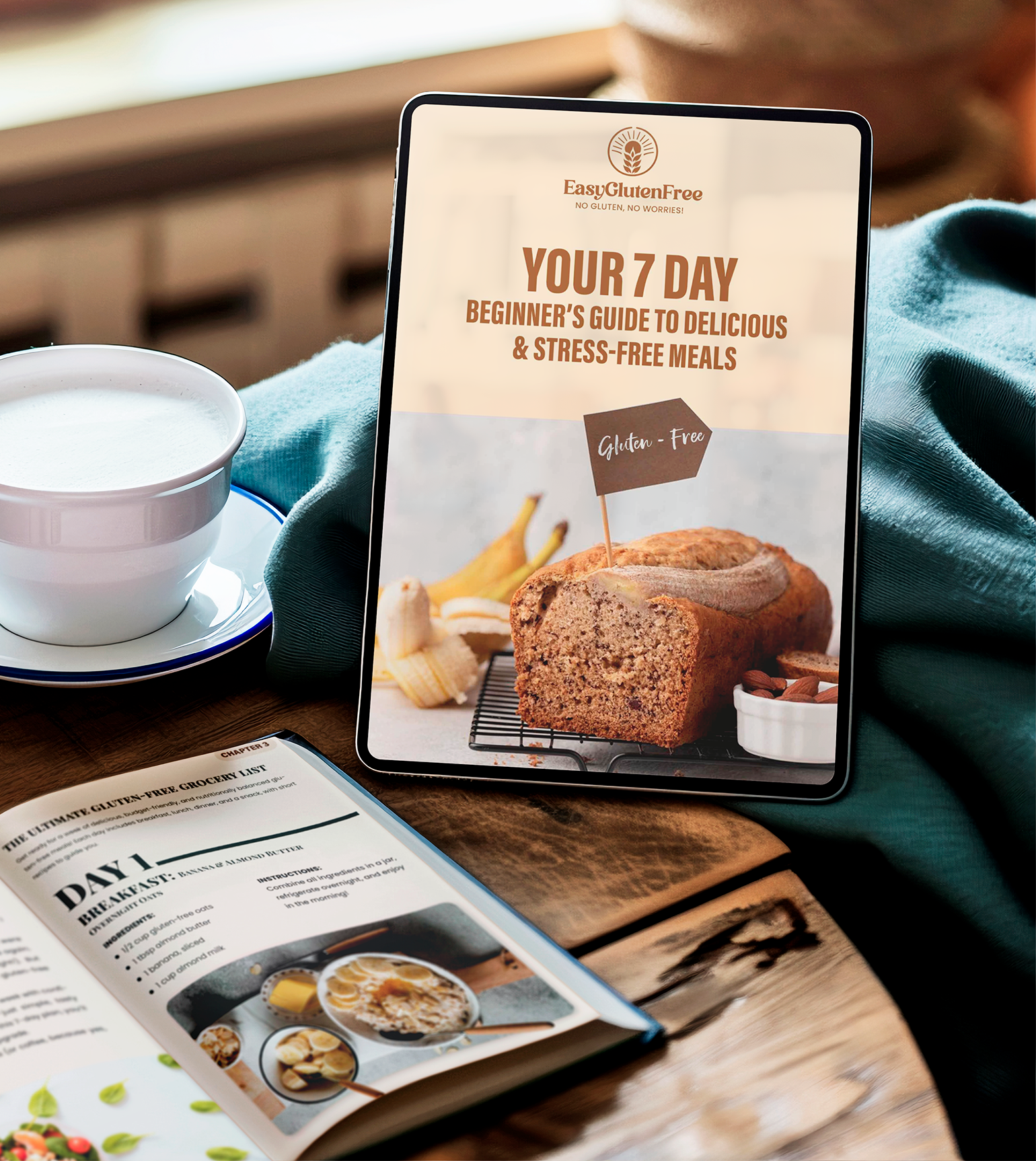
Save your search history some stress. Grab our FREE 7-Day Beginner's Guide and finally have a plan you can actually cook