Author name: thinkgroupemedia

Blog

Navigating Gluten-Free: A Practical Guide for Stress-Free Dining

2025 Guide Download the Free Guide to Stress-Free Gluten-Free Testing & Eating Out How to Use a Nima Gluten Sensor Test Safely When You’re Gluten-Free Wondering how a Nima gluten sensor test fits into real-life gluten-free living—especially if you’re constantly second-guessing restaurant menus, shared kitchens, and “gluten-friendly” labels? This guide walks you through how to think about quick gluten testing as one tool in a bigger gluten-free toolkit, so you can feel more confident, prepared, and less stressed when you eat. Download Our Free Gluten-Free Starter Guide 7-day meal plan shopping list Tips & 3 beginner-friendly recipes download now Introduction Living gluten-free today is both easier and more confusing than ever. Restaurants have “GF” symbols, friends swear their air fryer “doesn’t count” as cross-contact, and every week there’s a new gadget that promises to keep you safe. In the middle of all that noise, many gluten-free eaters just want clarity: is this food actually safe for me to eat? That’s where on-the-spot gluten checks come in. Tools like the Nima gluten sensor test are designed for exactly that moment when you’re staring at a plate of food thinking, “Is this really gluten-free, or am I gambling with my next 48 hours?” While no tool is perfect, understanding how these tests fit into a thoughtful gluten-free strategy can make a huge difference to your stress levels—and your confidence. In this article, we’ll explore practical, everyday ways to use quick gluten testing as part of your gluten-free life: how to think about results, how to combine tests with smart questions and label reading, and when relying on testing might not be the right move. You’ll come away with a calmer, more strategic approach to dining out, traveling, and handling shared kitchens—whether you’re newly gluten-free or years into the journey. Table of Contents ▾ 1. Understanding Quick Gluten Testing in Real Life 2. When a Nima Gluten Sensor Test Can Be Most Helpful 3. Practical Tips for Eating Out While Gluten-Free 4. Smart Gluten-Free Travel Strategies 5. Building a Low-Stress Gluten-Free Routine at Home 1. Understanding Quick Gluten Testing in Real Life Before you start relying on any kind of quick gluten test, it’s important to zoom out and look at the bigger picture: what can these tools realistically do for you, and what can they not do? When used thoughtfully, they can add confidence and data to your decisions. When misunderstood, they can create a false sense of security—or unnecessary panic. Think of testing as one layer of protection A helpful way to think about gluten-free safety is as a stack of layers, not a single magic answer. Those layers might include: Reading labels carefully and understanding certification logos Choosing restaurants with clear gluten-free procedures Asking targeted questions about cross-contact in kitchens Managing shared equipment and spaces at home Using gluten tests as an extra check in higher-risk situations Testing shines brightest when it’s confirming what already looks reasonably safe: a gluten-free labeled dish prepared in a kitchen that understands cross-contact, or a packaged item that seems fine but uses vague wording. It’s not a replacement for all the other layers—it’s the bonus safety net. What quick gluten checks can realistically tell you Real-world gluten testing is always limited by what you can actually sample. You’re testing a small portion of a meal or food, which can give you useful information about that specific bite. That means: A sample that looks representative of the whole dish will usually give you more meaningful information than testing just a garnish or a corner of a plate. Heavily mixed foods, like casseroles or sauces, are often easier to sample reliably than layered or “topped” foods, where gluten might be unevenly distributed. Any test result is a data point, not a guarantee. It’s one more piece of information to combine with your knowledge of the restaurant, ingredient list, and preparation method. Keeping this mindset—data, not perfection—can help keep your expectations realistic and your stress lower. When relying on testing alone can backfire It’s tempting to believe that a quick test can make any risky situation safe, but that’s not how gluten-free living really works. For example: A restaurant with flour dust in the air, shared fryers, and no understanding of cross-contact is still high-risk, even if a single test comes back negative on one bite of food. A shared home kitchen with cutting boards, wooden spoons, and toasters used for gluten foods may need system-level changes, not just spot checks. If you’re feeling pressured to eat something (“We made this just for you!”), testing under stress can make it harder to think clearly about the result and your own comfort level. Using quick gluten tests well means pairing them with your boundaries, not using them to talk yourself out of boundaries you know you need. Need Help Staying Organized? Plan meals & shopping Stay on track with ease See Planner 2. When a Nima Gluten Sensor Test Can Be Most Helpful If you use—or are considering using—a Nima gluten sensor test, it helps to think ahead about when it’s most likely to reduce stress and add clarity. You don’t need to test every bite you eat. In fact, being strategic about when you test can save time, money, and emotional energy. High-value moments to use a test Many gluten-free eaters find that quick gluten tests are most useful in situations like these: Trying a new restaurant where you’re not yet sure how well they understand gluten-free preparation and cross-contact. Traveling internationally, when language barriers or unfamiliar cuisine make ingredient questions harder. Eating foods with vague claims like “gluten-friendly,” “no gluten ingredients,” or “made without gluten,” especially when no third-party certification is present. Shared kitchens or events (office parties, catered events, family gatherings) where gluten-free items legally can be present but practically might be at risk. In those moments, a test can give you extra information to either proceed with more confidence—or decide to skip the food and find a safer option. Pairing test results with

Blog

Ultimate Guide to Gluten-Free Dining & Travel: Download the Free 2025 Guide

2025 Guide Download the Free Guide to Confident Gluten-Free Travel Gluten-Free Travel Safety: How to Test Restaurant Meals for Hidden Gluten Eating away from home is one of the most stressful parts of living gluten free. This guide walks you through realistic ways to test restaurant meals for hidden gluten, set up systems that lower risk, and feel more confident saying “yes” to dinners, dates, and travel again—without pretending the risks don’t exist. Download Our Free Gluten-Free Starter Guide 7-day meal plan shopping list Tips & 3 beginner-friendly recipes download now Introduction If you’ve ever stared at a restaurant plate wondering, “Is this really safe for me?”, you are absolutely not alone. Even the most “gluten-aware” kitchens can make mistakes, and vague answers like “it should be fine” don’t help when you’re the one who pays the price for cross-contact. The goal of this guide isn’t to scare you—it’s to put practical tools back in your hands so you can make informed choices instead of anxious guesses. Testing restaurant meals for hidden gluten is part science, part strategy, and part communication. No method is perfect, and nothing replaces a clearly labeled dedicated gluten-free kitchen, but there are smart ways to reduce risk. From choosing the right restaurants to understanding how consumer gluten tests work, you can create a personal “safety stack” that fits your body, your comfort level, and your lifestyle. In the sections below, we’ll cover how to prep before you go out, how to talk to staff without feeling like “that customer,” how to use at-the-table testing tools thoughtfully, and how to interpret results alongside your own symptoms and history. Think of this as your calm, realistic game plan for eating out gluten free—so you can focus more on the people you’re with and less on what might be lurking in your food. Table of Contents ▾ 1. Why Restaurant Gluten Is So Tricky 2. Tools to Help You Test Restaurant Meals 3. Step-by-Step: How to Test Your Meal for Hidden Gluten 4. Reading Results, Red Flags, and When to Skip the Meal 5. Building Your Personal Eating-Out Safety System 1. Why Restaurant Gluten Is So Tricky At home, you control the ingredients, surfaces, and utensils. In a restaurant, you’re stepping into a fast-paced system designed for speed and volume—not necessarily for strict gluten control. Understanding why restaurant gluten is so tricky helps you decide when testing makes sense and where it will (and won’t) help. Hidden gluten sources in restaurant meals Sauces and marinades: Soy sauce, “house” marinades, gravy bases, and pre-made stocks often contain wheat. Shared fryers: French fries or corn tortilla chips can pick up gluten from breaded foods fried in the same oil. Dusting and breading: Flour used for dusting pans, proteins, or pizza peels can linger on surfaces and in the air. Prepped ingredients: Croutons picked off a salad, a burger pulled off a bun, or grilled items cooked where buns were toasted may all carry gluten traces. Cross-contact vs. obvious gluten Most people can easily avoid the big, obvious gluten sources: pasta, bread, pastries, and battered foods. The real challenge is cross-contact—tiny amounts of gluten that get into “safe” foods through shared equipment or careless prep. For some people, even small amounts matter a lot. For others, their personal threshold may be different, and they define their own balance between risk and quality of life. When you use testing tools, you’re mostly looking for gluten that’s present at a measurable level in a small portion of the food. That can help you spot a clearly unsafe dish, but it doesn’t guarantee every bite on the plate is identical, especially with mixed foods like salads or stir-fries. Limitations of any restaurant test strategy Only a sample is tested: You’re testing a tiny part of a much larger meal. A crouton on the “other side” of the plate won’t show up in your sample. Different foods behave differently: Fatty, very hot, or complex dishes can sometimes be more challenging to test accurately with consumer tools. Staff communication still matters: No test can fix a kitchen that doesn’t know what gluten is or doesn’t take your request seriously. Instead of seeing testing as a magic shield, think of it as one helpful layer in your overall strategy: smart restaurant selection, clear communication, and a tool that can sometimes confirm when something has gone very wrong with your plate. Need Help Staying Organized? Plan meals & shopping Stay on track with ease See Planner 2. Tools to Help You Test Restaurant Meals For years, eating out gluten free relied almost entirely on trust and detective work. Now, consumer testing tools have added another optional layer of feedback. These tools are not medical devices and they’re not perfect, but they can sometimes alert you to clear gluten contamination that conversation alone might miss. Before using any at-the-table test, keep these principles in mind: Know what the tool can and can’t detect. Each device or kit has its own sensitivity limits, sample instructions, and food types it works best with. Read the manufacturer’s directions carefully. Accuracy depends heavily on handling the test correctly and using enough of the right part of the food. Use results as one data point, not the only one. Your history with a restaurant, the way staff answers questions, and your own body’s reactions all matter. Many people find testing tools most helpful in higher-risk situations: when traveling, trying a place for the first time, or when the menu is complex and staff knowledge is unclear. If you decide to incorporate testing into your routine, it can be reassuring to know you have something besides “it should be fine” to go on. Below is an example of a product that some gluten-free diners use as part of their travel or eating-out toolkit. Always review up-to-date product documentation and user guidance directly from the manufacturer or retailer before deciding whether a specific tool is a good fit for your needs and budget. Nima gluten

Blog

2025 Gluten-Free Pantry Makeover Guide

2025 Guide Grab Your Free Gluten-Free Pantry Makeover eBook The Essential Gluten-Free Pantry List for Beginners Building a gluten-free pantry from scratch can feel overwhelming, but it doesn’t have to be. This guide walks you through the must-have staples, smart swaps, and practical tips so you can cook confidently, avoid hidden gluten, and always have something safe and satisfying on hand. Download Our Free Gluten-Free Starter Guide 7-day meal plan shopping list Tips & 3 beginner-friendly recipes download now Introduction Standing in front of your kitchen cabinets and realizing that most of what you own suddenly might not be safe is a very real moment for many new gluten-free eaters. Whether you’re gluten-free by choice, on the advice of a professional, or supporting a gluten-free family member, the pantry is usually the first place that needs a serious refresh. The good news: you do not need to throw away everything, buy expensive specialty foods, or cook complicated recipes to eat well. A smart gluten-free pantry is built around naturally gluten-free whole foods, a few trusted packaged staples, and a basic understanding of where gluten tends to hide. Once you learn that framework, the entire lifestyle becomes far easier. In this guide, we’ll walk step by step through how to clean out, restock, and organize a gluten-free pantry that works for real life. You’ll learn what to watch for on labels, which flours and grains are safe, how to handle shared kitchens, and which convenient “backup” items will save you on those nights when you just can’t cook from scratch. Table of Contents ▾ 1. Pantry Basics: Understanding Gluten-Free Foundations 2. Building Your Core Gluten-Free Pantry Staples 3. Smart Gluten-Free Swaps for Everyday Cooking 4. Avoiding Hidden Gluten in Your Pantry 5. Organizing & Maintaining Your Gluten-Free Pantry 1. Pantry Basics: Understanding Gluten-Free Foundations Before you start bagging up half your pantry, it helps to understand what you’re actually trying to avoid. Gluten is a protein found naturally in wheat, barley, rye, and regular (non–gluten-free certified) oats. It also sneaks into many processed foods as a thickener, flavoring, or stabilizer. Your gluten-free pantry “foundation” is built on two pillars: foods that are naturally gluten-free, and packaged items that are clearly labeled or certified gluten-free according to the laws and standards in your country. Learning to lean on these two groups is what makes shopping and cooking easier over time. Audit what you already have Start with a simple audit rather than an emotional purge. Work shelf by shelf and create three groups: Clearly contains gluten: anything with wheat, barley, rye, malt, or regular oats in the ingredient list (think: standard pasta, flour, many cereals, some sauces). Clearly gluten-free: plain canned beans, vegetables, fruits, plain rice, plain nuts and seeds, most oils, plain spices (single-ingredient), and clearly labeled gluten-free items. “Question mark” foods: flavored mixes, sauces, bouillon, spice blends, snack foods, and any ultra-processed product where gluten could be hiding. Set aside the obvious gluten items and question-mark foods for later. Your goal today is to see what safe foods you already own. You may be pleasantly surprised by how many staples can stay. Learn the key label-reading habits Gluten-free living gets much easier when reading labels becomes second nature. Over time, you’ll gravitate toward brands and products you trust, but it still helps to double-check formulas now and then since they can change. When you pick up a packaged product, make a quick pass for: Allergen statement: some packages call out wheat clearly in a “Contains” line, which can simplify decisions. Gluten-free labeling: look for phrases like “gluten-free” or trusted gluten-free certification symbols where applicable. Red-flag ingredients: wheat flour, barley malt, rye, modified food starch (if source isn’t specified), and certain flavorings or hydrolyzed proteins in processed foods. A calm, systematic approach now will help you feel more confident later. The pantry is where your gluten-free lifestyle starts every single day—even on the nights you only have the energy to boil pasta or heat up soup. Need Help Staying Organized? Plan meals & shopping Stay on track with ease See Planner 2. Building Your Core Gluten-Free Pantry Staples Once you’ve identified what can stay and what needs to go, it’s time to think about what should always be in your gluten-free pantry. The goal is to make everyday meals possible without a last-minute grocery trip. A well-stocked pantry also saves money, because you’re less likely to rely on expensive takeout when you’re tired or busy. Gluten-free grains & starches to keep on hand These form the base of many meals and are usually budget-friendly: Rice: white, brown, jasmine, basmati, or short-grain—great for bowls, stir-fries, and one-pot meals. Gluten-free oats: look for clearly labeled gluten-free oats if tolerated and suitable for your needs. Quinoa, millet, and buckwheat groats: naturally gluten-free options that cook quickly and work well in salads and warm bowls. Gluten-free pasta: brown rice, corn, quinoa, or blended grain/legume pastas labeled gluten-free. Potatoes and sweet potatoes: technically not pantry items, but they keep well and are incredibly versatile. Beans, proteins & canned goods Plant-based proteins and shelf-stable options are your backup on busy nights: Canned beans (black, chickpeas, kidney, cannellini) and lentils. Canned tuna, salmon, or chicken packed in water or safe oils. Cartons or cans of plain tomatoes, tomato sauce, and tomato paste. Broth or stock labeled gluten-free for soups, stews, and sauces. Nut butters (peanut, almond, cashew) with simple ingredient lists. Everyday gluten-free baking staples You don’t need to be a baker to benefit from a few simple gluten-free baking staples. They make pancakes, quick breads, and basic treats possible without a big production: A trusted all-purpose gluten-free flour blend designed to be a 1:1 swap in many recipes. Cornstarch, tapioca starch, or arrowroot for thickening sauces and gravies. Baking powder, baking soda, and cocoa powder (check labels). Sugars and sweeteners: granulated sugar, brown sugar, honey, or maple syrup. From here, you can personalize your pantry based on what your household actually eats: gluten-free crackers, safe snack

Blog

7-Day Gluten-Free Meal Prep Guide: Simple Starter Tips

2025 Guide Transform Your Gluten-Free Routine in 7 Days with Our Simple Starter Guide Meal Prep Sans Gluten : Guide Complet Pour Des Repas Sereins Toute La Semaine Organiser ses repas sans gluten peut vite passer de “je gère” à “je mange quoi ce soir ?” si l’on n’a pas une méthode simple. Dans cet article, on va poser les bases d’un meal prep sans gluten réaliste, adaptable et surtout durable, que vous soyez débutant·e ou déjà bien avancé·e dans votre transition. Download Our Free Gluten-Free Starter Guide 7-day meal plan shopping list Tips & 3 beginner-friendly recipes download now Introduction Préparer ses repas à l’avance quand on mange sans gluten, c’est un peu comme avoir une version calme et organisée de soi-même qui vous attend dans la cuisine. Le frigo est rempli, les boîtes sont prêtes, et la question « qu’est-ce qu’on mange ? » ne déclenche plus de panique à 19h30. Le meal prep sans gluten n’a pas besoin d’être compliqué, ni de vous prendre tout votre dimanche. Que vous soyez récemment passé·e au sans gluten ou que vous viviez avec la contrainte depuis des années, la planification des repas reste souvent le point sensible : peur de la contamination croisée, étiquettes à vérifier, manque d’idées simples… Résultat, on se retrouve à manger toujours la même chose ou à improviser au dernier moment, ce qui est épuisant à la longue. Dans ce guide, on va voir comment construire une routine de meal prep sans gluten flexible, avec des idées concrètes, des astuces d’organisation, un peu de méthode et beaucoup de bienveillance. L’objectif : vous aider à gagner du temps, réduire le stress des repas et retrouver du plaisir à manger sans gluten au quotidien, sans viser la perfection. Table of Contents ▾ 1. Les bases du meal prep sans gluten 2. Ingrédients incontournables et produits du placard 3. Exemple de planning de meal prep sur 7 jours 4. Astuces pour éviter la monotonie et la fatigue alimentaire 5. Organisation de la cuisine et batch cooking sans gluten 1. Les bases du meal prep sans gluten Avant de commencer à couper des légumes et lancer du riz, il est important de poser les bases spécifiques au sans gluten. Le meal prep classique et le meal prep sans gluten ont un point commun : ils vous font gagner un temps fou. Mais le sans gluten ajoute une dimension supplémentaire : la vigilance. La première étape consiste à clarifier ce que « sans gluten » signifie pour vous. Certaines personnes doivent éviter strictement toute trace de gluten, d’autres suivent ce mode alimentaire par confort digestif ou choix personnel. Dans tous les cas, l’organisation reste votre meilleure alliée. Comprendre vos besoins et votre semaine Commencez par analyser votre semaine type : combien de repas à la maison, combien à emporter, quelles soirées particulièrement chargées, avez-vous des enfants ou un·e partenaire qui ne mange pas forcément sans gluten ? Cela vous permettra de déterminer le nombre de portions à préparer et les moments où vous avez besoin de solutions ultra rapides. Ensuite, choisissez votre « jour de prep ». Beaucoup optent pour le dimanche, mais ce n’est pas une obligation. L’important est de bloquer un créneau de 1h30 à 2h, téléphone loin, playlist sympa, pour vous concentrer sur vos bases de la semaine. Les piliers d’un meal prep sans gluten équilibré Pour des repas sans gluten qui tiennent la route, pensez en grandes catégories plutôt qu’en recettes compliquées : Une source de protéines : œufs, tofu, pois chiches, lentilles, poulet, poisson, etc. Un féculent sans gluten : riz, quinoa, sarrasin, pommes de terre, patates douces, polenta… Des légumes variés : crus, rôtis, sautés ou en soupe, pour le goût et les textures. Des “extras” qui font la différence : sauces maison, graines, herbes fraîches, fromages, pickles. Avec quelques éléments bien préparés dans chaque catégorie, vous pouvez assembler plusieurs repas différents sans avoir l’impression de manger la même chose. Gluten caché et contamination croisée L’un des enjeux majeurs du meal prep sans gluten, c’est de garder vos préparations vraiment sans gluten tout au long du processus. Deux points méritent une attention particulière : Le gluten caché : apprenez à lire les listes d’ingrédients pour repérer blé, orge, seigle, malt, ainsi que certains additifs ou sauces (bouillons, sauces soja non certifiées, panures…). La contamination croisée : planche à découper, grille-pain, farine volante dans l’air… Si vous partagez la cuisine avec des aliments contenant du gluten, il peut être utile d’avoir quelques ustensiles dédiés et des boîtes bien fermées. Sans tomber dans la paranoïa, quelques habitudes simples — comme nettoyer le plan de travail avant de démarrer, cuisiner d’abord le sans gluten, utiliser des outils propres — rendent votre meal prep plus serein. Need Help Staying Organized? Plan meals & shopping Stay on track with ease See Planner 2. Ingrédients incontournables et produits du placard Un bon meal prep sans gluten commence par un placard bien pensé. L’idée n’est pas de tout acheter en version “gluten free” ultra transformée, mais plutôt d’avoir une base d’ingrédients simples, polyvalents et rassurants sur lesquels vous pouvez compter chaque semaine. Les féculents sans gluten à toujours avoir Les féculents sont la base de nombreux repas. Avoir 2 ou 3 options prêtes à l’avance change tout : Riz (blanc, complet, basmati) : parfait en accompagnement, en bowl, en sauté façon riz frit. Quinoa : riche en protéines, idéal en salades de batch cooking. Sarrasin : en grains ou en flocons, pratique pour les porridges ou les salades. Pommes de terre et patates douces : rôties en grande quantité, elles deviennent la base de multiples repas. Pâtes certifiées sans gluten : à utiliser plutôt le jour même, mais faciles à intégrer à un plan de meal prep. Les protéines faciles à préparer en avance Pour gagner du temps, préparez une ou deux sources de protéines pour la semaine : Œufs durs : parfaits pour les salades, snacks rapides ou sandwichs sans gluten. Poisson ou poulet rôtis : à effilocher pour remplir

Blog

Transform Your Gluten-Free Dinners: Easy Ideas for Every Night

2025 Guide Transform Your Gluten-Free Dinners with Simple, Family-Approved Ideas Gluten-Free Dinner Ideas: Easy, Balanced & Stress-Free Meals for Every Night Looking for gluten-free dinner ideas that don’t feel like a second full-time job? You’re in the right place. In this guide, we’ll walk through realistic, achievable gluten-free dinners that work on busy weeknights, please mixed-diet households, and still let you enjoy food. No chef skills required, just a bit of planning and the right shortcuts. Download Our Free Gluten-Free Starter Guide 7-day meal plan shopping list Tips & 3 beginner-friendly recipes download now Introduction Dinner is usually the meal where everything happens at once: you’re tired, everyone’s hungry, and somehow the fridge is full but “there’s nothing to eat.” Add a gluten-free lifestyle on top of that, and it can feel overwhelming to find ideas that are safe, tasty, and doable on a Tuesday night. This article is here to simplify that moment. We’ll focus on gluten-free dinner ideas that use easy-to-find ingredients, flexible cooking methods, and smart shortcuts. You’ll see how to build balanced plates, adapt family favorites, and stock a small toolkit of products that make weeknights smoother—without turning your kitchen into a science lab. Whether you’re newly gluten-free, cooking for someone with a gluten-free diet, or just want more naturally gluten-free dinners, you’ll walk away with practical ideas you can use this week. Think sheet-pan meals, one-pot dinners, comforting bowls, and simple sides that quietly happen to be gluten-free. Table of Contents ▾ 1. Planning Easy Gluten-Free Dinners Without the Stress 2. Pantry Staples & One Helpful Shortcut Product 3. Gluten-Free Dinner Ideas for Busy Weeknights 4. Family-Friendly & Crowd-Pleasing Gluten-Free Meals 5. Time-Saving Tips to Keep Dinner Simple All Week 1. Planning Easy Gluten-Free Dinners Without the Stress Before we talk recipes, let’s talk strategy. Gluten-free dinner ideas become much easier when you stop designing meals from scratch every single day and start from simple “formulas”. Instead of thinking, “What recipe should I make?” try, “What protein + what vegetable + what gluten-free starch can I put together?” A balanced gluten-free dinner plate often looks like this: Protein – chicken, fish, tofu, eggs, lentils, beans, or beef Colorful vegetables – roasted, steamed, stir-fried, or raw Gluten-free starch – rice, potatoes, quinoa, polenta, or certified gluten-free pasta or bread From this simple structure, you can create endless combinations. For example, baked salmon + roasted carrots + garlic mashed potatoes is naturally gluten-free, comforting, and requires zero special products. The same goes for a veggie omelette with salad and roasted sweet potatoes—perfect for “breakfast for dinner” nights. It also helps to create a loose weekly structure. For instance: Monday – sheet-pan dinner (minimal dishes) Tuesday – gluten-free pasta night Wednesday – bowls (rice or quinoa base + toppings) Thursday – leftovers or “fridge clean-out” frittata Friday – tacos or baked potatoes with fun toppings By assigning a “type” of dinner to each day, you reduce decision fatigue. You’re not starting from zero. You already know that on Tuesday you’ll build something around gluten-free pasta—your only job is to choose the sauce and extras. As you gather your favorite gluten-free dinner ideas, keep a running list on your phone or printed on the fridge. When you hit a week where cooking feels like too much, you can just pick from that list instead of scrolling for hours. Over time, you’ll build a mini personal cookbook that fits your tastes, schedule, and budget. Need Help Staying Organized? Plan meals & shopping Stay on track with ease See Planner 2. Pantry Staples & One Helpful Shortcut Product Well-chosen pantry staples are the secret to quick gluten-free dinners. When the basics are already in your kitchen, you can pull together a safe meal while your oven preheats. Here are some useful gluten-free dinner building blocks to keep on hand: Grains & starches: rice, quinoa, certified gluten-free oats, polenta, rice noodles, and gluten-free pasta Canned goods: beans, lentils, chopped tomatoes, tomato sauce, coconut milk Proteins: eggs, canned tuna or salmon, frozen chicken breasts or thighs, tofu, frozen shrimp Flavor boosters: olive oil, gluten-free tamari or coconut aminos, vinegar, herbs, spices, garlic, onion Frozen vegetables: peas, spinach, broccoli, mixed veggies for fast stir-fries and sides With these staples, you can quickly make dishes like veggie fried rice (with gluten-free tamari), a lentil and tomato stew over polenta, or a shrimp and broccoli pasta tossed in olive oil and garlic. Alongside whole ingredients, a few well-chosen convenience products can make weeknights smoother. Think of them as “assistants” rather than the star of every meal: a good gluten-free pasta, a jarred tomato sauce you trust, or a ready-made seasoning mix. Used in moderation and combined with fresh ingredients, they can save you time and energy—especially on those evenings when cooking from scratch just isn’t realistic. Below is an example of the kind of product many gluten-free households like to keep in the pantry as a reliable shortcut for busy nights. Barilla Gluten Free Spaghetti, 12 oz Barilla Gluten Free Spaghetti offers a familiar pasta experience in a certified gluten-free version made from a blend of corn and rice. It cooks up with a pleasant texture and neutral flavor, making it a flexible base for everything from classic tomato sauces to simple olive oil and garlic. Keeping a box in your pantry makes last-minute gluten-free dinners—like spaghetti with vegetables or a quick tuna pasta—much easier to put together. → View on Amazon 3. Gluten-Free Dinner Ideas for Busy Weeknights When time is short, you want ideas that require minimal chopping, minimal dishes, and ingredients you can find almost anywhere. Here are practical gluten-free dinner ideas you can rotate through busy weeks. 1. Sheet-Pan Chicken & Veggies Toss chicken thighs or breasts with olive oil, salt, pepper, and your favorite herbs or spice blend. Add chopped vegetables—such as carrots, potatoes, broccoli, or bell peppers—on the same pan. Roast until everything is cooked through and lightly browned. Serve with a squeeze of lemon. This one-pan meal is

Blog

Guide to Gluten-Free Dairy-Free Meal Planning

2025 Guide Transform Your Gluten-Free Routine in 7 Days with Our Free Printable Guide Gluten-Free Dairy-Free Meal Planning: Simple Strategies for Stress-Free Weeks Gluten-free and dairy-free at the same time can feel like playing nutrition Tetris every single day. In this guide, we’ll walk through how to build a gluten-free dairy-free meal plan that actually fits your life: realistic, repeatable, and budget-aware. Whether you’re cooking for one or feeding a family, you’ll get practical ideas, templates, and tips to make “What’s for dinner?” a lot less overwhelming. Download Our Free Gluten-Free Starter Guide 7-day meal plan shopping list Tips & 3 beginner-friendly recipes download now Introduction If you’ve recently switched to a gluten-free dairy-free lifestyle, you’ve probably noticed that the hardest part is not saying no to bread or cheese – it’s figuring out what to eat every single day without spending your entire life in the kitchen. Meal times can quickly turn from something you enjoy into a constant puzzle of food labels, substitutions, and last‑minute improvisation. The good news: with a bit of structure, gluten-free dairy-free meal planning becomes much easier and more enjoyable. You don’t need to be a chef, you don’t need complicated recipes, and you definitely don’t need five different milks and six flours on your counter every night. What you do need is a simple framework that helps you repeat what works, avoid decision fatigue, and keep your pantry ready for busy days. In this article, we’ll break down how to build a flexible gluten-free dairy-free meal plan from scratch, how to shop without stress, and how to create “plug-and-play” meals that you can mix and match all week long. Think of it as your friendly roadmap: practical, realistic, and designed for real life (yes, including nights when you’re tired and the sink is already full of dishes). Table of Contents ▾ 1. Understanding Gluten-Free & Dairy-Free Basics 2. Pantry Essentials for Easy Gluten-Free Dairy-Free Meals 3. How to Build a Weekly Gluten-Free Dairy-Free Meal Plan 4. Budget & Time-Saving Tips for Busy Weeks 5. Sample 3-Day Gluten-Free Dairy-Free Meal Plan 1. Understanding Gluten-Free & Dairy-Free Basics Before you can plan balanced gluten-free dairy-free meals, it helps to be crystal clear on what those words actually mean day to day. Beyond obvious foods like bread, pasta, milk, or cheese, gluten and dairy can hide in sauces, seasonings, snacks, and even “healthy” products that look perfectly safe at first glance. Gluten-free basics mean avoiding wheat, barley, rye, and their derivatives. That includes foods like regular bread, couscous, many breakfast cereals, most pastries, and a surprising number of processed foods thickened with wheat or flavored with barley malt. Oats can be a gray area: some are naturally gluten-free but contaminated during processing, so many people choose oats labeled “certified gluten-free.” Dairy-free basics usually mean skipping cow’s milk and products made from it, such as cheese, yogurt, cream, butter, and many creamy sauces and desserts. It’s also worth checking ingredient lists for milk powder, casein, whey, lactose, and other milk-derived ingredients. Plant-based alternatives (like oat, almond, soy, or coconut drinks) can fit in well if they suit your needs and preferences. When you combine both gluten-free and dairy-free, life gets a bit more complex but absolutely manageable. For example, a standard lasagna uses gluten in the pasta sheets and dairy in the cheese and béchamel sauce. Gluten-free dairy-free lasagna, on the other hand, might rely on gluten-free noodles, a rich tomato sauce, and a creamy cashew or coconut-based topping instead of cheese. Here are a few common “surprise” sources to keep on your radar while meal planning: Sauces & dressings: soy sauce (contains wheat unless labeled gluten-free), some salad dressings, gravy mixes, and marinades often include gluten or dairy. Processed meats: some sausages, deli meats, meatballs, and burger patties may contain breadcrumbs, wheat-based fillers, or milk powder. Snack foods: flavored chips, crackers, and granola bars can hide both gluten and dairy in the seasoning blends. Breads & baked goods: even if labeled “dairy-free,” they may still contain gluten, and vice‑versa. Always check both. Instead of feeling overwhelmed by these details, use them as a guide to simplify. Focus on foods that are naturally gluten-free and dairy-free: vegetables, fruits, legumes, rice, quinoa, gluten-free oats, nuts, seeds, eggs, and unprocessed meat, poultry, or fish. These become the “building blocks” of your meal plan and make label-reading less exhausting because you’re starting from whole foods first. As you build confidence, store-bought gluten-free dairy-free products can support your routine as convenient shortcuts—things like certified gluten-free pasta, dairy-free yogurts, or ready-made sauces that fit your needs. Need Help Staying Organized? Plan meals & shopping Stay on track with ease See Planner 2. Pantry Essentials for Easy Gluten-Free Dairy-Free Meals A well-stocked pantry is the secret weapon of stress-free gluten-free dairy-free meal planning. When your shelves are filled with reliable staples, you can throw together quick bowls, soups, and tray bakes without needing a full written recipe every time. Think of your pantry as your safety net on days when time, energy, or creativity is low. Start with gluten-free grains and starches. These form the base of many meals and help you feel satisfied: Rice (white, brown, basmati, jasmine) Quinoa, millet, and buckwheat groats Certified gluten-free oats for breakfast bowls and bakes Gluten-free pasta made from rice, corn, or legumes Gluten-free tortillas or wraps for quick tacos and roll‑ups Next, add protein options that are either shelf-stable or freezable. These make it easy to turn a simple side dish into a complete meal: Canned beans (chickpeas, black beans, lentils, kidney beans) Canned tuna or salmon in water or olive oil Frozen edamame, peas, or mixed vegetables Eggs in the fridge for quick scrambles, frittatas, and baked dishes Frozen chicken breasts, thighs, or fish fillets Dairy-free “creamy” elements bring comfort and variety: Unsweetened plant milks (almond, oat, soy, coconut, etc.) Canned coconut milk for curries and creamy soups Nut or seed butters (peanut, almond, tahini, sunflower seed) Dairy-free yogurt for breakfasts, sauces, or

Blog

“Gluten-Free Budget Guide for 2025: Tips and Strategies for Eating Well Without Breaking the Bank”

2025 Guide Transform Your Gluten-Free Life in 7 Days with Our Free Starter eBook Gluten-Free on a Budget: Practical Tips to Eat Well Without Overspending Yes, it’s absolutely possible to eat gluten-free without watching your grocery bill explode. With a bit of strategy, smart shopping, and a few mindset shifts, you can build satisfying, naturally gluten-free meals that respect both your body and your wallet. In this guide, we’ll walk through concrete, easy-to-apply tips to help you save money while keeping your gluten-free lifestyle simple, delicious and sustainable over the long term. Download Our Free Gluten-Free Starter Guide 7-day meal plan shopping list Tips & 3 beginner-friendly recipes download now Introduction Passer à une alimentation sans gluten peut déjà être un grand changement. Quand on ajoute à cela l’augmentation du budget courses, la charge mentale grimpe encore d’un cran. Entre les produits spécialisés souvent plus chers, les essais ratés de pains ou de pâtes et les achats impulsifs “par sécurité”, la facture grimpe vite. La bonne nouvelle : manger sans gluten ne veut pas dire remplir son panier uniquement de produits étiquetés “gluten-free” à prix premium. Ce guide est là pour vous aider à reprendre le contrôle, étape par étape. On va se concentrer sur des astuces concrètes pour manger sans gluten avec un budget réaliste, en utilisant des aliments simples, en cuisinant malin et en planifiant juste ce qu’il faut pour éviter le gaspillage. Vous n’avez pas besoin d’être un chef ni de passer vos dimanches en cuisine : quelques habitudes bien choisies peuvent vraiment tout changer. Dans les sections qui suivent, vous trouverez des stratégies de base pour comprendre où part votre argent, des listes d’aliments naturellement sans gluten économiques, des idées de repas abordables, des façons d’optimiser vos courses, et même quelques repères pour manger à l’extérieur sans faire exploser le budget. Gardez ce guide comme une boîte à outils : vous n’êtes pas obligé de tout appliquer d’un coup, l’important est d’avancer à votre rythme. Table of Contents ▾ 1. Comprendre ce qui fait vraiment grimper le budget gluten-free 2. Aliments naturellement sans gluten et économiques 3. Idées de repas sans gluten à petit budget 4. Stratégies de courses pour une alimentation sans gluten abordable 5. Gérer sorties, restos et imprévus sans exploser son budget 1. Comprendre ce qui fait vraiment grimper le budget gluten-free Avant de chercher des astuces miracles, il est utile de comprendre pourquoi votre budget sans gluten semble plus élevé qu’avant. Souvent, ce n’est pas le “sans gluten” en lui-même qui coûte cher, mais la manière dont on l’aborde au début. 1.1. Les produits ultra-transformés “gluten-free” Les rayons sans gluten des supermarchés regorgent de biscuits, pains, snacks, gâteaux, céréales et plats préparés. Ils peuvent être pratiques, mais ils sont souvent bien plus chers que leurs équivalents classiques — et parfois moins rassasiants. Si une grande partie de votre budget part dans ces produits “de dépannage”, la note grimpe très vite. Une approche plus économique consiste à considérer ces produits comme des extras ponctuels, plutôt que comme la base de votre alimentation. En vous appuyant sur des aliments simples et bruts, vous réduisez mécaniquement la facture. 1.2. Les achats en double “par précaution” Autre facteur classique : la peur de manquer ou de ne pas avoir d’option sans gluten sous la main. Résultat, on achète trois types de pâtes, quatre mixes à pain, plusieurs sortes de biscuits, “au cas où”. Une partie finit ouverte puis oubliée, parfois même jetée. Clarifier ce que vous consommez vraiment chaque semaine et limiter les stockages excessifs est une façon simple de protéger votre budget. Un petit inventaire mensuel du placard “sans gluten” peut déjà éviter beaucoup de gaspillage. 1.3. Le manque de planification des repas Sans un minimum de planification, on tombe vite dans le schéma : “Je n’ai rien prévu, je commande ou j’achète du tout prêt”. Ces solutions sont souvent plus coûteuses, surtout en version gluten-free. Un planning basique de 3 à 5 repas repères, que vous répétez et adaptez, suffit à réduire le stress et les dépenses. La clé n’est pas d’avoir un planning parfait, mais de savoir à l’avance : “Cette semaine, on mange tel curry de légumes, telle frittata, tel chili de haricots.” Cela vous permet d’acheter exactement ce dont vous avez besoin, ni plus ni moins. 1.4. Le mythe “tout doit être remplacé par une version sans gluten” On pense souvent : “Je mangeais des pâtes, du pain, des biscuits… Il me faut leurs équivalents sans gluten.” Or, chercher à tout remplacer à l’identique avec des produits spécialisés est l’une des approches les plus coûteuses. Changer la structure de vos repas est plus économique : on met les légumes, les protéines et les féculents naturellement sans gluten au centre de l’assiette, puis on ajoute du pain ou des biscuits en accompagnement occasionnel, et non comme base à chaque repas. Need Help Staying Organized? Plan meals & shopping Stay on track with ease See Planner 2. Aliments naturellement sans gluten et économiques La meilleure base d’une alimentation sans gluten abordable, ce sont les aliments simples, bruts et polyvalents. Ils sont souvent bien moins chers que les produits transformés marqués “gluten-free” et s’intègrent dans une multitude de recettes. 2.1. Féculents et céréales naturellement sans gluten Bonne nouvelle : vous n’êtes pas obligé de vivre uniquement de pâtes sans gluten. Voici des options souvent économiques, surtout quand elles sont achetées en vrac ou en grands formats (en vérifiant toujours les risques de contamination croisée) : Riz (blanc, complet, basmati, jasmin) Pommes de terre et patates douces Quinoa (à surveiller côté prix mais très rassasiant) Maïs : polenta, semoule de maïs, tortillas certifiées sans gluten Flocons de sarrasin, de riz ou de millet pour le petit-déjeuner Ces féculents servent de base à de nombreux plats : bowls, soupes, mijotés, salades complètes… L’idée est de les alterner pour ne pas se lasser tout en restant dans un budget raisonnable. 2.2. Légumineuses : les championnes du rapport coût/satiété Les lentilles, pois chiches et haricots secs ou

Blog

“Cracking the Pringles Code: A Gluten-Free Guide for 2025”

2025 Guide Transform Your Gluten-Free Life in 7 Days with Our Free Starter eBook Peut-on manger des chips Pringles quand on est sans gluten ? Guide 2025 complet et mis à jour Vous suivez une alimentation sans gluten et vous vous demandez si les chips Pringles sont autorisées dans votre placard à snacks ? Vous n’êtes clairement pas seul. Entre les nouvelles recettes, les versions « baked », « light » ou « flavour blast » et les différences d’un pays à l’autre, savoir si les Pringles sont sans gluten peut vite tourner au casse-tête. Dans cet article, on fait le point calmement, avec un guide clair, pratique et à jour pour vous aider à grignoter en toute sérénité. Download Our Free Gluten-Free Starter Guide 7-day meal plan shopping list Tips & 3 beginner-friendly recipes download now Introduction Être sans gluten aujourd’hui, ce n’est pas seulement changer de pain ou de pâtes. C’est aussi apprendre à décoder chaque rayon du supermarché, surtout celui des snacks. Les chips font partie des aliments qui posent souvent question : beaucoup sont à base de pommes de terre, mais entre les arômes, les poudres, les enrobages et les risques de contamination croisée, il est difficile de savoir ce qui est vraiment compatible avec un mode de vie gluten-free. Les Pringles sont probablement les chips les plus reconnaissables du marché, avec leur tube iconique et leurs parfums multiples. Pourtant, quand on commence une alimentation sans gluten, Pringles devient aussi l’une des marques les plus confuses : certaines personnes disent qu’elles les tolèrent, d’autres les évitent totalement, les listes d’ingrédients semblent différentes selon les pays, et les mentions « sans gluten » ne sont pas toujours là. Dans ce guide Easy Gluten Free, on va répondre simplement à la question « les Pringles sont-elles sans gluten ? », tout en restant réaliste : la composition peut évoluer, les formulations peuvent changer, et ce que vous voyez sur votre tube reste toujours la référence. L’objectif : vous donner les bons réflexes pour vérifier, des alternatives plus sûres à explorer et des stratégies concrètes pour gérer vos envies de chips sans stress au quotidien. Table of Contents ▾ 1. Comprendre si les Pringles sont sans gluten : ce qu’il faut savoir 2. Variétés de Pringles : lesquelles éviter quand on est sans gluten ? 3. Alternatives gluten-free aux Pringles : options pratiques et savoureuses 4. Lire les étiquettes comme un pro : guide express spécial chips 5. Conseils lifestyle pour gérer les Pringles et autres snacks au quotidien 1. Comprendre si les Pringles sont sans gluten : ce qu’il faut savoir Avant de plonger dans le détail des parfums, il est important de poser une base claire : à l’heure actuelle, dans de nombreux pays, la gamme classique de Pringles n’est généralement pas considérée comme sans gluten. Les chips Pringles ne sont pas de simples rondelles de pommes de terre frites : ce sont des chips reconstituées à partir d’un mélange de pommes de terre déshydratées, de farines et d’amidons variés, auxquels s’ajoutent arômes, exhausteurs de goût et parfois des ingrédients contenant du blé. Dans plusieurs formulations, on peut trouver par exemple de la farine de blé, de l’amidon de blé, ou des arômes susceptibles de contenir du gluten. Par ailleurs, même lorsque le blé n’est pas clairement listé, la marque ne met pas toujours en avant de mention « sans gluten » sur l’emballage, ce qui est déjà un signal important pour les personnes qui doivent éviter strictement le gluten. Le point le plus délicat avec les Pringles, c’est que la composition peut changer d’un pays à l’autre et évoluer au fil du temps. Un tube acheté au Royaume-Uni n’a pas forcément la même liste d’ingrédients qu’un tube acheté au Canada ou en France. C’est pour cela qu’il est risqué de se fier uniquement à des listes trouvées en ligne ou à des retours d’expérience d’autres consommateurs. Le seul réflexe fiable : vérifier systématiquement l’étiquette et la présence – ou non – d’une mention « sans gluten » officielle. Autre aspect à avoir en tête : la notion de « contamination croisée ». Même si une recette ne contient pas d’ingrédient à base de gluten, elle peut être fabriquée dans des usines qui manipulent du blé, de l’orge ou du seigle. Sans démarche de contrôle spécifique, il peut rester des traces de gluten. Pour certaines personnes, ces traces ne posent pas de problème, pour d’autres elles sont à éviter. Comme Easy Gluten Free n’est pas un site médical, on vous invite à vous référer à votre professionnel de santé pour connaître le niveau de précaution qui vous convient. En résumé, à la question « les Pringles sont-elles sans gluten ? », la réponse la plus prudente est : considérez que la plupart des Pringles ne sont pas une option naturellement sans gluten, sauf si l’emballage porte une mention claire « sans gluten » et que la liste d’ingrédients a été vérifiée. Si vous êtes au début de votre transition gluten-free, il est souvent plus simple – et plus rassurant – de privilégier des marques spécifiquement certifiées sans gluten pour vos snacks. Need Help Staying Organized? Plan meals & shopping Stay on track with ease See Planner 2. Variétés de Pringles : lesquelles éviter quand on est sans gluten ? La force (et le piège) de Pringles, ce sont ses parfums : Original, Paprika, Sour Cream & Onion, Hot & Spicy, Cheese & Onion, Barbecue… et la liste continue de s’allonger chaque année. Pour une personne qui suit une alimentation sans gluten, cela signifie une chose : chaque parfum doit être considéré comme un produit différent, avec sa propre liste d’ingrédients et ses propres risques. Les versions fromagées et crémeuses comme « Sour Cream & Onion », « Cheese & Onion » ou « Cheesy » utilisent souvent des poudres de lait, des arômes complexes et parfois des supports contenant du gluten. Les goûts type « barbecue » ou « épices » peuvent intégrer des maltodextrines, des extraits de céréales ou des exhausteurs qui varient d’une zone géographique à l’autre. Même la version « Original », qui semble la plus simple, n’est pas forcément exempte de gluten selon les

Blog

Gluten-Free Travel: A Comprehensive 2025 Guide for Safe and Enjoyable Trips

2025 Guide Gluten-Free Travel: How to Eat Safely and Enjoy Every Trip Voyager sans gluten, c’est possible, agréable, et bien moins stressant qu’on l’imagine quand on sait comment s’y prendre. Ce guide complet Easy Gluten Free rassemble tout ce dont vous avez besoin pour manger sans gluten en voyage, rester serein dans les aéroports, les hôtels, les restaurants et même en road trip, sans sacrifier le plaisir de découvrir de nouvelles cuisines. Download Our Free Gluten-Free Starter Guide 7-day meal plan shopping list Tips & 3 beginner-friendly recipes download now Introduction Préparer un voyage quand on mange sans gluten peut vite ressembler à un casse-tête : “Est-ce que je trouverai quelque chose à manger à l’aéroport ?”, “Comment expliquer ma sensibilité au gluten en langue étrangère ?”, “Et si je me retrouve sans option safe au milieu de nulle part ?”. Si ces pensées vous sont familières, vous êtes au bon endroit. Chez Easy Gluten Free, on sait qu’un mode de vie sans gluten ne doit pas vous clouer à la maison. Avec un peu d’anticipation, quelques outils bien choisis et les bons réflexes, vous pouvez profiter pleinement de vos vacances, de vos city-trips professionnels ou de vos week-ends improvisés, tout en respectant votre alimentation sans gluten. Dans ce guide 2025, vous allez découvrir comment planifier un voyage gluten-free du début à la fin : recherche de restaurants sans gluten, gestion des transports, repas à l’hôtel ou en location, snacks de secours, traductions de base, organisation des bagages… Le but : que vous puissiez vous concentrer sur l’essentiel – explorer, rencontrer, savourer – sans passer votre temps à stresser pour votre prochaine assiette. Table of Contents ▾ 1. Préparer son voyage sans gluten en amont 2. Transports : aéroports, trains et longs trajets sans stress 3. Manger sans gluten à l’hôtel, en location ou en Airbnb 4. Sortir au restaurant et découvrir la cuisine locale 5. Check-list gluten-free voyage et astuces bonus 1. Préparer son voyage sans gluten en amont Un voyage sans gluten serein commence bien avant de faire sa valise. La préparation en amont est votre meilleur allié pour éviter les galères du dernier moment. Pas besoin d’y passer des heures, mais quelques actions clés changent tout. Choisir une destination plus “gluten-friendly” Toutes les destinations ne sont pas égales quand il s’agit de manger sans gluten. Certaines villes et pays sont très bien équipés en options gluten-free, d’autres moins. Avant de réserver, faites un rapide tour d’horizon : Recherchez “gluten free + nom de la ville/pays” pour repérer blogs, guides et cartes interactives. Consultez les avis Google Maps ou Tripadvisor en filtrant avec les mots-clés “sans gluten”, “gluten free”. Vérifiez s’il existe des associations locales dédiées au sans gluten ou à la maladie cœliaque. Pour un premier voyage sans gluten, privilégiez les grandes villes ou les pays où la culture du “special diet” est déjà bien installée. Vous aurez plus facilement des restaurants sans gluten, des supermarchés bien fournis et du personnel habitué à ces demandes. Rechercher des restaurants et supermarchés à l’avance Que vous voyagiez en mode city-trip ou road trip, prenez 30 à 45 minutes pour repérer à l’avance quelques restaurants sans gluten, cafés, boulangeries, et surtout des supermarchés. Notez : 2 à 3 options près de votre hébergement (pour le soir où vous arrivez fatigué). Des spots près des principales zones touristiques que vous visiterez. Au moins un supermarché ou magasin bio où trouver des produits naturellement sans gluten. Enregistrez tout dans Google Maps (liste “Gluten Free Trip”) pour avoir vos options accessibles hors connexion. C’est un petit geste, mais un énorme gain de sérénité une fois sur place. Gérer la barrière de la langue Si vous voyagez dans un pays où vous ne parlez pas la langue, préparez quelques phrases claires pour expliquer votre alimentation sans gluten. Vous pouvez : Utiliser des “gluten-free restaurant cards” traduites dans la langue locale. Préparer dans votre téléphone une note avec une phrase simple expliquant que vous ne pouvez pas consommer de gluten (blé, orge, seigle). Apprendre quelques mots clés comme “sans gluten”, “contamination croisée”, “farine de blé” dans la langue du pays. L’objectif n’est pas de devenir bilingue, mais de donner aux équipes de cuisine les informations essentielles pour vous orienter au mieux. Planifier vos snacks sans gluten Même dans les destinations très “friendly”, la règle d’or du gluten-free travel reste la même : ne jamais dépendre à 100 % de l’inconnu pour le prochain repas. Prévoyez toujours une petite réserve : Barres de céréales ou barres protéinées certifiées sans gluten. Noix, graines, fruits secs, compotes en gourde. Petits paquets de crackers ou galettes de riz. Mini portions de beurre de cacahuète ou d’amande (format voyage). Glissez-en dans votre bagage cabine, votre sac à dos de journée, et, si possible, dans la voiture ou la valise. Ce sont vos “filets de sécurité” quand un restaurant ne fonctionne pas, que le train a du retard, ou que vos plans changent à la dernière minute. Need Help Staying Organized? Plan meals & shopping Stay on track with ease See Planner 2. Transports : aéroports, trains et longs trajets sans stress Les transports sont souvent le moment le plus délicat pour manger sans gluten : choix limité, horaires imprévisibles, repas servis en masse… Pourtant, avec quelques habitudes simples, vous pouvez transformer ces passages obligés en étapes gérables. Voyager en avion quand on est sans gluten Si vous prenez l’avion, commencez par vérifier si la compagnie propose un repas sans gluten. Certaines le font, d’autres non, et il faut généralement le demander plusieurs jours avant le départ. Même si un menu gluten-free est prévu, gardez en tête qu’il peut y avoir des changements de dernière minute. Dans votre bagage cabine, prévoyez donc de quoi faire au moins un vrai repas et plusieurs collations : Sandwich maison dans un pain sans gluten bien emballé. Salade composée simple (riz, quinoa, légumes, œufs ou thon) dans une boîte hermétique. Snacks pratiques : fruits, barres sans gluten, oléagineux, biscuits. Une autre astuce consiste à

Blog

Decoding the Best Gluten-Free Flours: A 2025 Guide

2025 Guide The Best Gluten-Free Flours in 2025 Choosing the best gluten-free flours in 2025 can feel like decoding a secret language—almond flour, coconut flour, oat, sorghum, blends, starches… and why did your “bread” just bake into a brick? In this guide, we’ll break down exactly which gluten-free flours to use, when to use them, and how to finally get soft bread, chewy cookies, and fluffy pancakes without any gluten at all. Download Our Free Gluten-Free Starter Guide 7-day meal plan shopping list Tips & 3 beginner-friendly recipes download now Introduction If you’ve ever excitedly pulled a gluten-free cake from the oven only to find a dense, gummy, slightly tragic blob, you’re not alone. Mastering gluten-free baking in 2025 is less about following one magical recipe and more about truly understanding your flours. Once you know what each flour does, you can swap, mix, and match like a pro—and actually trust that your baked goods will turn out. Gluten-free baking relies on a smart mix of whole grain flours (for structure and flavor), nut and seed flours like almond flour and coconut flour (for richness and moisture), and starches (for lightness and stretch). There is no single one-to-one swap for wheat, which is why so many people get frustrated and give up. But with the right guidance, you can absolutely enjoy tender muffins, crusty bread, crisp cookies, and flaky pie crusts—without gluten and without weird textures. In this 2025 guide to the best gluten-free flours, we’ll dive deep into the everyday staples, specialty options, and ready-made blends that actually work. We’ll also talk about how to read labels, avoid cross-contamination, and build a gluten-free flour toolkit that supports your lifestyle—whether you’re baking once a month or running a 100% gluten-free kitchen for celiac disease. Keep the keywords “gluten-free baking,” “almond flour,” and “coconut flour” in mind—they’re the backbone of many modern gluten-free recipes, and by the end of this article you’ll know exactly how to use them with confidence. Table of Contents ▾ 1. Understanding Gluten-Free Flours in 2025 2. The Everyday Gluten-Free Flour Staples 3. Spotlight on Almond Flour & Coconut Flour 4. Choosing & Storing Gluten-Free Flour Blends 5. Practical Tips for Better Gluten-Free Baking 1. Understanding Gluten-Free Flours in 2025 Before you can choose the best gluten-free flours, it helps to understand one key truth: gluten-free baking is all about teamwork. Wheat flour naturally contains gluten, a protein network that traps air and gives bread its chew and cakes their soft crumb. Once you remove gluten, no single flour can do everything on its own. That’s why gluten-free baking relies on blends and combinations. In 2025, the gluten-free flour aisle has exploded. You’ll see whole grain options like brown rice flour, oat flour, sorghum, and millet; protein-rich flours like almond flour and chickpea flour; lighter starches like tapioca, arrowroot, and potato starch; and ready-to-use all-purpose gluten-free blends. This variety is amazing—but also overwhelming if you’re just starting out. Think of gluten-free flours in three broad categories: Whole grain flours (brown rice, oat, sorghum, buckwheat, millet, teff): These bring body, structure, fiber, and flavor. Alone, they can be heavy, but paired with starches they create a great base for gluten-free baking. Nut & seed flours (almond flour, coconut flour, sunflower seed flour): These are rich, tender, and satisfying. Almond flour is beloved in gluten-free baking for its moist crumb, while coconut flour is ultra-absorbent and best used in small amounts. Starches (tapioca, arrowroot, potato, corn starch): These provide lightness, chew, and that slight “stretch” we miss from gluten. They’re rarely used alone but are ideal partners to heavier whole grain and nut flours. Modern gluten-free baking blends these three categories strategically. For example, a typical gluten-free baking blend might be 60–70% whole grain flours, 20–30% starches, and optionally 10–20% nut flours for richness. You don’t have to blend your own from day one—good store-bought blends exist—but understanding these roles will help you read labels and choose the best flour for each recipe. Another big shift in 2025 is awareness of cross-contamination. With stricter standards and clearer labeling, more brands are offering certified gluten-free flours processed in dedicated facilities. If you have celiac disease or a medically diagnosed gluten sensitivity, look for “certified gluten-free” seals, and avoid bulk bins where cross-contact is common. Finally, keep in mind that gluten-free baking works best by weight, not volume. Two cups of almond flour can vary widely depending on how they’re packed, while 200 grams is always 200 grams. If you’re serious about gluten-free baking, a small digital kitchen scale may be the single best investment you make this year. Need Help Staying Organized? Plan meals & shopping Stay on track with ease See Planner 2. The Everyday Gluten-Free Flour Staples Let’s talk pantry basics. When people ask, “What are the best gluten-free flours?” they’re really asking, “Which flours should I buy first so I can bake almost anything?” Here are the core players I recommend stocking in 2025 if you want reliable, versatile gluten-free baking. Brown Rice Flour Brown rice flour is one of the workhorses of gluten-free baking. It has a mild, slightly nutty flavor and pairs beautifully with starches like tapioca or potato. It’s often the first ingredient in all-purpose gluten-free blends. Choose a finely milled, certified gluten-free brand to avoid grit and cross-contamination. Best for: breads, muffins, pancakes, cookies, and as a base for your own flour mix. Oat Flour (Certified Gluten-Free) Oat flour brings a cozy, breakfast-like flavor that works incredibly well in gluten-free baking. It adds tenderness, a light chew, and extra fiber. Always choose certified gluten-free oat flour, as regular oats are frequently contaminated with wheat or barley during processing. Best for: cookies, quick breads, snack bars, and pancakes. Oat flour pairs beautifully with almond flour for soft, cake-like textures. Sorghum Flour Sorghum flour has a gentle, sweet, whole-grain flavor that many people compare to wheat. It lends structure and color to gluten-free breads and is a staple in many commercial blends in 2025.

Scroll to Top

We See You Googling
‘Easy Gluten-Free Dinner’ Again​

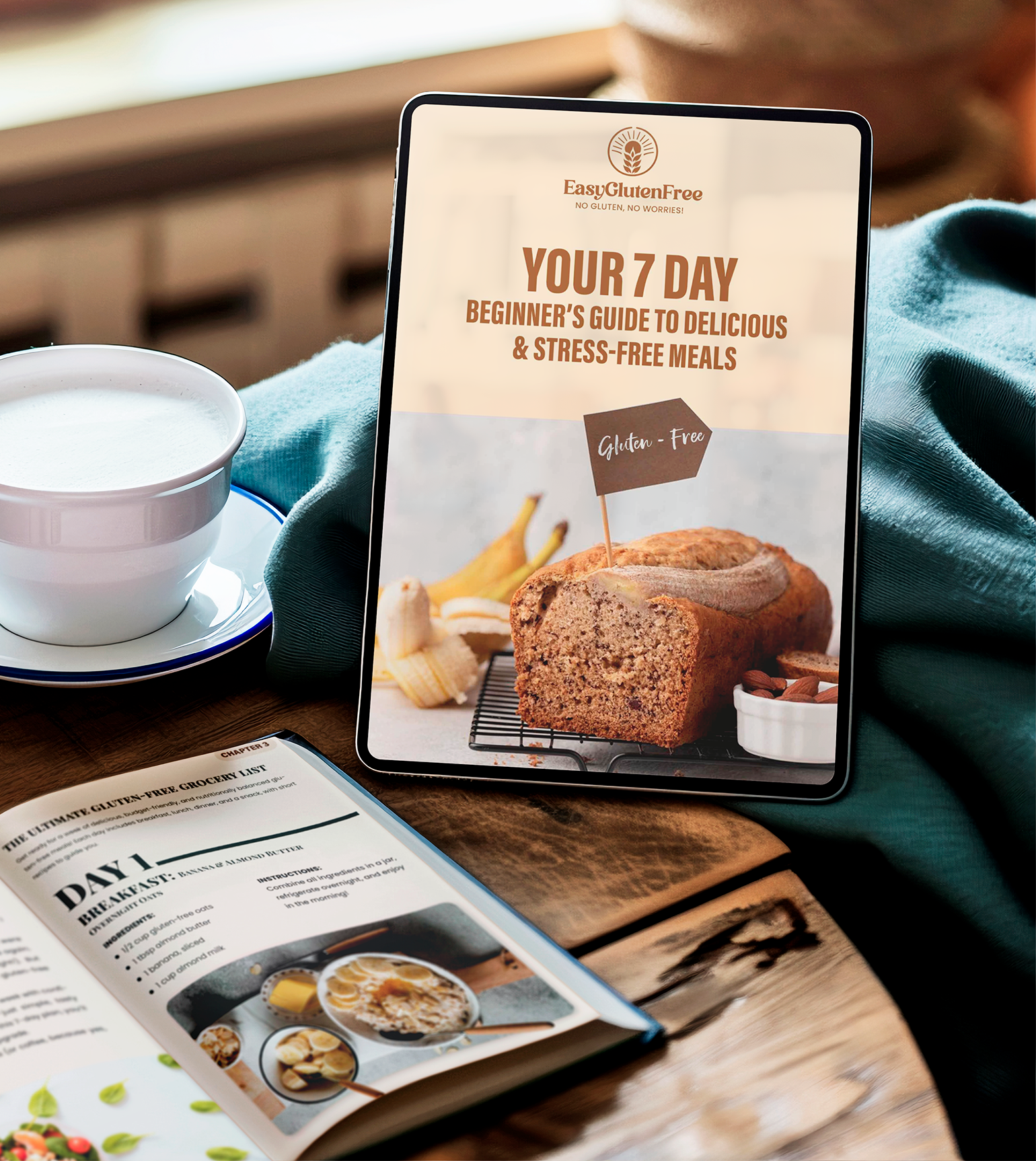
Save your search history some stress. Grab our FREE 7-Day Beginner's Guide and finally have a plan you can actually cook