Blog

Your blog category

Blog

The First Week Gluten-Free: What I Wish Someone Told Me

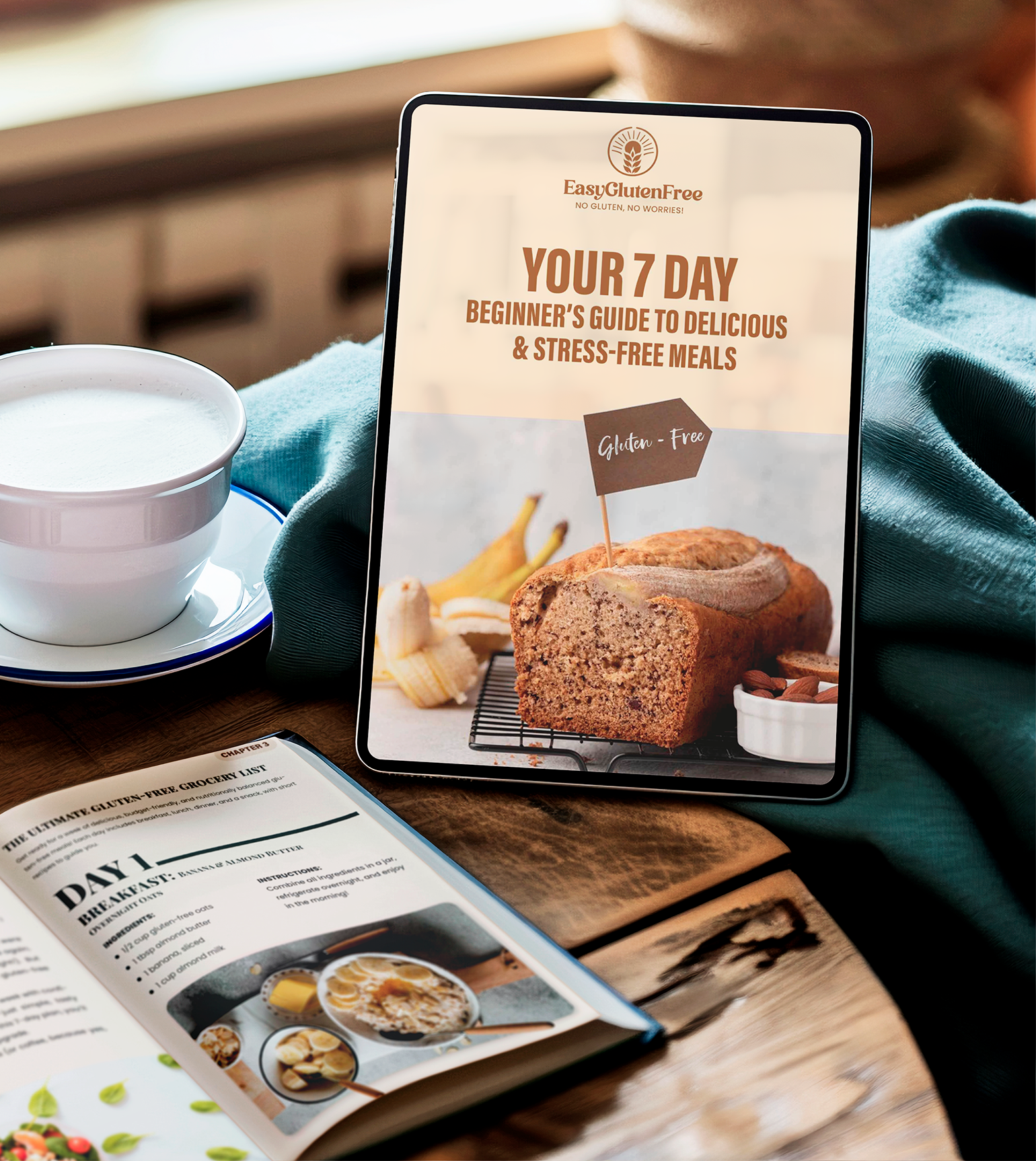
by Claire Bennet | Easy Gluten Free Hi friend,If you’ve just started your gluten-free journey — first, let me give you the biggest virtual hug . I know how overwhelming that first week can feel. You’re reading every ingredient label, Googling things like “Is corn gluten-free?”, and wondering if your favorite pasta night is a thing of the past. I’ve been there — standing in my Sunday Light Kitchen, hungry and confused, staring at a loaf of gluten-free bread that felt more like a brick than food. The good news? It gets easier. So much easier.Here’s everything I wish someone had told me that first week. 1. You Won’t Starve — You Just Need a Plan Let’s get this out of the way: there’s more to gluten-free eating than salads and sadness. You just need a few solid meals to fall back on while you find your groove. That’s why I created a Free 7-Day Gluten-Free Meal Plan — packed with recipes that are: Start with these: 2. You Might Feel Lost — That’s Totally Normal I cried over soy sauce.Not even kidding. You’re learning a whole new way of eating, shopping, and thinking about food. So yes, give yourself grace. Keep snacks on hand. And maybe… don’t plan a dinner party on day 3. If you’re feeling overwhelmed, I wrote this just for you: “Is It Really Gluten-Free?” — How to Read Labels Like a Pro 3. Your Kitchen Needs a Reset (But It Doesn’t Have to Be Fancy) I used to think going gluten-free meant buying all-new everything. But you don’t need to go broke. Start small: More tips here: “How to Set Up a Gluten-Free Kitchen (Without Losing Your Mind)” 4. You Might Grieve Your Old Favorites — And That’s Okay Food is emotional. It connects us to memories, people, and places. So if you find yourself missing a family recipe or crying over your favorite bakery’s croissants… you’re not being dramatic. You’re being human. But I promise: you’ll discover new favorites. Like my Fudgy Gluten-Free Brownies that taste better than boxed mixes. Or homemade pizza with our foolproof gluten-free crust. You’re not giving up joy — you’re just redefining it. 5. Not Everyone Will “Get It” — But You Will Find Your People “Oh, so you’re like one of those gluten-free people?” Yep.And proud of it. You might get side-eyes, eye-rolls, or the dreaded, “Can’t you just eat a little bread?” But don’t let it get to you. The gluten-free community is huge, supportive, and incredibly kind — and I’m so glad you’re here with us. Bonus: The E-Book I Wish I Had in Week 1 I poured my heart into this free beginner’s guide to help you feel confident and supported from day one. Inside, you’ll find: Download “Gluten-Free Made Easy: Your 7-Day Beginner’s Guide” right here Final Words from the Sunday Light Kitchen The first week gluten-free is a wild mix of hope, hunger, and Google searches.But with the right support, you can move from confusion to confidence faster than you think. So go ahead — light a candle, pour yourself a lemony fuzzy drink, and pick your first gluten-free recipe to try. I’m here cheering you on every step of the way. See you soon,—Claire Read Next:
Blog

Celiac Disease vs. Gluten Sensitivity: What’s the Difference?

Have you ever felt bloated, tired, or foggy after eating bread? You might have wondered if you’re sensitive to gluten or even have Celiac Disease. But these two conditions are not the same, and misdiagnosing yourself could have serious consequences for your health. In this article, we’ll break down:✅ The key differences between Celiac Disease and Gluten Sensitivity✅ The science behind these conditions✅ The symptoms to watch out for✅ How to get the right diagnosis So, let’s dive in and separate fact from fiction when it comes to gluten-related disorders! What is Celiac Disease? Celiac Disease is an autoimmune disorder that affects about 1 in 100 people worldwide. When someone with Celiac Disease eats gluten (a protein found in wheat, barley, and rye), their immune system mistakenly attacks the small intestine. What happens inside the body? If left untreated, Celiac Disease can lead to: Common Symptoms of Celiac Disease Celiac symptoms aren’t just digestive-related—they can affect the entire body. Here’s what to watch for: Digestive Symptoms (More common in children)✅ Chronic bloating & gas✅ Diarrhea or constipation✅ Unexplained weight loss✅ Nausea & stomach pain Non-Digestive Symptoms (More common in adults)✅ Extreme fatigue (even after sleeping well)✅ Brain fog & memory issues✅ Skin rash (Dermatitis Herpetiformis) – itchy, painful blisters✅ Joint pain & muscle weakness✅ Frequent headaches or migraines✅ Depression & anxiety Silent Celiac: Some people don’t experience obvious symptoms but still suffer intestinal damage over time! That’s why testing is crucial. What is Gluten Sensitivity? Gluten Sensitivity (also called Non-Celiac Gluten Sensitivity or NCGS) is a condition where people experience symptoms after eating gluten, but their immune system does NOT attack the intestine like in Celiac Disease. How is it different from Celiac? Common Symptoms of Gluten Sensitivity:✅ Bloating & stomach pain✅ Fatigue & brain fog✅ Headaches & migraines✅ Joint pain & inflammation Unlike Celiac Disease, Gluten Sensitivity does not cause malabsorption or long-term damage. Some people with Gluten Sensitivity may tolerate small amounts of gluten, while others feel better when they avoid it completely. Celiac vs. Gluten Sensitivity: Key Differences Feature Celiac Disease Gluten Sensitivity Cause Autoimmune reaction to gluten Possible immune response, but NOT autoimmune Damage to Intestines? ✅ Yes (Villi are destroyed) ❌ No Malabsorption Issues? ✅ Yes (Nutrient deficiencies) ❌ No Symptoms Digestive + Full-body effects (anemia, osteoporosis, infertility) Mainly bloating, fatigue, and headaches Testing Available? ✅ Blood test & biopsy ❌ No official test Treatment 100% gluten-free diet for life Gluten avoidance based on tolerance How to Get the Right Diagnosis DO NOT go gluten-free before testing—this can lead to a false negative! Steps to Diagnose Celiac Disease:1️⃣ Blood Test – The tTG-IgA test detects antibodies linked to Celiac Disease.2️⃣ Endoscopy + Biopsy – If bloodwork is positive, a doctor will examine villi damage in the small intestine.3️⃣ Genetic Testing – The HLA-DQ2 & HLA-DQ8 genes can rule out Celiac but cannot confirm it alone. How to Diagnose Gluten Sensitivity? The Risks of Misdiagnosis Many people assume they have Gluten Sensitivity without getting tested for Celiac Disease—but this can be dangerous! Why? If you suspect gluten is affecting you, get tested properly! Final Thoughts: Celiac vs. Gluten Sensitivity – Which One Do You Have? If you have severe symptoms, weight loss, anemia, or nutrient deficiencies, get tested for Celiac Disease ASAP. If you feel bloated and fatigued but tests for Celiac are negative, you might have Gluten Sensitivity. If in doubt, work with a doctor before cutting out gluten completely! ✅Both conditions require awareness and careful management, but Celiac Disease is a serious autoimmune disorder that needs lifelong vigilance. Have you ever been tested for Celiac or Gluten Sensitivity? Share your experience in the comments below! #CeliacDisease #GlutenSensitivity #GlutenFreeLife #GutHealth Sources & References: 1️⃣ Mayo Clinic – Celiac Disease Overview (www.mayoclinic.org)2️⃣ Celiac Disease Foundation – Symptoms & Diagnosis (www.celiac.org)3️⃣ National Institute of Diabetes and Digestive and Kidney Diseases (NIDDK) – Gluten Sensitivity Research (www.niddk.nih.gov)4️⃣ Harvard Medical School – Gut Health & Gluten (www.health.harvard.edu)

Scroll to Top

We See You Googling
‘Easy Gluten-Free Dinner’ Again​

Save your search history some stress. Grab our FREE 7-Day Beginner's Guide and finally have a plan you can actually cook