Download the Free Guide to Confident Gluten-Free Travel

Gluten-Free Travel Toolkit: How to Eat Safely and Stress Less on the Go
Traveling while gluten free can absolutely be exciting instead of anxiety-inducing—if you go in with a solid plan. This guide walks you through practical steps, tools, and scripts so you can explore new places, eat well, and still protect your gluten-free lifestyle without feeling like “that difficult guest” everywhere you go.
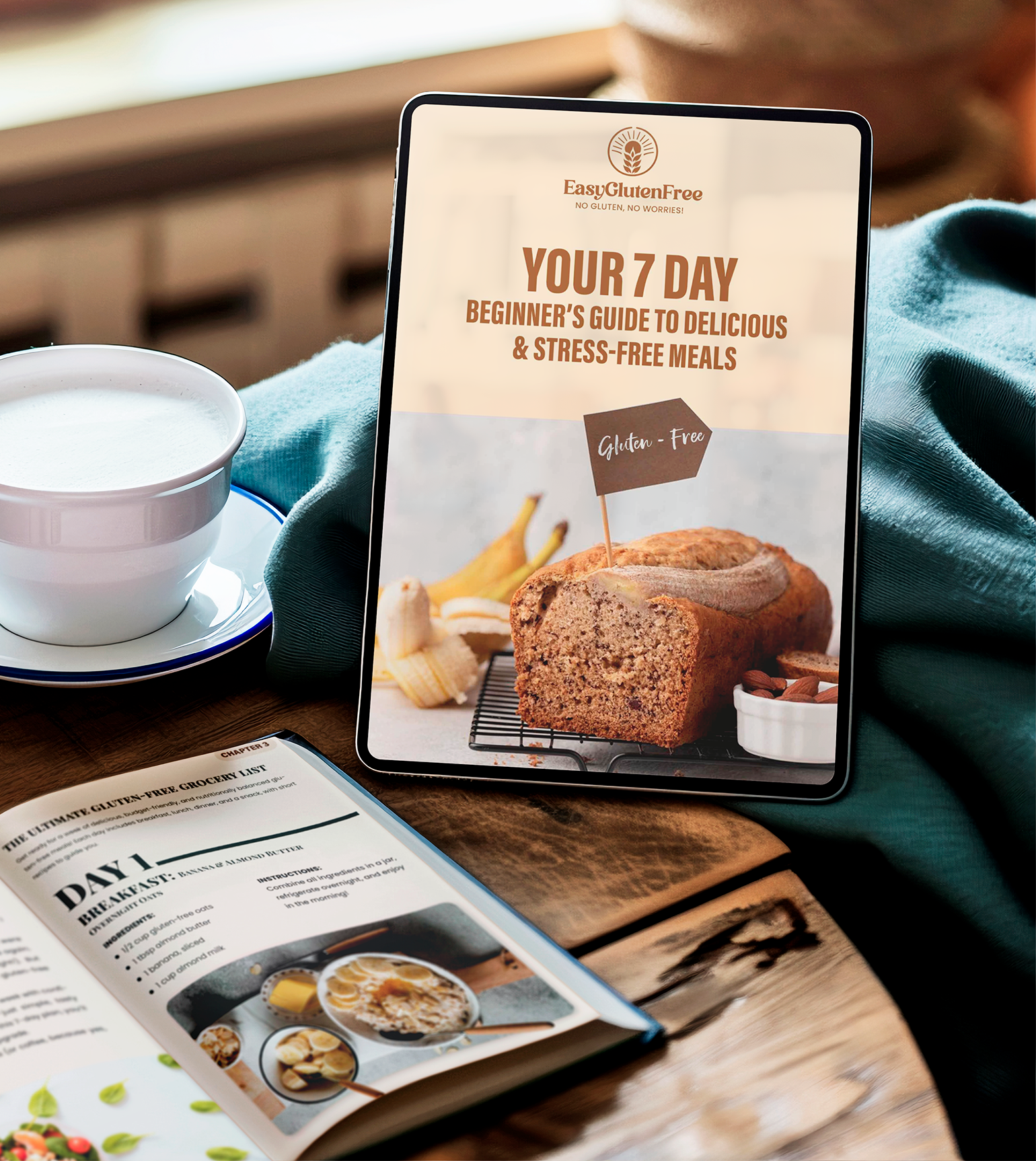
Download Our Free Gluten-Free Starter Guide
- 7-day meal plan
- shopping list
- Tips & 3 beginner-friendly recipes
Introduction
“Will there be anything I can actually eat?” is one of the most common questions people ask themselves before traveling gluten free. Whether you’re dealing with celiac disease, non-celiac gluten sensitivity, or you simply feel better avoiding gluten, being away from your familiar kitchen and trusted brands can feel risky.
The good news: with a bit of preparation, the right questions, and a few smart tools in your bag, gluten-free travel is not only possible—it can be enjoyable. You can say yes to spontaneous gelato stops, cozy cafés, and work trips without living on plain salad and panic alone.
This article is your practical gluten-free travel toolkit. We’ll cover how to plan ahead, communicate your needs, use at-the-table testing tools wisely, pack smart snacks, and handle those “uh-oh, I might have been glutened” moments with more calm and less chaos. Use it as a checklist before each trip so you can focus more on the adventure and less on reading every crumb on your plate.
Table of Contents
▾
1. Planning a Gluten-Free Trip from Start to Finish
Strong planning is what turns a stressful gluten-free trip into a confident one. Think of it as building a safety net before you ever step on the plane, train, or in the car. You don’t need to control every variable (you can’t), but you can stack the odds heavily in your favor.
Choose destinations and accommodations strategically
Some destinations are naturally more gluten-free friendly than others. Big cities, wellness-oriented areas, and places with strong tourism often offer more options. When you can, prioritize:
- Destinations with known gluten-free restaurants or bakeries (search “[city] gluten-free restaurant” in advance).
- Regions where rice, corn, potatoes, or naturally gluten-free grains are staples.
- Places where ingredient labeling laws are relatively strong and transparent.
Accommodation matters just as much as the location itself. If you can, look for:
- Short-term rentals or aparthotels with at least a mini-kitchen so you can prepare a few safe meals.
- Hotels with mini-fridges so you can store safe snacks, dairy, or leftovers.
- Places near supermarkets or health food stores you’ve already pinned on your map.
Before you book, it’s completely reasonable to email or call a hotel and ask, “Do your rooms include a fridge, kettle, or microwave?” or “Is it possible to have a clean pan/utensil available?” Many are happy to help if they know in advance.
Research restaurants before you go
Once your destination is set, spend an hour building a short list of promising spots. Your goal is not perfection—it’s to make sure you’re not arriving hungry and desperate with zero leads.
Use a combination of:
- Google Maps and reviews that mention “gluten-free,” “celiac,” or “allergy friendly.”
- Local gluten-free Facebook groups or community forums (search “gluten free + [city] group”).
- Blogs or local guides written by people who are gluten free and live in or visited your destination.
Create a short list of 5–10 options and note:
- Address and neighborhood.
- Typical hours and whether they take reservations.
- Any mention of cross-contact awareness in reviews.
If a spot looks especially promising, email or message them before your trip. Share your needs simply and ask what they can realistically do. This not only informs you; it also gives them time to prepare.
Plan for the “edges” of travel: airports, stations, and gas stops
Many gluten-free travelers run into trouble not at the destination, but on the way there. Airport food courts, roadside diners, and train snacks can be unpredictable.
Before departure:
- Check your airport’s website for a list of restaurants and browse menus online.
- Look up chains you already trust at home and see if they’re at your route hubs.
- Pack a “just in case” meal (like a hearty salad, cold pasta, or rice-based dish in a leak-proof container) if allowed in your region.
For road trips, pin supermarkets along your route. A quick stop to grab fresh fruit, yogurt, chips labeled gluten free, or prepared salads can be safer than relying purely on fast food.
Create a simple travel folder or note
To avoid mental overload, collect everything in one place you can quickly refer to:
- Restaurant shortlist with addresses and hours.
- Accommodation booking and notes (kitchen, fridge, neighborhood supermarket).
- Key phrases in the local language if traveling abroad (explaining you must avoid gluten).
- Photos of any doctor or dietitian notes if you like having documentation.
This can be as simple as a shared Google Doc or a notes app folder. The magic is not in complexity—it’s in having your plan visible when you’re tired, hungry, and jet-lagged.
2. Gluten Testing on the Go: How Tools Fit into Your Travel Strategy
Gluten testing tools are becoming more common in the gluten-free world, especially for travelers. They can offer extra data points when you’re in unfamiliar places, reading menus in another language, or trying foods with hidden ingredients.
It’s helpful to think of these tools as one piece of a bigger strategy—not a replacement for asking questions, choosing restaurants carefully, or listening to your body. No device can see the entire kitchen, understand how bread crumbs fly, or change how a restaurant trains its staff.
When testing might be useful while traveling
Some gluten-free travelers like to use testing tools in a few specific situations:
- When a dish is naturally gluten free, but there’s a question about sauces, marinades, or seasonings.
- Eating in a place where there’s a language barrier and communication feels unclear.
- Trying packaged food from another country where labeling norms are unfamiliar.
- On big travel days when getting sick would seriously disrupt your plans and you want extra reassurance.
Testing tools can be especially appealing if you know you react strongly even to very small amounts of gluten and want more data points before you dive in.
What testing can—and cannot—tell you
At-the-table testing devices and capsules help you test a small sample of food for the presence of gluten above a specific threshold. Results are usually delivered quickly enough that you can decide whether to move ahead with eating the dish you ordered.
It’s important to keep a few realities in mind:
- They test only the portion of food you put in the capsule or device.
- Different foods can behave differently in a test because of fat content, fermentation, or complexity.
- No tool can guarantee that every bite of an entire meal will be gluten free.
- Results are information—not a diagnosis, medical advice, or a perfect guarantee of safety.
Used thoughtfully, though, they can bring extra peace of mind, especially when you feel like you’ve already done your part with good communication and restaurant selection.
How to integrate testing into your travel routine
If you decide to bring a gluten testing tool on your trip, a few practices can help you get the most out of it:
- Use it as a backup, not your only defense. Still ask your server questions and explain your needs.
- Test the riskiest components. Sauces, fried items, and grain-based dishes may be more informative to test than, say, plain salad greens.
- Build in a time buffer. Order a safe starter or drink first so you’re not starving while waiting for test results.
- Notice patterns over time. If certain types of restaurants or meals often test high, that tells you something useful for future trips.
Remember: the goal isn’t perfection. It’s to give yourself one more layer of information so you can make decisions you feel good about, instead of guessing in the dark.
Nima gluten sensor test
These single-use capsules pair with the Nima Sensor to help users test foods for gluten on the spot. Perfect for travelers, researchers of their own digestive reactions, or anyone who just doesn’t trust that café’s “gluten-free… we think?” answer. A reliable, quick-gluten-detection option that empowers people who want data—not guesswork.

3. Eating Out Safely: Questions, Scripts, and Smart Choices
Restaurants are often the most stressful part of gluten-free travel, but a few reliable habits can make the experience much smoother. Think of each meal as a little collaboration between you and the staff: you bring clarity, they bring effort.
Start with the right kinds of restaurants
Before you even sit down, you can tilt the odds in your favor by choosing:
- Restaurants that clearly mark allergens or offer specific gluten-free menus.
- Places that cook mostly from scratch with simple, whole ingredients.
- Cuisines that have naturally gluten-free options (grill houses, some Mediterranean or Asian spots—always confirm ingredients).
- Places where reviews mention “celiac,” “allergy awareness,” or “cross-contamination training.”
Buffets, all-you-can-eat setups, and very busy fast-food counters tend to be higher risk because cross-contact is harder to control.
Use simple, clear scripts with staff
You don’t have to give your entire health history at the table. A short, direct explanation is often more effective. For example:
“I need my food to be strictly gluten free, including avoiding cross-contact with gluten. Is there someone who can help me choose the safest options?”
Then, follow with specific questions, such as:
- “Do you have a separate area or procedure for preparing gluten-free meals?”
- “Are your fries cooked in a shared fryer with breaded foods?”
- “Is the sauce/marinade on this dish thickened with wheat flour or roux?”
- “Can this be cooked in a clean pan with clean utensils?”
If the person answering seems unsure, it’s okay to gently push for clarity or choose something simpler like grilled meat, plain rice, and steamed vegetables.
Safer ordering strategies
When in doubt, stay close to meals built around naturally gluten-free ingredients, and strip away anything that seems mysterious. Consider:
- Grilled fish or meat seasoned with salt, pepper, and herbs (no sauces unless confirmed safe).
- Plain potatoes, rice, or polenta as sides.
- Simple salads with oil and vinegar instead of creamy dressings or house-made sauces.
- Omelets or eggs cooked in a clean pan (checking that no pancake batter or toast crumbs share the space).
Ask for bread baskets to be removed from the table if crumbs feel like a concern, and request your plate be carried separately from gluten-heavy dishes for a little extra margin.
Red flags that might mean it’s time to pivot
Everyone’s comfort level is different, but common warning signs include:
- Staff who say, “We have gluten-free options, but we can’t avoid cross-contact at all.”
- Brush-offs like, “Lots of people eat this and they’re fine,” instead of specific answers.
- Menus that mark items as gluten free but reviews from gluten-free guests say otherwise.
- Very chaotic environments where staff seem overwhelmed and rushed.
It’s perfectly okay to have a drink or side dish, then move on to another place or eat something you’ve packed instead. Protecting your health and your peace of mind is more important than forcing a risky meal.
Recipe Inspiration
Try these gluten-free staples loved by thousands:



4. What to Pack: Gluten-Free Travel Snacks and Essentials
Your carry-on or day bag is your safety blanket. When you know you have food that works for you, it’s much easier to walk past uncertain options without feeling panicked or deprived.
Build a balanced snack kit
Instead of loading up only on sweets or only on protein bars, aim for a mix that keeps your energy steady:
- Protein and healthy fats: nut or seed packets, individual nut butter squeeze packs, gluten-free jerky, shelf-stable cheese portions (where appropriate).
- Slow carbs: gluten-free crackers, oat-based bars labeled gluten free, rice cakes, popcorn, instant gluten-free oatmeal cups (for hotel kettles).
- Fruits and extras: apples, oranges, dried fruit, single-serve olives or pickles, dark chocolate.
Pack foods in resealable bags or small containers so you can portion things out during the day and avoid crumbs all over your bag.
Bring “anchor meals” for long travel days
For flights, train rides, or long drives, it’s helpful to pack one or two simple “anchor meals” so you’re not relying entirely on what’s sold on board.
Ideas (depending on travel rules in your region):
- Gluten-free cold pasta salad with veggies and olive oil.
- Rice or quinoa bowls with beans, veggies, and a vinaigrette.
- Hearty salad jars with dressing stored separately.
- Gluten-free sandwiches or wraps tightly wrapped in foil or beeswax wrap.
Always check security and customs rules about bringing fresh foods, especially when crossing borders. When in doubt, finish fresh items before landing and keep packaged goods sealed.
Non-food essentials that make trips easier
A few small, lightweight extras can make gluten-free travel far more comfortable:
- A compact cutting board or travel plate and a dedicated knife/fork/spoon set.
- Resealable bags for leftovers or dividing bulk snacks.
- Travel-sized dish soap and sponge if you’ll be washing up in a hotel room or rental.
- Printed or digital gluten-free restaurant cards in the local language, if abroad.
- A small notebook or notes app entry where you jot down meals and how you felt, if you like tracking patterns.
Consider also packing any comfort items you reach for at home on tougher days: your favorite herbal tea bags, a cozy snack you associate with feeling safe, or a simple soup mix you can prepare with hot water.
5. Handling Mistakes, Setbacks, and “Glutened” Days
Even with careful planning, clear communication, and smart tools, gluten accidentally sneaks in sometimes. It happens to almost everyone living gluten free, especially when traveling. What matters most is how you respond—not whether you managed to avoid every single crumb.
Step one: pause and assess
If you suspect you might have eaten gluten, take a breath. Notice what you’re feeling and when it started. Ask yourself:
- What did I eat earlier that could reasonably contain gluten?
- Did anything feel off about the meal (uncertain sauce, confusing conversation, rushed staff)?
- Do my current symptoms match what I usually feel when I’ve had gluten, or could it be something like fatigue, dehydration, or general travel stress?
Keeping mental or written notes about your typical reactions can help you spot patterns over time and give more context to your experiences.
Focus on gentle care for the rest of the day
There’s no universal “fix,” but many people find it helpful to focus on gentler choices until they feel better:
- Stick to simple, easy-to-digest gluten-free foods for your next meals.
- Hydrate steadily with water, herbal teas, or broths.
- Build in extra rest time, even if it means adjusting your sightseeing plans.
- Wear comfy clothes and give your body space to decompress.
You know your body best. If you work with a healthcare professional or dietitian, keep their general guidance in mind and reach out if you have questions about your usual response patterns.
Adjust your plan, not your entire trip
After you’ve taken care of yourself, look back at what happened with curiosity instead of criticism. Ask:
- Was there a step in my process I skipped (like asking about a shared fryer)?
- Did I feel rushed or pressured to order faster than I was comfortable with?
- Is there a type of restaurant or dish I want to avoid for the rest of this trip?
Then make one or two simple tweaks. Maybe you shift toward restaurants that are 100% gluten free, or you rely more heavily on your own snacks the next day. Maybe you decide to use testing tools more consistently for certain foods.
Gluten-free travel is a skill you build over time, not a test you either pass or fail. Every trip teaches you something that will make the next one easier.
Remember the big picture
Living gluten free does ask more of you when you travel—but it doesn’t have to cancel your sense of adventure. With a thoughtful plan, supportive tools, and a willingness to learn as you go, you can create trips that are both joyful and safe enough for your needs.
Keep refining your system: the restaurants you trust, the snacks that always work, the questions that unlock honest answers, and the tools that help you feel informed. Over time, what feels overwhelming now becomes a routine you can run almost on autopilot—leaving more energy for exploring, connecting, and actually enjoying the journey.
Key Takeaways
- Thoughtful planning—choosing the right destination, accommodation, and restaurant short list—dramatically reduces gluten-free travel stress.
- Gluten testing tools can offer extra data on the road, but they work best alongside clear communication and careful restaurant selection.
- Using simple, direct scripts with staff and prioritizing naturally gluten-free meals helps you eat out more safely and confidently.
- A well-packed snack and essentials kit turns airports, road trips, and busy days into manageable, low-stress experiences.
- Accidental gluten exposures can still happen; respond with gentle self-care, small adjustments, and a long-term mindset rather than self-blame.
Take the Next Step in Your Gluten-Free Journey
- Download the Free EGF Starter Guide
- Try our Gluten-Free Planner to simplify your week
- Explore our growing recipe library
You don’t have to navigate the gluten-free lifestyle alone, we are here to make it easier every day.
Category: Travel