Grab Your Free Guide to Confident Gluten-Free Dining Out

How to Test Restaurant Food for Hidden Gluten (Without Feeling Awkward)
Navigating restaurant menus when you’re gluten-free can feel like a risky experiment—especially when you’ve been burned by “gluten-free… we think?” before. This guide walks you through practical, real-world ways to test restaurant food for hidden gluten, set boundaries with confidence, and enjoy eating out again without the constant anxiety.
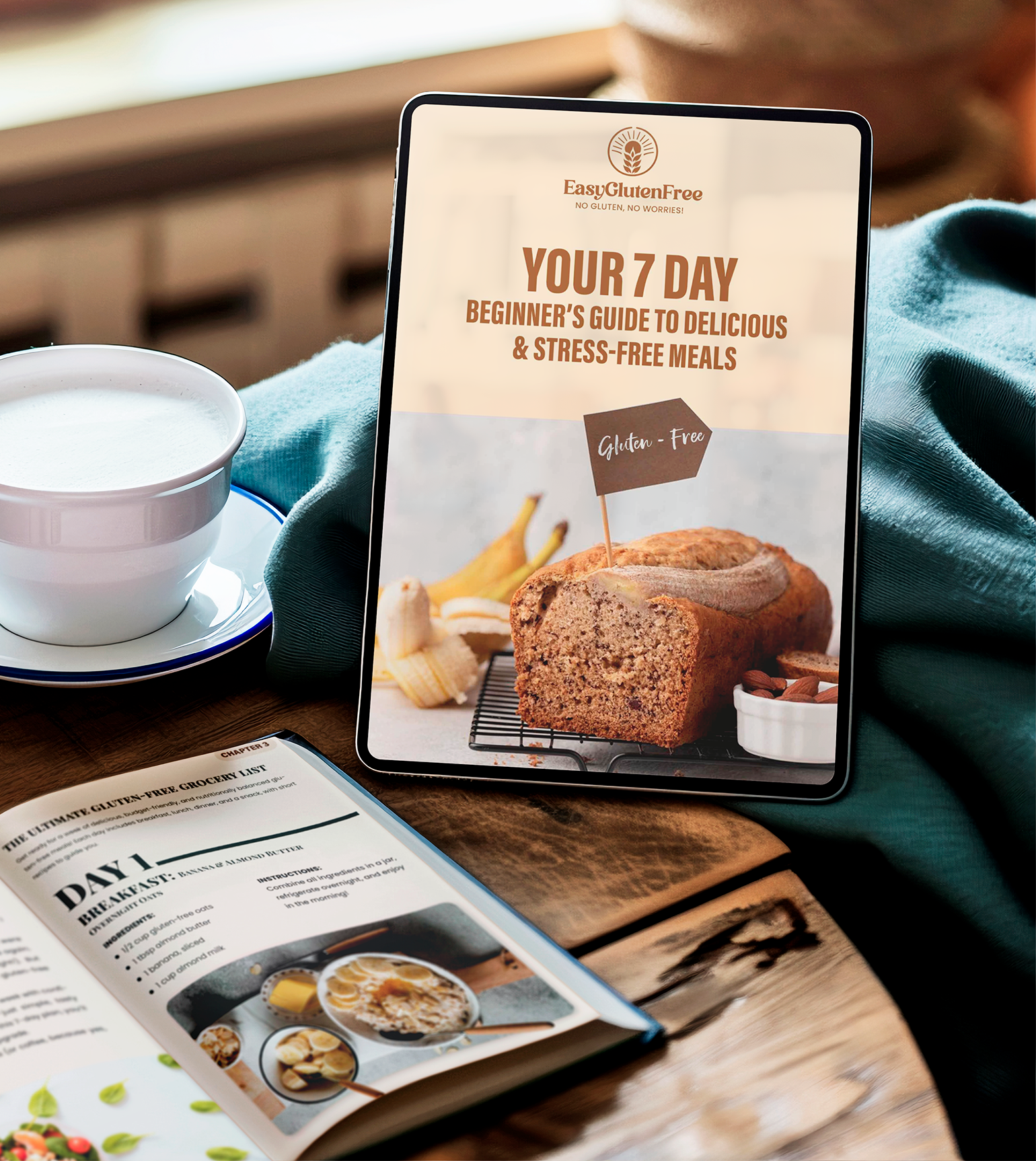
Download Our Free Gluten-Free Starter Guide
- 7-day meal plan
- shopping list
- Tips & 3 beginner-friendly recipes
Introduction
Eating out when you’re gluten-free can be equal parts exciting and nerve‑wracking. You want to say yes to dinners, dates, and trips—but you also don’t want to spend the night reading every label in the kitchen (or worse, getting sick because something wasn’t truly gluten-free). The good news: you can absolutely enjoy restaurant meals while staying safe; you just need a system that helps you test for hidden gluten in a calm, confident way.
This article walks you through exactly how to do that. We’ll talk about how to assess risk before you even sit down, what to ask your server, how to spot red flags on the menu, and how to use at-the-table gluten-testing tools to get real answers when you need them. Think of it as your step‑by‑step playbook for turning “I hope this is safe” into “I know what I’m choosing and why.”
Whether you’re managing celiac disease, non-celiac gluten sensitivity, or simply feel better gluten-free, you deserve to enjoy meals out without constant second‑guessing. Use this guide to build a repeatable routine you can lean on at local spots, family gatherings, and while traveling—so food becomes fun again, not a full‑time investigation.
Table of Contents
▾
1. Understanding the Risks of Hidden Gluten When Eating Out
Before you can confidently test restaurant food, it helps to understand where gluten commonly sneaks in. Hidden gluten isn’t usually about obvious bread or pasta—it’s often in the tiny details: a dusting of flour on the grill, a splash of soy sauce in the marinade, or fries sharing oil with breaded nuggets.
Common restaurant sources of hidden gluten
- Sauces and dressings: Many gravies, pan sauces, salad dressings, and marinades use wheat flour or malt vinegar as thickeners or flavor boosters.
- Shared fryers: Even if the fries or chips themselves are gluten-free, oil that’s also used for breaded foods can carry gluten crumbs.
- Seasoned or pre-marinated proteins: Some spice blends and marinades contain wheat, barley, or gluten-containing soy sauce.
- Cross-contact on surfaces: Cutting boards, toasters, pizza peels, and grill tops can all introduce gluten if not cleaned or separated correctly.
- “Secret” ingredients: Crouton crumbs in salads, flour in omelets, or a roux in soups are common—and not always mentioned on the menu.
Why “gluten-friendly” isn’t the same as gluten-free
Many restaurants now use terms like “gluten-friendly” or “low gluten.” These phrases typically mean they’re reducing gluten where possible, not that strict procedures are in place to prevent cross-contact. If you’re highly sensitive, take these labels as a conversation starter, not a guarantee.
Instead of trusting a menu label alone, focus on two things you can control:
- The questions you ask (how they prepare food, where it’s cooked, how they prevent cross-contact).
- How you verify when you’re unsure—for example, by testing questionable foods at the table.
Deciding your personal comfort level
Everyone’s risk tolerance and sensitivity level is different. Some people are comfortable eating at places that use a shared fryer but offer dedicated prep areas; others only eat at restaurants with a separate gluten-free kitchen space. Your comfort level might also change depending on the situation—like being more cautious before a long flight or big event.
Take a minute to consider:
- How do you typically react to small amounts of gluten?
- Are you okay with potential cross-contact if preparation sounds careful, or do you need very strict control?
- How important is this meal compared to the risk (e.g., casual lunch vs. vacation you’ve waited for all year)?
Knowing your personal boundaries makes it much easier to decide when to walk away, when to ask more questions, and when to add an extra layer of reassurance by testing your food.
2. Smart Ways to Test Restaurant Food for Hidden Gluten
Once you understand where gluten can hide, the next step is figuring out how to verify what’s in front of you. While no method is perfect, combining good communication with smart testing tools can dramatically lower your risk and raise your confidence when eating out.
Start with a “risk scan” before you order
Before you even think about testing a dish at the table, do a quick risk scan:
- Read the menu carefully: Note where gluten-heavy items are concentrated (fried foods, breaded dishes, gravies, desserts).
- Look for naturally gluten-free choices: Simply grilled meats or fish, plain baked potatoes, salads without croutons, and steamed vegetables are usually safer starting points.
- Consider the cuisine: Some cuisines, like traditional Italian or classic pub food, lean heavily on wheat. Others, like many Mexican or Thai dishes, can be more naturally gluten-free—but still need careful checking.
When table-side testing can be helpful
Gluten-testing tools can be especially useful when:
- The ingredients list is long or complex (think sauces, marinades, or layered dishes).
- You’re traveling and can’t easily replace the meal if it goes wrong.
- The restaurant staff seems willing but not fully trained on gluten-free procedures.
- You’ve had issues at that restaurant—or similar ones—before.
Testing a small portion of your food before eating the full dish can provide an extra data point to help you decide whether to dig in or send it back.
How to integrate testing without feeling awkward
If you’re worried about standing out, here are a few low‑key strategies:
- Tell your server up front: A simple “I use a small gluten tester sometimes; don’t be alarmed if you see me checking a sample” can normalize it.
- Test a bite from the side of the plate: You don’t need much food for most testing tools, so you can quietly test without dismantling the whole dish.
- Use testing as backup, not a replacement: Always pair testing with questions and smart ordering—think of it as a seat belt, not the entire car.
Remember, your goal isn’t to be the “difficult” customer; it’s to take care of your health. You’re allowed to use tools that help you do that.
Nima gluten sensor test
These single-use capsules pair with the Nima Sensor to help users test foods for gluten on the spot. Perfect for travelers, researchers of their own digestive reactions, or anyone who just doesn’t trust that café’s “gluten-free… we think?” answer. A reliable, quick-gluten-detection option that empowers people who want data—not guesswork.

3. How to Talk to Restaurants About Gluten-Free Needs
Even the best testing tool can’t replace clear communication. In most cases, your safest meals come from restaurants that understand your needs and are willing to adapt their process. The key is to keep your questions simple, specific, and kind—but firm.
What to say when you first sit down
When your server arrives, aim for a short, clear script. For example:
“I need to eat strictly gluten-free. That means no wheat, barley, or rye, and I also need to avoid cross-contact from things like shared fryers or cutting boards. Could you help me choose a safe option, and maybe check with the kitchen?”
This does three things at once:
- Signals that this is a medical-level need, not a preference.
- Makes cross-contact part of the conversation from the start.
- Invites the server to be part of the solution, not just a messenger.
Targeted questions that reveal a lot
Instead of asking, “Is this gluten-free?” try questions that require concrete answers:
- “Is this cooked on a shared grill or in a shared fryer?”
- “Is there flour or soy sauce in this marinade or sauce?”
- “Can the kitchen prepare this in a clean pan with clean utensils?”
- “Are any pre-made components (like dressings or soups) thickened with flour?”
Pay attention not only to the answers, but also to how confidently they’re given. If you hear “I’m not sure,” “I think so,” or “We get it pre-made,” that’s your cue to either ask for more information or choose something simpler.
Red flags that may mean it’s time to leave
It might feel uncomfortable to walk out after you’re seated, but your health comes first. Consider leaving or just ordering a drink if:
- The staff seems annoyed or dismissive when you mention gluten-free needs.
- No one is willing to check ingredients or ask the kitchen.
- You’re told, “We can remove the bun; that makes it gluten-free,” with no mention of cross-contact.
- You see obvious cross-contact issues, like gluten-free bread sliced on the same board as regular bread.
How to respond if a test raises concerns
If you test a dish and decide it’s not safe for you, you don’t have to apologize for protecting your body. You also don’t need to show or explain your testing device if you don’t want to. You might simply say:
“I’m really sorry, but I don’t feel comfortable eating this dish. Would it be possible to choose something else that’s simpler—maybe just grilled protein and vegetables prepared in a clean pan?”
Staying calm and respectful usually keeps the conversation constructive, and many restaurants genuinely do want to get it right—especially if you give them a chance to fix it.
Recipe Inspiration
Try these gluten-free staples loved by thousands:



4. Travel, Takeout, and Buffets: Extra-High-Risk Situations
Some eating situations come with built‑in extra risk, simply because there are more moving parts and less control. You don’t have to avoid them completely, but it helps to have a plan.
Traveling while gluten-free
When you’re away from home, restaurant choices can be limited—and language barriers, new cuisines, or tight schedules can make communication harder. A few strategies that help:
- Research ahead of time: Look up gluten-aware restaurants, hotels, and bakeries near where you’re staying. Save a short list and their addresses in your phone.
- Learn key phrases: If traveling abroad, save simple translations explaining that you must avoid wheat, barley, rye, breaded foods, and shared fryers.
- Pack a small backup kit: Include safe snacks, a protein source you tolerate well, and any testing tools you like to use.
Knowing you have options—and a backup plan—takes a lot of pressure off each restaurant choice.
Takeout and delivery
With takeout, you lose the chance to send a dish back if something looks off, so front‑loading the communication is even more important. When ordering:
- Mention your gluten-free needs clearly in the order notes.
- Ask for gluten-free meals to be packaged separately from gluten-containing foods.
- When food arrives, inspect before eating: look for stray croutons, crumbs, or sauces you didn’t approve.
If something looks questionable, trust your instincts. It’s always okay to skip a dish rather than risk a reaction.
Buffets, shared plates, and family-style dining
Buffets and shared dishes can be particularly tricky because cross-contact is almost impossible to control once other people are serving themselves.
- At buffets: Look for dishes that haven’t been touched much and haven’t had utensils swapped between trays. When in doubt, ask if you can be served directly from the kitchen instead.
- Shared plates: If everyone is dipping into the same dish with shared utensils or bread, your safest option is to ask for your own separate plate.
- Family events: Consider bringing your own gluten-free dish and serving it first with clean utensils before it goes on the main table.
You don’t have to call a spotlight on yourself—simple phrases like, “I’ll grab my portion first, I have to avoid cross-contact,” usually do the trick.
5. Building Your Personal Restaurant Safety Checklist
Every gluten-free person eventually builds their own set of “rules” for eating out. Writing yours down transforms trial‑and‑error into a simple checklist you can rely on, especially on days when you’re tired or overwhelmed.
Your pre-restaurant checklist
- Look up the menu online and identify 2–3 potentially safe options.
- Check reviews for mentions of gluten-free knowledge or celiac-friendliness.
- Call ahead if needed to ask about shared fryers, separate prep areas, or gluten-free options.
- Decide your “non-negotiables” for that meal—for example, no shared fryer, no crouton removal, no guessing on sauces.
Your at-the-table checklist
- Let your server know you must eat strictly gluten-free and mention cross-contact.
- Ask specific questions about how your chosen dish is prepared.
- Confirm substitutions (like no croutons, gluten-free bun, or sauce on the side).
- Visually inspect your plate when it arrives—does it match what you discussed?
- If you use a testing tool, test a small sample before eating the full portion.
Your post-meal notes
After you leave, take a moment to record how it went. A quick note on your phone is enough:
- Did staff seem knowledgeable and careful?
- Did you feel confident and heard?
- How did your body feel afterward?
- Would you eat there again? If so, what would you order next time?
Over time, you’ll build your own trusted list of restaurants and “safe orders,” which means less guessing and more enjoying. You’ll also get faster at spotting places that truly understand gluten-free dining—and those that are better skipped.
Remember: your job isn’t to be a perfect gluten detective. It’s to gather enough information, through smart questions and tools, to make choices you feel comfortable with. That confidence is what turns eating out from stressful to joyful again.
Key Takeaways
- Hidden gluten in restaurants often comes from sauces, shared fryers, and cross-contact—not just obvious bread and pasta.
- Start every meal out with a quick “risk scan” of the menu and a short, clear explanation of your gluten-free needs.
- Use focused questions and, when helpful, table-side testing tools to gather real information about what’s on your plate.
- High‑risk situations like travel, takeout, and buffets require extra planning, backup snacks, and clear communication.
- A simple personal checklist helps you turn stressful guesswork into a repeatable, confident gluten-free restaurant routine.
Take the Next Step in Your Gluten-Free Journey
- Download the Free EGF Starter Guide
- Try our Gluten-Free Planner to simplify your week
- Explore our growing recipe library
You don’t have to navigate the gluten-free lifestyle alone, we are here to make it easier every day.
Category: Eating Out Gluten-Free