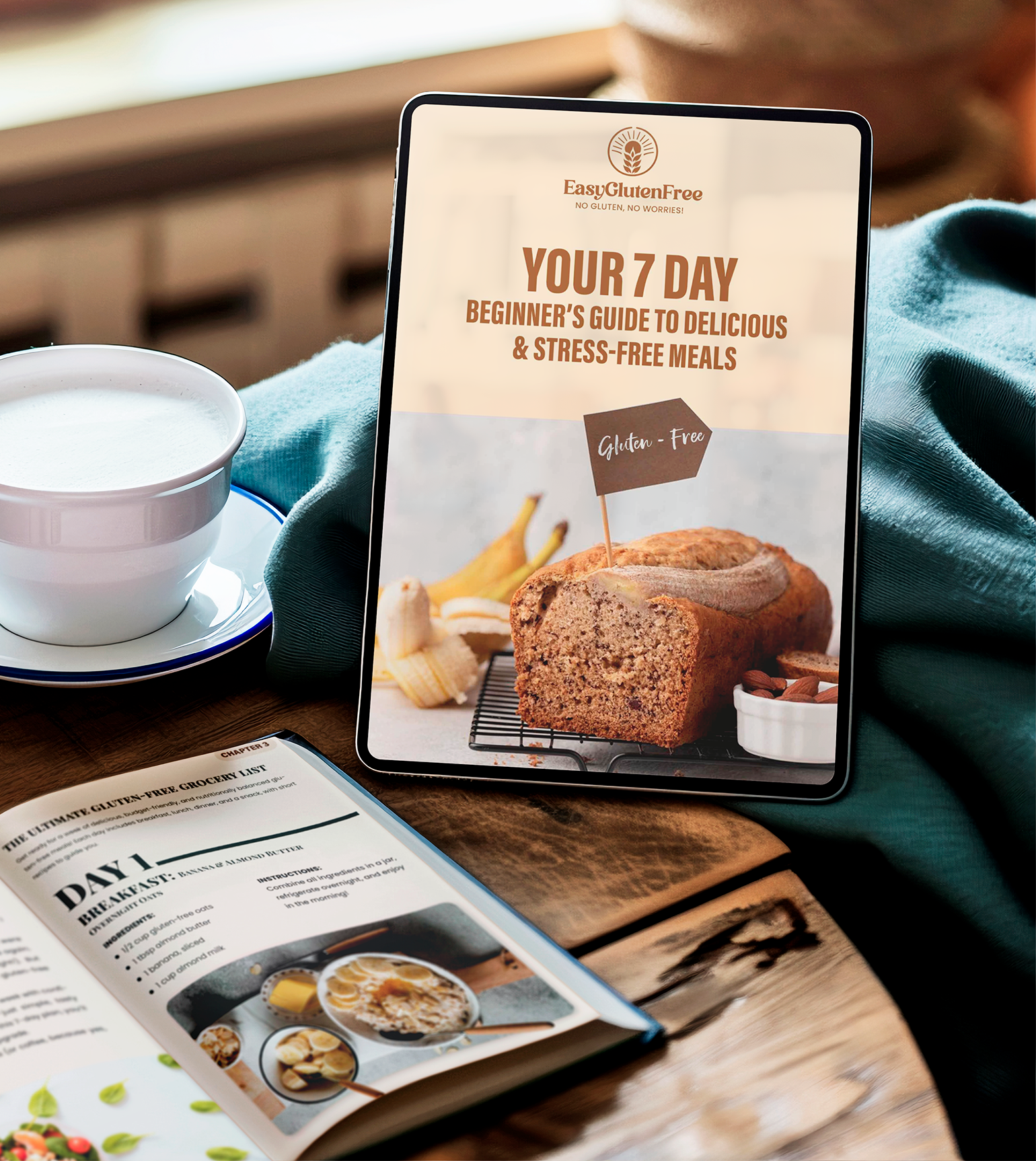
Download the Free Guide to Stress-Free Gluten-Free Living

Gluten Cross-Contamination: How to Avoid Hidden Gluten and Stay Safe
Gluten cross-contamination is the sneaky reason many people still feel “off” even after going fully gluten-free. In this guide, you’ll learn exactly where hidden gluten likes to lurk, how to reduce your risk in the kitchen, at restaurants, and while traveling, and which simple habits make the biggest difference for long-term confidence and comfort.
Download Our Free Gluten-Free Starter Guide
- 7-day meal plan
- shopping list
- Tips & 3 beginner-friendly recipes
Introduction
If you’ve cut out gluten but still feel bloated, foggy, or “glutened” from time to time, cross-contamination is almost always suspect number one. You’re doing the hard work of changing how you eat—so the last thing you need is invisible gluten crumbs sabotaging your efforts from a cutting board, toaster, or restaurant kitchen.
The tricky part is that cross-contamination isn’t always obvious. It can happen in seconds: a knife that sliced regular bread, a shared fryer for fries and breaded nuggets, or a “gluten-free” salad topped with crouton dust. The good news is that once you understand how and where it happens, you can dramatically reduce your exposure without feeling scared of every meal.
This article walks you through the most common sources of gluten cross-contact at home, in restaurants, and on the go, plus practical systems to protect yourself. You’ll find realistic, sustainable strategies—not perfectionism—so you can live your gluten-free life with more ease, fewer surprises, and a lot more confidence.
1. What Is Gluten Cross-Contamination?
Gluten cross-contamination (often called “cross-contact”) happens when naturally gluten-free food comes into contact with gluten and picks up enough residue to make some people react. That might mean obvious crumbs, or tiny traces you can’t see—both can be an issue for those with celiac disease or a strong gluten sensitivity.
Think of it like peanut butter: you wouldn’t consider a knife “peanut-free” just because you scraped most of it off. The same logic applies to gluten. A shared knife, pan, fryer, or work surface can easily transfer gluten from one food to another.
Common examples of gluten cross-contamination
- Shared toasters: Gluten-free bread toasted where regular bread has been, leaving crumbs stuck to the racks.
- Cutting boards and knives: Boards used for regular bread, pastries, or pizza and then for your gluten-free prep.
- Shared fryers: Gluten-free fries or wings cooked in oil that’s also used for breaded items.
- Bulk bins: Scoops moved between bins of flour, grains, or snacks in grocery stores.
- Spreads and condiments: Jars of jam, mayo, or butter with visible crumbs from regular bread.
Cross-contamination doesn’t mean you’ve done anything wrong. It simply means gluten is very good at getting where it doesn’t belong. The key is learning where it’s most likely to show up so you can decide where to be strict, and where a simple wipe-down is enough for you.
Cross-contact vs. “trace amounts” on labels
It’s also worth separating kitchen cross-contact from manufacturing risk. At home and in restaurants, your focus is on preventing crumbs, splashes, and shared equipment from contaminating your food. With packaged foods, you’re looking at labels for gluten-containing ingredients and, if necessary for you, may-contains or “made in a facility with wheat” statements.
Everyone’s comfort level is different, but understanding both types of risk helps you make informed, calm decisions—rather than guessing every time you shop or eat.
2. How to Reduce Cross-Contamination at Home
Home is usually the easiest place to control gluten cross-contamination—especially once you set up a few simple systems. Whether you live solo, with a gluten-free household, or in a mixed kitchen where some people still eat gluten, you can dramatically lower the risk with clear zones, smart labeling, and a bit of planning.
Start with a gluten-free “safe zone”
Designate one area of your kitchen as your gluten-free base. This might be:
- A specific cupboard or shelf for all gluten-free dry goods.
- One drawer for gluten-free utensils, cutting boards, and tools.
- A clearly labeled section of the fridge for your sauces, bread, and leftovers.
Use labels, colored containers, or even washi tape so everyone in the house knows: “If it’s in this spot, don’t touch it with gluten-y hands or knives.” This alone significantly cuts down on casual crumb transfer.
Separate vs. shared equipment: what really matters
You don’t need to replace your entire kitchen, but some tools are notorious for holding onto gluten. Many people prefer to keep these gluten-free only:
- Toaster: A separate gluten-free toaster (or reusable toaster bags) prevents constant crumb exposure.
- Cutting boards: Opt for fresh, smooth cutting boards just for gluten-free foods—especially for bread or baked goods.
- Wooden utensils and rolling pins: Wood is porous and can hold onto gluten; consider dedicated gluten-free versions.
- Strainers and colanders: Pasta starch can cling to mesh and holes; keep one for gluten-free pasta only.
Pots, pans, glass, stainless steel, silicone, and most plates can usually be safely shared as long as they’re washed thoroughly and free from scratches full of old food residue.
Smart cleaning habits that make a big difference
Daily habits are just as important as equipment. A few to prioritize:
- Wipe counters before gluten-free prep, not just after.
- Use fresh dishcloths or paper towels for gluten-free clean-up when possible.
- Wash hands between handling gluten and gluten-free foods.
- Keep separate butter, spreads, and jars if crumbs are an issue—label them clearly as “GF.”
Remember: you’re not trying to create a sterile lab; you’re just removing places where obvious gluten loves to hide.
Mixed households: how to keep the peace
In a home where not everyone is gluten-free, communication is everything. Consider:
- Agreeing that certain meals (like family dinners) are naturally gluten-free.
- Keeping gluten-containing snacks in a separate bin or cupboard.
- Setting a rule that gluten never touches your safe zone or tools.
Share the “why” behind your systems so your family or roommates understand that this is about your health and comfort, not kitchen drama.
Nima gluten sensor test
These single-use capsules pair with the Nima Sensor to help users test foods for gluten on the spot. Perfect for travelers, researchers of their own digestive reactions, or anyone who just doesn’t trust that café’s “gluten-free… we think?” answer. A reliable, quick-gluten-detection option that empowers people who want data—not guesswork.

3. Staying Safe When Eating Out
Restaurants can be one of the biggest sources of gluten cross-contamination, simply because you don’t control the kitchen. But that doesn’t mean you have to stay home forever. With the right questions and a few backup strategies, you can enjoy eating out more and worrying less.
How to choose more gluten-aware restaurants
Not every restaurant handles gluten-free needs well—and that’s okay. Your job is to find the places that take it seriously. Look for:
- Menus with clearly marked gluten-free options (not just “can be made gluten-free”).
- Staff who already understand the word “cross-contamination” or “cross-contact” without a long explanation.
- Restaurants that naturally use lots of whole foods: grilled meats, salads, rice, potatoes, veggies.
Online reviews from gluten-free or celiac communities can also be helpful. Pay attention to what people say about how their requests were handled, not just how many menu items were labeled.
Key questions to ask your server
When you arrive, keep the conversation clear and calm. You might say something like:
- “I need to eat strictly gluten-free for health reasons. Can you help me choose something that can be prepared safely?”
Then, ask targeted questions:
- “Do you have a dedicated gluten-free menu or list?”
- “Are gluten-free items cooked on shared surfaces or in shared fryers?”
- “Are any sauces, marinades, or seasonings made with flour or soy sauce that contains wheat?”
- “Can you change gloves and use clean pans and utensils when preparing my meal?”
You’re not trying to interrogate the staff; you’re just checking whether the kitchen has systems in place to reduce cross-contact.
High-risk vs. lower-risk restaurant choices
Some dining situations are known cross-contamination hotspots. These tend to be higher risk:
- Buffets and salad bars with shared tongs and lots of crumbs.
- Pizza places without separate prep areas or ovens.
- Bakeries where flour is constantly in the air.
- Fast food with shared fryers and limited gluten-free training.
On the other hand, these are often lower risk (still ask questions, of course):
- Grill or steak restaurants that can cook meat and vegetables simply.
- Mexican, Thai, or Vietnamese spots that rely heavily on rice (watch for soy sauce and marinades).
- Dedicated gluten-free bakeries or restaurants when available.
Backup strategies for peace of mind
Even with good communication, eating out can feel uncertain. To make it less stressful:
- Look at menus and call ahead when you can—fewer surprises at the table.
- Keep a simple snack with you, just in case the options aren’t safe.
- Have a few “safe favorite” restaurants you return to often.
Over time, you’ll build a mental map of where you feel safe eating—and that’s when gluten-free life starts to feel a whole lot bigger than your own kitchen.
Recipe Inspiration
Try these gluten-free staples loved by thousands:



4. Travel, Work, and School: Gluten-Safe on the Go
Life doesn’t pause when you go gluten-free, and neither should you. Trips, office lunches, and school events can absolutely be part of your world—you just need a plan for minimizing cross-contamination in places you don’t control.
Gluten-safe travel basics
Whether you’re heading on a weekend road trip or an overseas adventure, a bit of prep time makes all the difference:
- Pack a mini gluten-free kit: Think snacks, a small cutting board, a travel knife, and maybe a dedicated sponge.
- Research ahead: Save a list of gluten-aware restaurants and grocery stores in your destination.
- Accommodations with kitchens: Apartments and extended-stay hotels let you control more of your meals.
In shared kitchens (hostels, rentals, or family homes), treat the space like a mixed household: clean surfaces before use, avoid old wooden tools, and keep your food and utensils separate.
Work lunches and office kitchens
Office fridges and break rooms can be cross-contamination playgrounds, but you can still eat well and stay safe by:
- Bringing your own labeled container of gluten-free staples (like bread, wraps, or crackers).
- Using your own cutlery and a small plate kept at your desk or in a drawer.
- Wiping down shared microwaves and tables before you use them.
- Keeping emergency snacks for surprise meetings or catered lunches you can’t eat safely.
If you’re comfortable, one short conversation with a manager or HR can also help make company events more inclusive of gluten-free needs.
School and kids: teaching gluten-safe habits
For kids who need to be gluten-free, cross-contamination can be especially tricky at school and playdates. A few ideas:
- Work with teachers to explain basic cross-contact (no sharing snacks, handwashing after crafts that use flour, etc.).
- Send labeled lunches and snacks in distinct containers that are easy to recognize.
- Keep a “safe treat” box with the teacher for birthday parties or surprise sweets.
- Practice with your child at home so they feel confident saying, “No thank you, I can’t have that, but I have my own snack.”
The goal isn’t to make them fearful—it’s to empower them with scripts and routines so gluten-free life feels normal, even when they’re away from home.
5. Building a Practical, Sustainable Gluten-Safe Routine
Understanding gluten cross-contamination is one thing; living with it day to day is another. The secret is to build routines that become second nature, so you’re not constantly thinking about crumbs every time you eat.
Focus on high-impact changes first
You don’t have to fix everything at once. Start with the changes that give you the biggest protection:
- Set up a clearly labeled gluten-free zone at home.
- Use separate toasters, cutting boards, and colanders for gluten-free food.
- Learn a short script for explaining your needs in restaurants.
- Identify 3–5 safe go-to meals at home and 2–3 reliable restaurants.
Once those feel automatic, you can fine-tune other areas—like condiments, bulk bins, or travel strategies.
Listen to your body and adjust
Everyone’s sensitivity level is different. Two people can get exposed to the same tiny amount of gluten and have very different reactions. Pay attention to your own patterns:
- Do certain settings (buffets, office kitchens, or one particular restaurant) often leave you not feeling well afterward?
- Do you react more strongly to fried foods, sauces, or baked goods when eating out?
- Do symptoms calm down when you simplify meals and eat mostly at home?
Use these clues as gentle feedback—not judgment—to adjust your boundaries around cross-contamination.
Balancing safety with quality of life
Being careful about cross-contact matters, but so does enjoying your life. The aim is to find a balance where you feel:
- Physically better and more stable from day to day.
- Confident that you’re doing what’s reasonable and sustainable for you.
- Free enough to say yes to trips, celebrations, and dinners out—with a plan.
That balance might shift over time as you learn more about how your body responds, and that’s okay. Gluten-free living is a skill set you build, not a test you either pass or fail.
Making gluten-free life easier over time
As you fine-tune your routines, tools like meal planning, shopping lists, and a few trusted products can make everything feel more manageable. The more structure you add—without overcomplicating things—the less mental space cross-contamination takes up.
With clear systems at home, honest conversations when you eat out, and a bit of preparation when you’re on the go, hidden gluten becomes less of a mystery and more of a manageable factor in your day. You deserve that kind of calm confidence with every meal.
Key Takeaways
- Gluten cross-contamination happens when gluten-free foods come into contact with gluten through shared surfaces, tools, or cooking methods.
- Creating a labeled gluten-free zone and dedicating a few key tools (like toasters and cutting boards) dramatically reduces household risk.
- In restaurants, choosing gluten-aware venues and asking clear, specific questions helps you avoid common cross-contact pitfalls.
- Travel, work, and school can all be gluten-safe with simple routines like packing backup snacks, using your own utensils, and planning ahead.
- Over time, consistent habits turn cross-contamination from a constant worry into something you manage confidently and calmly.
Take the Next Step in Your Gluten-Free Journey
- Download the Free EGF Starter Guide
- Try our Gluten-Free Planner to simplify your week
- Explore our growing recipe library
You don’t have to navigate the gluten-free lifestyle alone, we are here to make it easier every day.
Category: Gluten-Free Basics