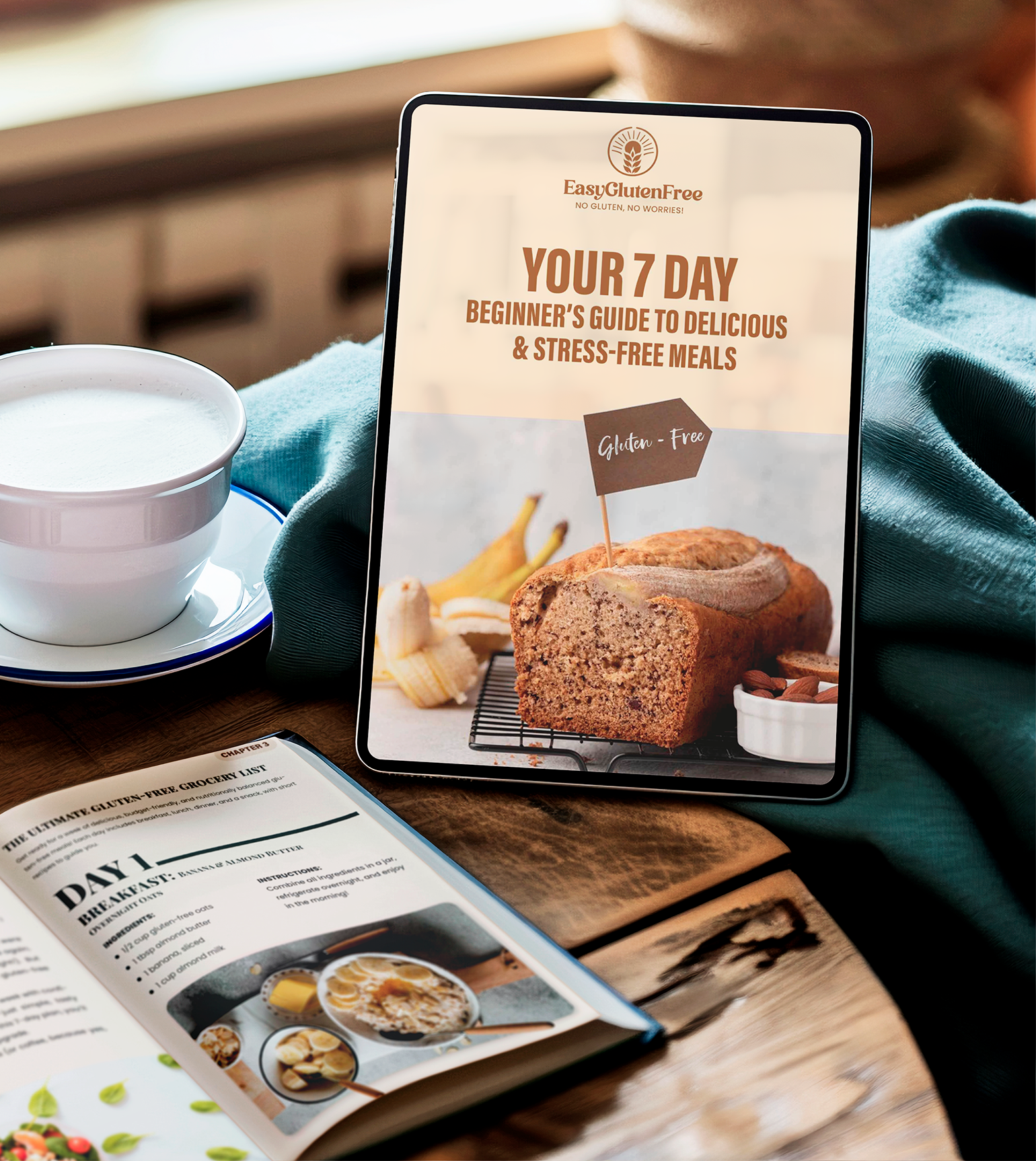
Download the Free Guide to Confident Gluten-Free Restaurant Dining

Gluten-Free Eating Out: How to Stay Safe and Still Enjoy Restaurants
Eating out gluten free doesn’t have to mean dry salads, cross-contamination anxiety, and leaving the restaurant hungrier than when you arrived. With a clear game plan—what to ask, what to look for, and when to say “nope, not worth the risk”—you can enjoy restaurants again without feeling like you’re gambling with your gut every time.
Download Our Free Gluten-Free Starter Guide
- 7-day meal plan
- shopping list
- Tips & 3 beginner-friendly recipes
Introduction
For many people, going gluten free turns restaurants from a source of joy into a source of stress. Suddenly, that carefree “let’s grab dinner” becomes “will this make me sick for three days?” Menus feel like minefields, servers seem rushed, and you’re stuck trying to decode whether “gluten friendly” actually means anything at all.
The good news: with some practice and a few reliable strategies, you can absolutely eat out, enjoy real food, and still protect yourself from gluten. You don’t need to memorize every obscure ingredient or interrogate staff for 20 minutes. You just need a system—how to choose safer spots, what questions actually matter, and how to make quick calls in the moment.
This guide walks you through eating out gluten free from start to finish: choosing restaurants, talking to staff, spotting common gluten traps, using tools to double-check your plate, and handling social situations without feeling like “the difficult one.” Use this as a reference you can return to whenever you’re planning a meal out or traveling somewhere new.
1. Setting Yourself Up for Safer Gluten-Free Dining
Successful gluten-free eating out starts long before your plate hits the table. A little prep work on the front end saves you from awkward moments and risky decisions later. Think of this as your “restaurant pre-check” routine.
Choose the Right Type of Restaurant
Not all restaurants are equally equipped to handle gluten-free needs. You’ll have a much easier time in places where naturally gluten-free foods are already part of the menu, or where the kitchen is used to managing special requests.
In general, you’ll find it easier to stay gluten free at:
- Farm-to-table and made-from-scratch spots – They tend to know every ingredient and are often happy to modify.
- Restaurants that clearly label allergens – Menus that list “GF” and cross-contamination notes show they’re at least thinking about it.
- Cuisines with naturally gluten-free bases – Think grilled proteins, rice-based dishes, salads, and simple veg.
You may have a harder time at:
- Fast-food places with shared fryers and minimal staff training
- Bakeries and pizza joints where flour is literally floating through the air
- Buffets, due to constant cross-contact from shared utensils and self-serve stations
Do a 5-Minute Online Check
Before you book, do a quick scan:
- Look for an allergen or gluten-free menu. This is a huge plus, especially if they mention cross-contamination procedures.
- Read a few recent reviews. Search phrases like “gluten free,” “celiac,” or “allergy.” People often mention how seriously staff took their needs.
- Check their social profiles or website. Some restaurants share behind-the-scenes kitchen practices or highlight gluten-free options.
If nothing about gluten is mentioned anywhere online, that doesn’t automatically mean it’s unsafe—but it does mean you’ll lean more heavily on good questions when you arrive.
Call Ahead When It Really Matters
For special occasions, travel days, or when your options are limited, calling ahead can be worth the extra effort. You’ll get a feel for how informed and flexible the staff are before you’re sitting at a table, hungry and pressured to decide.
When you call, keep it simple and specific. For example:
- “Hi, I need to eat strictly gluten free for medical reasons. Can your kitchen safely prepare gluten-free meals, including avoiding cross-contamination?”
- “Do you have a dedicated gluten-free menu or separate prep area or fryer?”
- “What are a couple of dishes you feel most confident preparing gluten free?”
Pay attention not just to the answers, but to the tone. Do they sound rushed or annoyed, or do they take a moment to explain? A thoughtful response often reflects a thoughtful kitchen.
Align Expectations Before You Go
One of the least-talked-about parts of gluten-free eating out is expectation management. When you go in expecting a huge menu of safe options, it’s easy to feel disappointed or pressured into compromising if that doesn’t exist.
Instead, try this mindset:
- Your goal is a safe, satisfying meal, not necessarily the most adventurous or “Instagrammable” one.
- It’s okay if you end up with a simpler meal—grilled protein, veggies, and rice is still a win if you leave feeling good.
- You’re allowed to say “this doesn’t feel safe for me” and opt for a backup plan if needed.
When your expectations are realistic, you’ll feel more relaxed—and you’ll be able to enjoy what is available instead of focusing on what isn’t.
2. Ordering With Confidence: Questions, Choices, and Extra Safety Checks
Once you’re seated and looking at the menu, it’s easy to feel rushed—especially if everyone else already knows what they want. A simple ordering script helps you advocate for yourself clearly without overexplaining or apologizing.
How to Talk to Your Server About Gluten Free
Servers are your link to the kitchen, so clear communication matters. You don’t need to share your entire medical history, but you do want to signal that this isn’t a casual “diet preference.”
Here’s a straightforward way to start the conversation:
- “I need to eat strictly gluten free for health reasons. Can you help me choose something that can be prepared safely?”
From there, you can ask targeted questions like:
- “Do you have a gluten-free menu or mark gluten-free options?”
- “Is there a separate fryer for gluten-free items?”
- “Are the gluten-free items cooked on a clean grill or shared with regular breaded items?”
- “Can the kitchen cook my meal in a clean pan to avoid cross-contact?”
If a server seems unsure, it’s okay to gently say, “If you’re not certain, could you please ask the kitchen?” A good restaurant will appreciate the clarity.
Build a “Safe-ish” Menu Strategy
When in doubt, aim for items that are more likely to be gluten free by nature and easier to keep separate during preparation. While nothing is guaranteed, some patterns are useful:
- Often easier to adapt gluten free: plain grilled meats or fish, rice dishes, baked potatoes, salads (without croutons or breaded toppings), vegetable sides.
- Often higher risk: anything fried (unless there’s a dedicated fryer), sauces and gravies, marinated or pre-seasoned meats, “secret house spice blends,” and anything breaded or dusted with flour.
You can also ask for simple swaps:
- Replace pasta with extra veggies or rice, if available.
- Ask for sauces and dressings on the side so you can decide how comfortable you feel once you see them.
- Request no bread basket on the table to reduce crumbs everywhere.
Red Flags to Watch For
Sometimes a restaurant tells you everything you need to know without meaning to. Common warning signs include:
- The server says, “We have gluten-free options,” but can’t explain how cross-contact is handled.
- Fried foods are called “gluten free,” but all fried items share one fryer.
- The kitchen says they can “just take the bun off” for a burger without offering any extra safety steps.
- Your meal arrives with obvious gluten contacts (like croutons on a “gluten-free” salad).
If one red flag pops up, you might be able to steer things back with more specific instructions. If you’re seeing several, it may be time to adjust your order to something very simple—or decide that this just isn’t the right place to take a risk.
Using Testing Tools as an Extra Layer of Information
Some people find it reassuring to use portable gluten-testing tools when eating out, especially when traveling or trying new places. These tools are not a replacement for good communication with staff, but they can offer one more data point when you’re unsure about a dish.
Think of them as a way to better understand how your body responds in real life, rather than as a guarantee that anything is “perfectly safe.” If you choose to use one, it’s helpful to test occasionally at places you trust as well, just to build a sense of what “safe for you” tends to look like.
Nima gluten sensor test
These single-use capsules pair with the Nima Sensor to help users test foods for gluten on the spot. Perfect for travelers, researchers of their own digestive reactions, or anyone who just doesn’t trust that café’s “gluten-free… we think?” answer. A reliable, quick-gluten-detection option that empowers people who want data—not guesswork.

3. Common Gluten Traps in Popular Cuisines
Menus vary wildly, but certain patterns show up again and again. Knowing the usual gluten “trouble spots” in different cuisines helps you skim a menu quickly and focus on options that are more likely to work for you.
American & Pub-Style Restaurants
These places often feel like a gluten festival, but there are still possibilities if the kitchen is willing to help.
Watch out for:
- Shared fryers (fries, wings, onion rings, mozzarella sticks, etc.)
- House spice blends or rubs that may contain wheat-based anti-caking agents
- Gravy, pan sauces, and soups thickened with flour
- Burgers cooked on the same surface as buns without cleaning
Often safer (with modifications):
- Bunless burgers on a lettuce wrap or plate, cooked in a clean pan
- Grilled chicken, steak, or fish with simple seasoning and a plain veg + potato side
- Salads without croutons, crispy toppings, or pre-marinated meats
Italian Restaurants
Italian cuisine can be tricky because flour is everywhere, but some places are increasingly gluten-aware and even offer gluten-free pasta.
Watch out for:
- Shared pasta water for regular and gluten-free pasta
- Flour on everything from sauté pans to breaded cutlets
- Meatballs and sausages using breadcrumbs as a binder
- Desserts like tiramisu and panna cotta with hidden cookie crumbs
Questions to ask:
- “Is gluten-free pasta cooked in a clean pot with fresh water?”
- “Are your meatballs and sausages gluten free?”
- “Can the kitchen prepare grilled fish or chicken without flour or breading?”
Often simpler choices: grilled fish, plain meats, salads with oil and vinegar, and vegetable sides prepared without breadcrumbs or shared pans.
Mexican & Latin American Restaurants
These cuisines can be friendlier to gluten free, especially when corn-based dishes are the focus—but there are still hidden pitfalls.
Watch out for:
- Flour tortillas used on the same grill as corn tortillas
- Shared fryers for chips, churros, and breaded items
- Pre-marinated meats that may contain soy sauce or malt vinegar
- “Enchilada sauces” or moles thickened with flour
Questions to ask:
- “Are your chips fried in a dedicated fryer?”
- “Are your corn tortillas 100% corn, and are they heated separately from flour tortillas?”
- “Is there any wheat or flour in the marinades or sauces?”
Often safer: corn tortilla tacos with simply seasoned meats, fajitas served with corn tortillas and plain sides of rice and beans (after confirming ingredients).
Asian Restaurants
Asian cuisines are rich in naturally gluten-free ingredients—but soy sauce and breading show up frequently.
Watch out for:
- Soy sauce (traditional versions contain wheat)
- Oyster sauce, hoisin, and some fish sauces that include wheat
- Breaded meats, tempura, and anything deep fried
- Noodles made from wheat, even if the dish includes rice
Questions to ask:
- “Do you have any dishes made with gluten-free tamari or without soy sauce?”
- “Are the rice noodles or rice paper wrappers 100% rice?”
- “Can the chef prepare my stir-fry without any soy or wheat-based sauces?”
Often simpler choices: plain rice, steamed veggies, grilled or steamed proteins without sauce, rice paper rolls (after confirming ingredients), and some sushi options with gluten-free tamari brought from home if the restaurant is okay with that.
Bakeries, Cafés, and Brunch Spots
These environments are usually heavy on flour and crumbs, which raises the risk of cross-contact even when gluten-free options exist.
Watch out for:
- Gluten-free pastries stored next to regular pastries
- Shared toasters for gluten-free and regular bread
- Avocado toast or sandwiches prepared on surfaces dusted with flour or crumbs
When these places also operate as full kitchens, you may do better with cooked-to-order items like omelets, scrambles, and simple sides prepared in clean pans.
Recipe Inspiration
Try these gluten-free staples loved by thousands:



4. Social Situations, Travel, and Last-Minute Plans
Eating out gluten free isn’t just about food—it’s about people, plans, and sometimes, awkward group texts. Having a few ready-made strategies makes it much easier to socialize without sidelining your needs.
When You’re Not the One Choosing the Restaurant
Friends, family, and coworkers don’t always realize how much planning goes into a safe gluten-free meal. Instead of quietly stressing until you arrive, try stepping in gently early in the process.
You might say:
- “I need to eat strictly gluten free—would you mind if I suggest a couple of places that work well for me?”
- “Anywhere with clearly marked gluten-free options and good communication is perfect. I can help find something that works for everyone.”
Most people are happy to accommodate when they understand the stakes. If you end up somewhere that doesn’t feel great, it’s okay to order something very simple or, if needed, just have a drink and eat later. Protecting your health is not being “difficult.”
Handling Parties, Buffets, and Shared-Plate Situations
Events with shared food—buffets, family-style dinners, tapas—can be especially challenging due to constant cross-contact.
Some practical approaches:
- Eat a small safe meal or snack beforehand so you’re not relying entirely on the event food.
- Ask if your plate can be made separately in the kitchen before it goes out onto shared tables.
- At buffets, go first if you can, before utensils have been switched around, and stick to items that look less handled.
- Bring a safe dish to share when it’s a potluck-style event, so you know there’s at least one option you can fully trust.
Traveling Gluten Free
Travel adds another layer of complexity—new cities, unfamiliar chains, and sometimes language barriers. A little extra planning turns “this is stressful” into “I’ve got a plan B (and C).”
Before you go:
- Research gluten-aware spots near where you’re staying, not just in the city in general.
- Save a few options on your phone (screenshots or offline maps) so you’re not stuck if cell service is spotty.
- Pack reliable snacks—bars, nuts, crackers, instant oatmeal, or anything that travels well.
On the road:
- Prioritize places that mention gluten free clearly when you’re tired or short on time.
- Use simple, direct language if there’s a language barrier; some people like to carry a translation card explaining gluten free.
- Lean on tools and your own comfort level to decide when a restaurant feels safe enough for you.
Dealing with “You Can Have a Cheat, Right?”
If you avoid gluten for medical reasons, you’ve probably heard some version of this. It can be frustrating, but it often comes from misunderstanding, not malice.
You don’t have to justify every decision in detail. A calm, firm response usually works best, such as:
- “I actually can’t cheat without getting sick, so I have to be really careful.”
- “It’s not a preference for me; it’s more like a serious food restriction.”
Over time, the people around you will learn your boundaries—and you’ll get more comfortable holding them without feeling like you need approval.
5. Building Your Personal Gluten-Free Eating-Out Playbook
No two gluten-free journeys look exactly alike. Some people are comfortable with certain levels of risk; others need extremely strict avoidance. The goal isn’t to follow a rigid rulebook, but to build your own decision-making framework that you can adjust over time.
Define Your Non-Negotiables
It helps to decide ahead of time what you’re never willing to compromise on. For example, your personal non-negotiables might include:
- No shared fryers, even if an item is labeled “gluten free.”
- No “we’ll just remove the bun or croutons” adjustments without extra precautions.
- No restaurants where staff say, “We don’t really do allergies.”
When these rules are clear in your own mind, decisions in the moment feel much less stressful—you’re just following the plan you’ve already set for yourself.
Create a Shortlist of “Safe-ish” Go-To Spots
As you try different places, pay attention to which ones really “get it.” Notice:
- How staff respond when you mention gluten free
- Whether your food consistently arrives as requested
- How you feel afterward—physically and emotionally
Over time, you’ll build a mental (or written) list of:
- Local restaurants you trust for regular meals
- Backup chains that are reasonably consistent when you’re traveling
- One or two “special occasion” spots that take extra care
Keep notes in your phone if it helps—what you ordered, how you modified it, and how your body responded. That way, next time you’re there, you’re not starting from scratch.
Use Each Experience as Data, Not Judgment
Almost everyone living gluten free has a story (or several) about doing everything right and still getting sick—or about taking a risk and regretting it. It’s frustrating, but it doesn’t mean you failed.
Instead of beating yourself up, try asking:
- “What might have contributed to this reaction?”
- “Is there a question I wish I’d asked, or a red flag I might watch for next time?”
- “Does this change anything about where or how I choose to eat out?”
Your goal isn’t perfection; it’s learning. Over months and years, that learning adds up to intuition—a gut feeling (pun fully intended) about which places and practices work for you.
Making Eating Out Enjoyable Again
Gluten-free eating out will probably always come with a bit more mental load than it used to—but it doesn’t have to be joyless. When you have tools, clear boundaries, and a few trusted restaurants in your back pocket, you can relax more and focus on what you’re really there for: connection, conversation, and a genuinely good meal.
Use this guide as something you can revisit whenever your confidence wobbles a little. Over time, you’ll find that the process becomes second nature—and you’ll spend far more time enjoying your food than analyzing it.
Key Takeaways
- Start your gluten-free dining strategy before you leave home by researching menus, reading reviews, and choosing restaurants more likely to handle gluten-free needs well.
- Use clear, confident language with servers and ask targeted questions about fryers, sauces, cross-contact, and how gluten-free meals are prepared.
- Learn the common gluten traps in popular cuisines so you can quickly scan menus and focus on safer, simpler options that still feel satisfying.
- Plan ahead for social events and travel with backup snacks, suggested restaurants, and a few prepared phrases for explaining your needs.
- Build your own personal “playbook” over time—non-negotiables, go-to restaurants, and lessons learned—so eating out gluten free feels more confident and less exhausting.
Take the Next Step in Your Gluten-Free Journey
- Download the Free EGF Starter Guide
- Try our Gluten-Free Planner to simplify your week
- Explore our growing recipe library
You don’t have to navigate the gluten-free lifestyle alone, we are here to make it easier every day.
Category: Eating Out Gluten Free