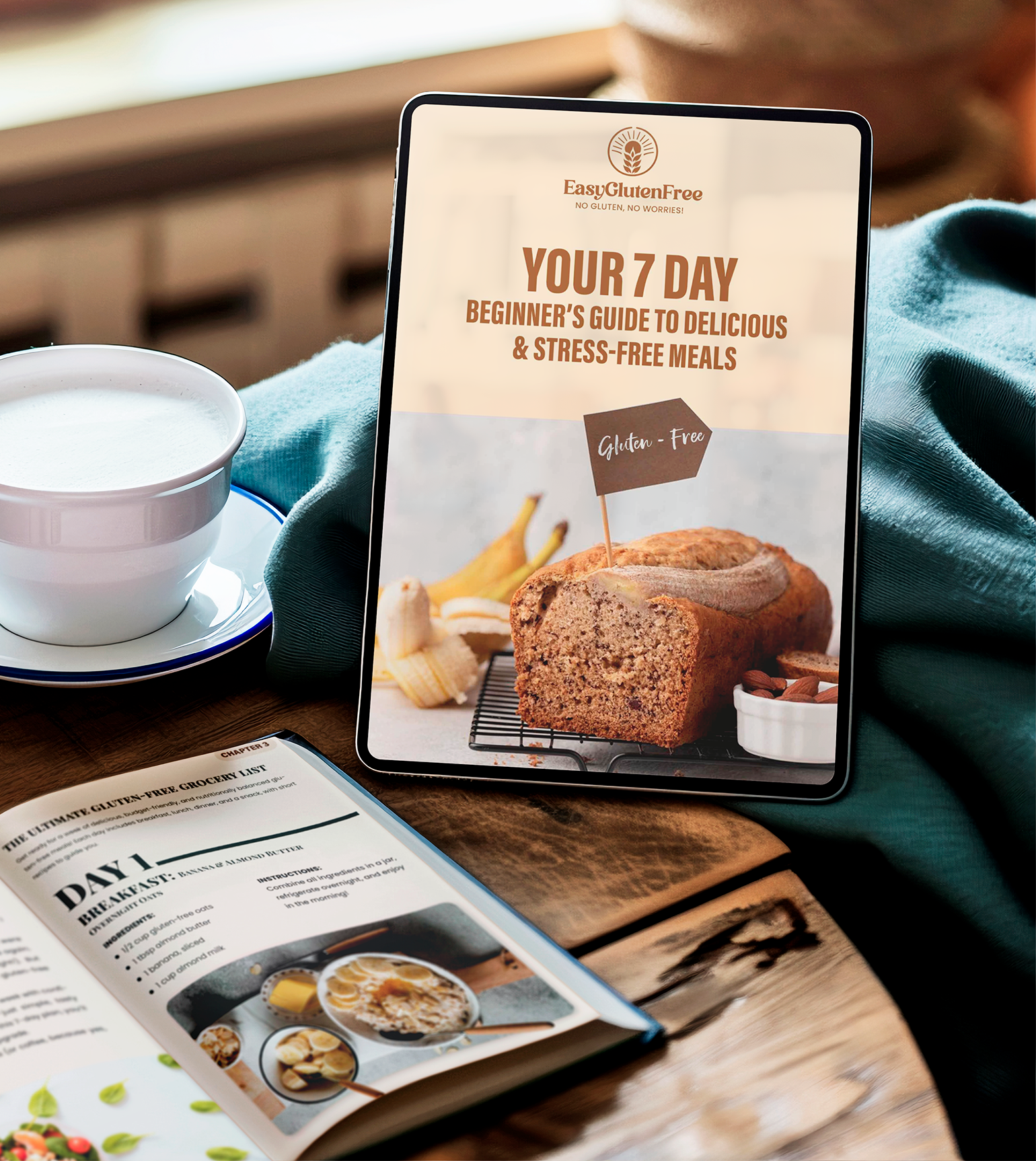
Download Your Free Guide to Stress-Free Gluten-Free Living

Is Nima Gluten Sensor Accurate? A Practical 2026 Guide for Gluten-Free Eaters
If you live gluten free, you’ve probably heard whispers (or full-on debates) about the Nima gluten sensor. Some people won’t eat out without it; others say it’s overkill or confusing. In this guide, we’ll unpack how Nima works, where it shines, where it struggles, and how to decide if it deserves a place in your gluten-free toolkit—without the tech jargon or scare tactics.
Download Our Free Gluten-Free Starter Guide
- 7-day meal plan
- shopping list
- Tips & 3 beginner-friendly recipes
Introduction
Eating gluten free in 2026 can feel like detective work. Menus change, staff turnover is constant, and “gluten friendly” has somehow become a thing. Tools like the Nima gluten sensor entered the scene to give us more data, more confidence, and fewer “I’ll just have a side salad” moments—but they also spark a lot of questions, especially around accuracy.
Some people swear Nima saved them from gluten landmines. Others say it gave a “safe” result when they later reacted, or that it flagged trace gluten in food that should have been fine for their needs. With so many mixed stories circulating in Facebook groups, it’s hard to know what to believe or how to use Nima wisely.
This article walks you through what “accuracy” really means for the Nima gluten sensor, what it can and cannot tell you, and realistic ways to use it in everyday gluten-free life. The goal is not to sell you on a gadget, but to help you make informed choices and pair tech with common sense, label-reading, and solid gluten-free habits.
1. What Is the Nima Gluten Sensor and How Does It Work?
The Nima gluten sensor is a small, portable device designed to help people check foods for the presence of gluten before they eat. You place a pea-sized sample of food into a disposable capsule, insert it into the sensor, and after a few minutes Nima displays either a “gluten found” result or a “smiley face” type result that indicates gluten was not detected above its testing threshold.
Behind the scenes, the capsule contains reagents that react with gluten proteins. The device reads that reaction and translates it into a simple, easy-to-understand output. It’s built for real life—restaurants, travel, shared kitchens—where you can’t always see or control how your food was handled.
Three key things to know about how Nima works:
- It tests the sample you provide, not the entire dish. If gluten is unevenly distributed (for example, one gluten-y crouton in an otherwise safe salad), the tiny sample you test may or may not capture it.
- It looks for gluten above a certain level. Like any test, Nima has a detection limit. Below that level, it reports “gluten not detected,” which doesn’t necessarily mean the food is absolutely gluten-free—it means gluten, if present, is below that threshold.
- It’s single-use per test. Each capsule is used once, with one food sample. That makes it more convenient and less messy, but also means ongoing cost if you test frequently.
Understanding these basics is essential before we even talk about accuracy, because a lot of frustration comes from expecting the device to do more than it’s actually designed to do.
Think of Nima as an extra data point, not a magic yes/no stamp on every bite of food. It can strengthen your decisions, especially when paired with good gluten-free habits, communication, and a little intuition earned from experience.
2. How Accurate Is the Nima Gluten Sensor Really?
When people ask “Is Nima accurate?”, they’re usually asking a few different things at once:
- Will it catch gluten in my food if it’s there?
- Can I trust a “safe” result enough to actually eat?
- How often does it give false alarms or miss gluten?
Any test device has strengths and limitations, and Nima is no exception. Its accuracy depends on several factors, including how you collect the sample, the type of food, and how gluten is distributed in the dish.
Let’s break down a few key accuracy-related concepts in everyday language:
Detection threshold and real-world expectations
Nima is designed to detect gluten at low levels that matter to many gluten-free eaters. However, it does not measure gluten in “parts per million” on a readout you can see, the way a lab report might. Instead, it gives a simple binary-style result based on whether gluten was detected above its internal threshold.
That leads to two important realities:
- “Gluten found” means gluten was detected in your sample. It doesn’t tell you exactly how much, only that it crossed the device’s detection line.
- “Gluten not detected” means the device did not find gluten above its threshold in that specific sample. Very low levels could still be present, or gluten could be hiding in another part of the dish.
Sampling challenges: the “one bite problem”
The most important limitation for real-life accuracy is sampling. Because Nima tests a very small amount of food, your technique matters:
- Mixed dishes (like pasta with sauce, stir-fries, or burritos) can have gluten concentrated in pockets. Sampling from several different parts and combining them in the capsule can give you a more representative test.
- Layered foods (like cakes, lasagnas, or sandwiches) may have gluten hiding in a particular layer. Try to include a bit of each layer in your sample.
- Crumb risks—like a stray crouton or crumbed garnish—may or may not end up in your capsule, even if they’re present on the plate.
Because of this, people sometimes experience both false reassurance and cautionary “gluten found” results that don’t line up perfectly with how they feel later. It doesn’t necessarily mean the device is broken—it may point to sampling limits, restaurant practices, or individual sensitivity.
Understanding “accuracy” as part of a bigger toolkit
In practice, Nima tends to be most helpful when used as one piece of a broader gluten-free strategy rather than the only decision-maker. Many gluten-free diners use it to:
- Spot-check restaurants they’re trying for the first time.
- Test high-risk items, like fried foods that may share oil with breaded items.
- Verify packaged foods from new brands, particularly when labeling or cross-contact risk is unclear.
On the flip side, relying on it to green-light every restaurant meal or to “override” your own common sense (for example, if a server clearly doesn’t understand cross-contact) can lead to disappointment and mixed experiences.
Ultimately, the Nima gluten sensor can provide useful, real-time data—but it should sit alongside label reading, asking good questions, choosing restaurants carefully, and knowing your own body’s responses.
Nima gluten sensor test
These single-use capsules pair with the Nima Sensor to help users test foods for gluten on the spot. Perfect for travelers, researchers of their own digestive reactions, or anyone who just doesn’t trust that café’s “gluten-free… we think?” answer. A reliable, quick-gluten-detection option that empowers people who want data—not guesswork.

3. When Nima Helps Most (And When It May Not)
Because the Nima gluten sensor has specific strengths and limitations, there are situations where it tends to be especially useful—and others where it may add more stress than clarity.
Situations where Nima can be especially helpful
- Traveling or eating in unfamiliar places. When you can’t rely on a trusted list of gluten-free restaurants, a quick test can give you extra data so you’re not making decisions completely blind.
- High-risk menu categories. Items like fries, hash browns, or grilled foods often share equipment or oil with gluten-containing foods. Testing can sometimes reveal cross-contact you wouldn’t otherwise see.
- Buffets, catered events, or parties. These settings can be chaotic, with shared utensils and people moving items around. While sampling is still a limitation, a test may alert you to significant gluten in a dish you were considering.
- New packaged foods without a gluten-free certification. If an ingredient label is technically gluten free but you’re unsure about manufacturing practices, testing can help you decide whether to proceed.
- Building confidence after diagnosis. For some people, especially early on, having a tool to double-check choices can reduce anxiety and help them learn which restaurants and dishes tend to work best.
Situations where Nima may be less helpful
- Highly mixed or complex dishes. Casseroles, stuffed items, and thick sauces can make it harder to get a representative sample. One tiny, gluten-containing element can be missed if it doesn’t end up in the capsule.
- When it replaces basic gluten-free precautions. No device can compensate for a restaurant that doesn’t understand cross-contact, ignores your dietary needs, or brushes off your questions.
- For people highly sensitive to even the smallest traces. Because Nima has a detection threshold, some individuals who react to very low levels of gluten may still feel best sticking with certified products, home cooking, and carefully vetted restaurants regardless of test results.
- When results cause more stress than peace of mind. If you find yourself testing nearly every bite or spiraling after every ambiguous result, the emotional cost may outweigh the practical benefits.
Ultimately, Nima is most successful when it supports your gluten-free routine rather than controlling it. It can highlight patterns—like which restaurants consistently test well—and empower you to phase out options that don’t align with your comfort level.
Recipe Inspiration
Try these gluten-free staples loved by thousands:



4. Practical Tips for Using Nima in Everyday Life
If you decide to use a Nima gluten sensor, a few smart habits can go a long way toward getting the most meaningful information from each test. Think of these as “best practices” for real-world use.
1. Take thoughtful samples
- Combine multiple small bites. For mixed dishes, gather tiny pieces from different areas—sauce, center, edges—so the sample represents the dish as a whole.
- Include risky components. If something looks suspicious (crumbs, sauce, cheese topping), try to include that in the sample.
- Avoid testing mostly “safe” parts. For example, testing plain rice while the risky sauce sits untouched won’t tell you much about the sauce.
2. Use Nima as a second step, not the first
- Step 1: Do your usual gluten-free homework. Check labels, choose restaurants with good reviews from the gluten-free community, and ask how food is prepared.
- Step 2: Use Nima selectively. Test dishes that feel borderline or situations that are hard to read.
- Step 3: Combine results with your comfort level. A “gluten found” result might be an automatic no for you, while a “not detected” result should still be weighed against what you observed and heard.
3. Track your results over time
Keeping a simple log—either on paper, in your phone, or in a planner—can be hugely helpful. Note the restaurant or product, what you ordered, the Nima result, and how you felt afterward. Over time, patterns emerge:
- Places you trust more because they consistently test well and sit well.
- Items you decide to avoid, even if the menu marks them as gluten free.
- How your own body tends to respond in different contexts.
4. Decide ahead of time how you’ll respond
Emotionally, the hardest moment is often seeing a result you weren’t expecting right before you’re hungry and ready to eat. To reduce on-the-spot stress, decide your personal boundaries in advance:
- Will you eat a dish if Nima detects gluten? For many, the answer is simply no.
- Will you send it back, order something different, or choose not to eat?
- Do you feel comfortable eating from a place again after a “gluten found” result, or is that a deal-breaker?
Having these answers ahead of time means you’re not making big decisions in a moment of pressure, which can make gluten-free life feel calmer and more intentional.
5. Is Nima Right for You? Questions to Ask Yourself
Not everyone needs or wants a gluten-testing device. For some, it’s a powerful layer of reassurance; for others, it adds cost and complexity without enough benefit. Asking a few honest questions can help you decide whether a tool like Nima fits your situation.
1. How often do you eat out or travel?
If you mostly cook at home with trusted gluten-free ingredients, you may not feel much need for testing. On the other hand, if your lifestyle includes frequent travel, social events, or business meals at restaurants you don’t choose, a portable tester may offer helpful extra information.
2. How comfortable are you with restaurant conversations?
Some people are confident asking detailed questions and walking away if they’re not satisfied with the answers. Others feel awkward or rushed, especially in busy or social settings. If you find it hard to advocate for yourself in restaurants, a testing tool might help you feel more supported—provided you still pair it with clear communication about your needs.
3. What level of risk feels acceptable to you?
Everyone has a slightly different risk tolerance, shaped by their history, reactions, and lifestyle. Consider:
- Do you aim for the strictest possible avoidance at all times?
- Are you comfortable eating certified or carefully vetted gluten-free foods without additional testing?
- Does the idea of having extra data, even imperfect, help you relax—or stir up more worry?
4. How do you handle uncertainty?
Gluten-free life involves a certain amount of “best-guess” decision-making. For some, a tool like Nima lowers anxiety by adding another layer of information. For others, seeing every ambiguous result or potential trace level becomes a new source of worry.
It may help to imagine a few scenarios—like a catered wedding, a new brunch spot, or street food while traveling—and ask whether a Nima result in those settings would make you feel more confident, or more stressed.
5. Are you prepared for the ongoing cost and learning curve?
Because each test requires a disposable capsule, using Nima regularly is an ongoing investment. There is also a learning curve: understanding what the results can and cannot tell you, and practicing better sampling techniques over time.
None of this is a reason for or against using the device—it simply helps you clarify whether its benefits match your real-world habits and budget.
At the end of the day, the “right” choice is the one that helps you feel safer, more confident, and more at peace with your gluten-free lifestyle. For some, that includes a gluten sensor in their bag. For others, it looks like mastering label reading, building a roster of trusted restaurants, and filling their kitchen with go-to gluten-free recipes they love.
Key Takeaways
- The Nima gluten sensor is a portable tool that tests a small food sample for gluten, offering real-time information but not a perfect guarantee.
- Its accuracy depends heavily on smart sampling, the type of food tested, and understanding that it has a detection threshold, not a detailed ppm readout.
- Nima tends to be most useful for higher-risk situations—like travel, unfamiliar restaurants, and ambiguous menu items—rather than as a replacement for basic gluten-free precautions.
- Using Nima effectively means combining its results with label reading, clear restaurant communication, and an honest sense of your own comfort level and sensitivity.
- Whether Nima is right for you depends on how often you eat out, your risk tolerance, your budget, and whether more data will bring you calm or additional stress.
Take the Next Step in Your Gluten-Free Journey
- Download the Free EGF Starter Guide
- Try our Gluten-Free Planner to simplify your week
- Explore our growing recipe library
You don’t have to navigate the gluten-free lifestyle alone, we are here to make it easier every day.
Category: Gluten-Free Living