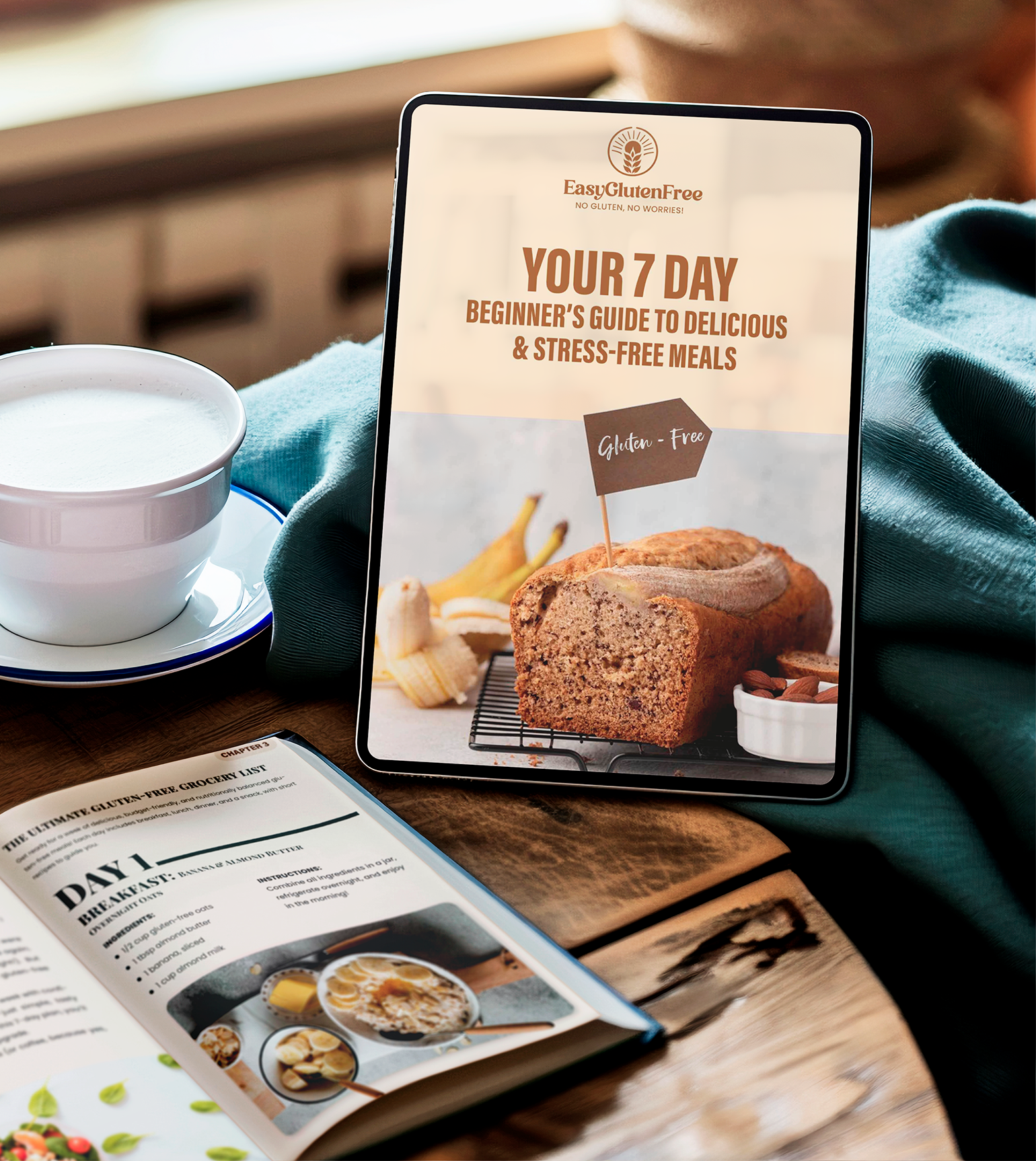
Download the Free Guide to Stress‑Free Gluten‑Free Travel Snacks

Gluten-Free Travel Snacks: Easy Ideas for Airports, Road Trips & Busy Days
Trying to travel gluten free without going hungry (or spending $30 on sad airport nuts) is…a lot. This guide walks you through simple, packable gluten-free travel snack ideas, how to plan ahead, and what to look for on the road so you can actually enjoy the trip instead of stress-scanning every snack shelf.
Download Our Free Gluten-Free Starter Guide
- 7-day meal plan
- shopping list
- Tips & 3 beginner-friendly recipes
Introduction
Traveling or commuting while gluten free adds a layer of logistics most people never have to think about. You’re not just packing a bag; you’re packing Plan A, B, and C so you’re not stuck hungry in an airport, on a highway, or at a friend’s house with nothing safe to eat. The good news: with a little strategy and the right gluten-free snacks, life on the go can feel far less stressful — and a lot more delicious.
In this guide, we’ll walk through practical gluten-free travel snack ideas for planes, road trips, workdays, and long errands. You’ll learn how to build a balanced “snack kit,” what to check on labels, and how to prevent cross-contact when you’re snacking in the wild. Think of this as your on-the-go survival guide for gluten-free living, whether you’re traveling across the country or just sprinting between meetings.
Nothing here is meant as medical advice, just lived-experience strategies and gluten-free know‑how to help you feel more prepared. Use what fits your lifestyle, adjust for your own needs and tolerances, and remember: you deserve more than just plain salad and air-popped rice cakes. Let’s build a snack plan that actually works.
1. Planning Gluten-Free Snacks Before You Travel
Strong gluten-free travel starts before you ever zip your suitcase. When you plan snacks ahead, you remove a lot of stress, last‑minute spending, and “I guess I’ll just eat later” moments. Think of planning in three layers: what you’ll definitely eat, what you might need, and what you keep as true emergency backup.
First, look at your itinerary. How many hours will you be in transit door‑to‑door? Are you crossing time zones? Do you have connections or layovers where food options may be limited? For most trips, planning for at least one full extra meal’s worth of snacks beyond what you think you’ll need is a smart buffer. Delays, traffic, or closed airport restaurants are a lot less stressful when you know your bag is full of safe options.
Next, consider your routine. Are you someone who feels best with protein-heavy snacks, or do you graze more frequently on lighter things? Try to mimic your usual rhythm as much as possible. For example, pack:
- Protein options: nuts or seeds (if tolerated), pre-portioned nut butter, jerky labeled gluten free, roasted chickpeas, hard-boiled eggs you eat early in the trip.
- Carb options: gluten-free crackers, rice cakes, individual oatmeal cups, fruit, or small baked goods from home.
- Fun extras: a chocolate bar labeled gluten free, gummies, popcorn, or your favorite “comfort snack” so you don’t feel deprived while everyone else is munching.
Finally, think about storage. Do you need snacks that can survive in a hot car? Do you have access to a fridge on arrival? Using a small insulated bag with a reusable ice pack expands your options to things like cheese sticks, yogurt, and cut veggies. Pack items in clear, small containers or bags so you can see what you have at a glance and keep gluten-free foods sealed when you’re around shared spaces or crumbs.
2. Easy Gluten-Free Snacks for Planes, Trains & Road Trips
When you’re actually in motion — boarding a plane, piling into a car, or catching a train — convenience matters. You want snacks that are easy to open, not super messy, and clearly gluten free so you’re not second‑guessing every bite. Individually wrapped or portioned snacks are especially helpful for long days, shared travel situations, or when you’re hopping between events and don’t know what food will be available.
For air travel, aim for compact, non‑liquid, non‑crumbly snacks that can survive being bumped around in a backpack. Think gluten-free bars, trail mixes or nuts, dried fruit, sturdy crackers, and shelf‑stable items like jerky labeled gluten free. You can also bring an empty water bottle to fill after security and pair it with electrolyte packets that are gluten free for long flights.
On road trips, you have a bit more flexibility. A small cooler or insulated bag can hold gluten-free yogurt, cheese sticks, hummus cups, and fresh fruit or veggies. Pair them with gluten-free crackers or rice cakes, and you’ve basically built a mini snack board in the car. For gas station stops, your safest bets tend to be packaged items that clearly say gluten free on the label rather than open bins or shared coffee shop pastries.
If you’re traveling with others who eat gluten, having your snacks in their own bin or bag helps protect them from stray crumbs or shared hands. Communicate clearly — “These are my gluten-free snacks; please don’t mix them with the group food” — so you’re not stuck wondering if someone grabbed your crackers right after handling a regular sandwich. It’s your body and your health; you’re allowed to set those boundaries.
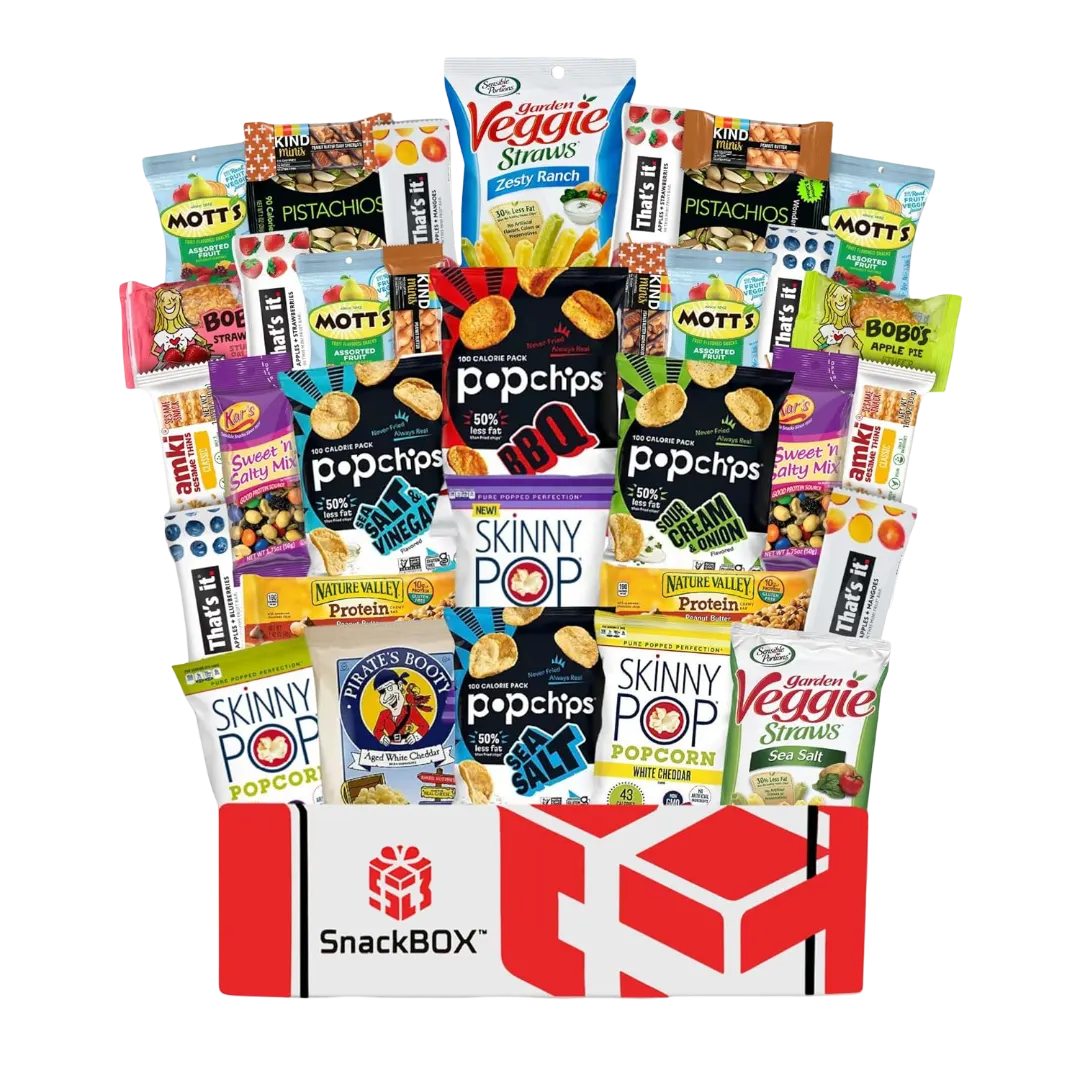
Snack BOX Gluten Free Healthy Care Package
This box is basically “emergency gluten-free social survival” in one package. It’s packed with individually wrapped snacks you can throw into your bag, keep at the office, bring to movie nights, or stash in your car so you don’t end up nibbling sad plain lettuce while everyone else has chips. Great for sharing, hosting, travel, or just living your best snack-gremlin life — gluten free.
3. Building a Portable Gluten-Free Snack Kit
A dedicated gluten-free snack kit is one of the easiest ways to make travel and busy days feel manageable. Instead of rebuilding from scratch every time you leave the house, you keep a small set of essentials ready to go — like a first‑aid kit, but for hunger and cross-contact stress.
Start with a small pouch, zip bag, or hard‑sided container that fits easily in your backpack, purse, or carry‑on. Inside, you might keep a mix of:
- Shelf-stable foods: sealed bars, nut or seed packs, roasted chickpeas or broad beans, fruit leather, or small packs of gluten-free crackers.
- Mini condiments: salt, pepper, gluten-free soy sauce alternatives, or single‑serve nut butter to upgrade plain foods you find on the road.
- Safety tools: a travel fork and spoon, a small cutting-safe butter knife where allowed, a few paper towels or wipes, and a couple of zip-top bags for leftovers or separating foods.
If you’re frequently social — office snacks, kid activities, game nights — consider building a second snack kit just for your car or desk. Rotate items regularly so they don’t go stale, and note expiration dates in your calendar if that helps. That way, when surprise plans pop up (“We’re all grabbing snacks after this!”), you’re not scrambling. You can participate comfortably with your own gluten-free options in hand.
Over time, pay attention to what you actually eat versus what always comes home untouched. Your personal “must haves” might be different from someone else’s, and that’s okay. The best gluten-free snack kit is the one you’ll genuinely enjoy and remember to bring — not the one that looks the most impressive on paper.
Recipe Inspiration
Try these gluten-free staples loved by thousands:



4. How to Read Labels & Avoid Cross-Contact on the Go
When you’re away from home, you’re often reading labels quickly — in an airport kiosk, a tiny corner shop, or a gas station with spotty lighting. Having a simple mental checklist keeps you from feeling overwhelmed and helps you spot obvious red flags fast.
First, look for any clear “contains wheat” statements or bolded allergens. If wheat is listed, that product is not gluten free. Some items will also say “contains barley” or “contains rye,” which are also gluten-containing grains. In many countries, these statements are required and easy to spot underneath the ingredients list.
If the food isn’t clearly labeled gluten free, read the full ingredient list carefully. Watch for less‑obvious gluten sources such as malt flavoring (often from barley), some modified food starches depending on your region, or flavorings that include wheat. When you’re traveling and unsure, it’s okay to put a product back and choose something simpler with fewer ingredients you recognize.
Cross-contact is another important piece. Even if the ingredients are gluten free, a product might be made on shared equipment or in a shared facility with wheat. Some people choose to avoid anything with a “may contain wheat” or “made on shared equipment with wheat” statement, while others, under guidance from their healthcare provider, may decide what feels right for them. Do what supports your body and your comfort level.
Beyond packaging, think about your surroundings: shared snack bowls on planes, bakery cases with crumbs, or workplace kitchens where people make sandwiches next to the only gluten-free item. Whenever you can, keep your food in its own container, use clean utensils, and avoid putting gluten-free food down on shared surfaces. Small habits like wiping down a tray table or using a napkin barrier under your snack can help reduce everyday cross-contact risk while you’re on the go.
5. Sample Gluten-Free Snack Lists for Different Trips
Sometimes it helps to see real‑life examples instead of starting from a blank page. Use these sample gluten-free snack lineups as inspiration and tweak them based on your preferences, budget, and dietary needs.
For a short flight or busy afternoon (3–5 hours):
- 1–2 gluten-free bars (protein or granola style).
- A small pack of nuts or seeds (if tolerated).
- One piece of sturdy fruit like an apple, clementine, or grapes in a container.
- A small bag of gluten-free crackers or popcorn.
- Your favorite treat — maybe chocolate, gummies, or a cookie from home.
For an all‑day travel day or long road trip:
- Several individually wrapped snacks you can spread across the day.
- Protein options like jerky labeled gluten free, roasted chickpeas, or nut butter packets.
- Carb options: gluten-free crackers, rice cakes, instant oatmeal cups (use hot water on the road).
- Fresh items in a cooler: cheese sticks, yogurt, cut veggies, and hummus cups if you have refrigeration.
- Electrolyte mix or tea bags to pair with water along the way.
For workdays, school, or everyday errands:
- A “permanent” snack kit in your bag or car with sealed items.
- Quick options like fruit, snack packs, or leftovers in small containers.
- One more snack than you think you’ll need, in case meetings run late or plans change.
Remember that your energy matters too. If planning snacks feels like one more chore, start small — maybe you prep just tomorrow’s snacks, or you stock one shelf or drawer with grab‑and‑go gluten-free options. Over time, you’ll build your own go‑to list that makes traveling, commuting, and social plans feel far more doable.
The goal isn’t perfection; it’s feeling prepared enough that you can focus on the actual trip, event, or workday — not just on what you’re going to eat. With a bit of planning and a few well‑chosen gluten-free snacks, you can give yourself that freedom.
Key Takeaways
- Plan gluten-free snacks before you leave so you’re not relying on limited or uncertain options while traveling.
- Choose compact, clearly labeled gluten-free snacks for planes, trains, and road trips, and pack a bit more than you think you’ll need.
- Create a portable gluten-free snack kit you can keep in your bag, car, or desk for everyday “just in case” moments.
- Read labels carefully on the go and watch for both obvious gluten ingredients and cross-contact warnings that matter to you.
- Use sample snack lists as a starting point, then customize them so your gluten-free travel routine feels realistic, flexible, and satisfying.
Take the Next Step in Your Gluten-Free Journey
- Download the Free EGF Starter Guide
- Try our Gluten-Free Planner to simplify your week
- Explore our growing recipe library
You don’t have to navigate the gluten-free lifestyle alone, we are here to make it easier every day.
Category: Lifestyle