Download the Free Guide to Confident Gluten-Free Travel

Gluten-Free Travel Safety: How to Test Restaurant Meals for Hidden Gluten
Eating away from home is one of the most stressful parts of living gluten free. This guide walks you through realistic ways to test restaurant meals for hidden gluten, set up systems that lower risk, and feel more confident saying “yes” to dinners, dates, and travel again—without pretending the risks don’t exist.
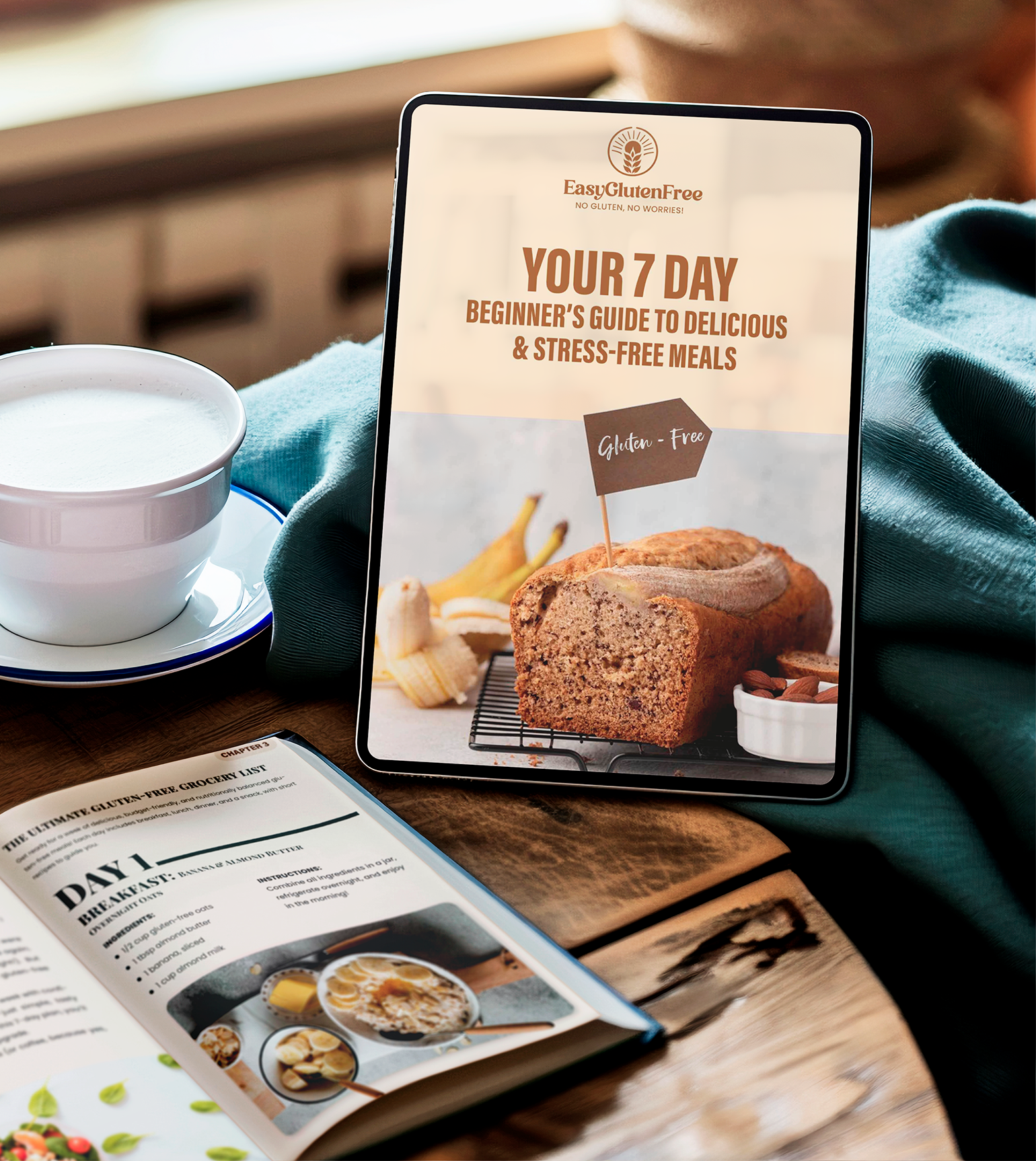
Download Our Free Gluten-Free Starter Guide
- 7-day meal plan
- shopping list
- Tips & 3 beginner-friendly recipes
Introduction
If you’ve ever stared at a restaurant plate wondering, “Is this really safe for me?”, you are absolutely not alone. Even the most “gluten-aware” kitchens can make mistakes, and vague answers like “it should be fine” don’t help when you’re the one who pays the price for cross-contact. The goal of this guide isn’t to scare you—it’s to put practical tools back in your hands so you can make informed choices instead of anxious guesses.
Testing restaurant meals for hidden gluten is part science, part strategy, and part communication. No method is perfect, and nothing replaces a clearly labeled dedicated gluten-free kitchen, but there are smart ways to reduce risk. From choosing the right restaurants to understanding how consumer gluten tests work, you can create a personal “safety stack” that fits your body, your comfort level, and your lifestyle.
In the sections below, we’ll cover how to prep before you go out, how to talk to staff without feeling like “that customer,” how to use at-the-table testing tools thoughtfully, and how to interpret results alongside your own symptoms and history. Think of this as your calm, realistic game plan for eating out gluten free—so you can focus more on the people you’re with and less on what might be lurking in your food.
1. Why Restaurant Gluten Is So Tricky
At home, you control the ingredients, surfaces, and utensils. In a restaurant, you’re stepping into a fast-paced system designed for speed and volume—not necessarily for strict gluten control. Understanding why restaurant gluten is so tricky helps you decide when testing makes sense and where it will (and won’t) help.
Hidden gluten sources in restaurant meals
- Sauces and marinades: Soy sauce, “house” marinades, gravy bases, and pre-made stocks often contain wheat.
- Shared fryers: French fries or corn tortilla chips can pick up gluten from breaded foods fried in the same oil.
- Dusting and breading: Flour used for dusting pans, proteins, or pizza peels can linger on surfaces and in the air.
- Prepped ingredients: Croutons picked off a salad, a burger pulled off a bun, or grilled items cooked where buns were toasted may all carry gluten traces.
Cross-contact vs. obvious gluten
Most people can easily avoid the big, obvious gluten sources: pasta, bread, pastries, and battered foods. The real challenge is cross-contact—tiny amounts of gluten that get into “safe” foods through shared equipment or careless prep. For some people, even small amounts matter a lot. For others, their personal threshold may be different, and they define their own balance between risk and quality of life.
When you use testing tools, you’re mostly looking for gluten that’s present at a measurable level in a small portion of the food. That can help you spot a clearly unsafe dish, but it doesn’t guarantee every bite on the plate is identical, especially with mixed foods like salads or stir-fries.
Limitations of any restaurant test strategy
- Only a sample is tested: You’re testing a tiny part of a much larger meal. A crouton on the “other side” of the plate won’t show up in your sample.
- Different foods behave differently: Fatty, very hot, or complex dishes can sometimes be more challenging to test accurately with consumer tools.
- Staff communication still matters: No test can fix a kitchen that doesn’t know what gluten is or doesn’t take your request seriously.
Instead of seeing testing as a magic shield, think of it as one helpful layer in your overall strategy: smart restaurant selection, clear communication, and a tool that can sometimes confirm when something has gone very wrong with your plate.
2. Tools to Help You Test Restaurant Meals
For years, eating out gluten free relied almost entirely on trust and detective work. Now, consumer testing tools have added another optional layer of feedback. These tools are not medical devices and they’re not perfect, but they can sometimes alert you to clear gluten contamination that conversation alone might miss.
Before using any at-the-table test, keep these principles in mind:
- Know what the tool can and can’t detect. Each device or kit has its own sensitivity limits, sample instructions, and food types it works best with.
- Read the manufacturer’s directions carefully. Accuracy depends heavily on handling the test correctly and using enough of the right part of the food.
- Use results as one data point, not the only one. Your history with a restaurant, the way staff answers questions, and your own body’s reactions all matter.
Many people find testing tools most helpful in higher-risk situations: when traveling, trying a place for the first time, or when the menu is complex and staff knowledge is unclear. If you decide to incorporate testing into your routine, it can be reassuring to know you have something besides “it should be fine” to go on.
Below is an example of a product that some gluten-free diners use as part of their travel or eating-out toolkit. Always review up-to-date product documentation and user guidance directly from the manufacturer or retailer before deciding whether a specific tool is a good fit for your needs and budget.
Nima gluten sensor test
These single-use capsules pair with the Nima Sensor to help users test foods for gluten on the spot. Perfect for travelers, researchers of their own digestive reactions, or anyone who just doesn’t trust that café’s “gluten-free… we think?” answer. A reliable, quick-gluten-detection option that empowers people who want data—not guesswork.
3. Step-by-Step: How to Test Your Meal for Hidden Gluten
Once you’ve decided to test a meal, a simple, repeatable process makes everything less stressful. The exact steps depend on the product you’re using, so always follow that tool’s instructions first. The process below is a general framework you can adapt.
1. Set expectations at the table
- Before ordering, mention that you eat gluten free and may test your food, especially if you’re with new friends or coworkers. A quick “Hey, I sometimes test my meals for gluten—it’s just how I manage my food restrictions” helps avoid awkwardness later.
- If you’re comfortable, let the server know too. Some people find that staff are extra careful when they know you test your food.
2. Choose what to test
Focus on the most likely sources of gluten in your meal, such as sauces, dressings, breaded-looking coatings, or anything that has passed through multiple prep stages in the kitchen. In mixed dishes, you might choose to test:
- A bit of sauce from the plate or ramekin
- A small piece of protein that’s been marinated or grilled
- Portions from different spots on the plate if the meal looks inconsistent
3. Prepare your sample
- Let hot foods cool slightly if your test directions recommend it. Very hot foods may not be ideal to handle or test.
- Use a clean utensil to take the sample, avoiding crumbs or obvious gluten on the plate.
- Follow your test’s instructions about how much food to use and whether it should be chopped, mixed, or crushed.
4. Run the test according to directions
This is where you follow the manufacturer’s steps exactly: adding the sample to the test device or capsule, sealing or mixing as directed, and starting the test. Many tools require a few minutes to process, which is a great time to sip water, chat, and resist the temptation to keep poking the device.
5. Wait for and record the result
- When the result is ready, read it carefully and double-check the meaning of any symbols, colors, or messages.
- Some people like to snap a quick photo of results, especially when traveling, to help remember which dish or restaurant caused issues later.
- If you’re dining with close friends or family, you can share the result if you’re comfortable. It can help allies understand what you’re managing.
6. Decide what to do next
After you have a result, combine it with everything else you know: How confident did you feel about the conversation with staff? Does the kitchen seem organized? Have you eaten here safely before? Do you feel okay physically and emotionally eating the dish if there’s any doubt?
Your decision might be to eat the meal, eat only part of it (for example, plain items you feel better about), or send it back and ask for a remake or a different option. You’re allowed to change your mind, and you’re allowed to prioritize your health over social pressure or sunk cost.
Recipe Inspiration
Try these gluten-free staples loved by thousands:



4. Reading Results, Red Flags, and When to Skip the Meal
Interpreting restaurant meal test results isn’t always black and white. Different tools use different thresholds and ways of displaying results, and people vary in how cautious they want or need to be. Still, there are some common patterns and red flags to watch for.
Use the instructions as your first reference
Every test device or kit should come with clear guidance on what each result means. Keep that guide handy (or saved as a photo on your phone) and lean on it. If the result is unclear, error-like, or seems inconsistent with how you ran the test, you may want to treat it as “inconclusive” rather than assuming the food is safe.
Combine results with context
- Restaurant history: Have you eaten here many times without issues, or is this your first visit?
- Staff knowledge: Did your server understand gluten, cross-contact, and your needs, or did they seem unsure?
- Kitchen setup: Open kitchens, clearly labeled allergy protocols, and dedicated fryers can all boost confidence.
If your test suggests gluten is present and the conversation with staff was already shaky, that’s a strong signal to skip the meal. If your test shows a result consistent with what you were told by a well-trained staff in a place you trust, you may feel more comfortable moving forward.
When to consider sending food back
Many people feel uncomfortable sending food back, but your health is more important than a short awkward moment. You might decide to ask for a remake or replacement when:
- The test result indicates gluten and you ordered a gluten-free dish.
- You spot visible gluten on the plate (breadcrumbs, croutons, a stray pasta noodle).
- The dish looks very different from what was described as gluten free (for example, battered instead of grilled).
You can keep the wording simple and calm: “I ordered this gluten free, but it looks like there may be gluten in it. Would it be possible to have this remade, or could you recommend a safer option?”
Listening to your own comfort level
There will be times when the test is fine, but your instincts are not. Maybe the plate arrived suspiciously fast, or you overheard something in the kitchen, or your body just says “nope.” It’s okay to step back, eat something simple instead, or keep a backup snack in your bag for exactly these moments.
Over time, you’ll build a personal library of experiences—restaurants, cuisines, and situations that feel consistently safer, and ones that simply aren’t worth the worry. Testing tools can help inform those patterns, but they don’t get the final vote. You do.
5. Building Your Personal Eating-Out Safety System
Testing restaurant meals for hidden gluten works best when it’s part of a bigger, thoughtful routine. You don’t need a complicated spreadsheet or a lab coat—just a few simple systems you return to again and again.
Before you go: research and shortlist
- Check menus and allergen pages online to see how a restaurant talks about gluten-free options.
- Look for phrases like “dedicated gluten-free kitchen” or detailed allergen matrices, which can indicate stronger processes.
- Browse recent reviews from other gluten-free diners when available; they often mention staff knowledge and consistency.
At the restaurant: script your questions
Having a short script can lower social anxiety dramatically. You might say something like:
- “I need to eat gluten free for health reasons. Can you tell me which dishes can be prepared safely gluten free?”
- “Do you have a dedicated fryer for gluten-free items?”
- “Is this sauce or marinade made in-house, and does it contain wheat or soy sauce with wheat?”
Ask calmly and confidently—this isn’t “being picky,” it’s simply giving the kitchen the info they need to help you.
During the meal: decide when to test
You might not want or need to test at every single restaurant. Many people reserve testing for:
- New places they’re trying for the first time
- Travel days, when getting sick would be especially disruptive
- Meals with higher-risk components like complex sauces or fried foods
After the meal: track your experiences
A simple note in your phone (or a dedicated gluten-free planner) can make future choices much easier. For each restaurant, you might note:
- What you ordered and whether you tested it
- Any test results or red flags
- How you felt in the hours and days afterward
- Whether you’d happily go back, return with caution, or skip in the future
Over time, this becomes your personal, experience-based “safe list.” It’s far more powerful than any generic directory because it’s tailored to your body and your patterns.
Give yourself permission to change your mind
Your gluten-free journey will evolve. What felt comfortable in year one might change in year five, and that’s okay. You might decide to test more often for a while, then less once you’ve built a strong list of trusted spots. The goal is not perfection—it’s a life where you can eat, travel, and connect with people while respecting your own boundaries.
With a mix of smart planning, clear communication, optional tools for testing hidden gluten, and a lot of self-trust, you absolutely can enjoy restaurant meals again. One meal, one data point, and one decision at a time.
Key Takeaways
- Restaurant gluten is tricky mainly because of hidden ingredients and cross-contact, not just obvious bread and pasta.
- Consumer gluten tests can be a helpful extra data point, but they’re not perfect and should always be used according to manufacturer instructions.
- A clear step-by-step process—asking questions, choosing what to sample, and running tests calmly—reduces stress at the table.
- Test results work best when combined with context like staff knowledge, kitchen setup, and your own comfort level.
- Building a personal system of research, scripts, testing habits, and notes over time makes eating out gluten free more confident and sustainable.
Take the Next Step in Your Gluten-Free Journey
- Download the Free EGF Starter Guide
- Try our Gluten-Free Planner to simplify your week
- Explore our growing recipe library
You don’t have to navigate the gluten-free lifestyle alone, we are here to make it easier every day.
Category: Gluten-Free Dining & Travel